Financial Sector Under Siege: 65% of Organizations Hit by Ransomware in 2024
In 2024, the financial industry faced an unprecedented surge in cyberattacks, with 65% of organizations falling victim to ransomware incidents—the highest rate among all sectors. This alarming statistic underscores the escalating threat landscape targeting banks, insurance companies, and fintech firms, which are custodians of vast financial assets and sensitive personal data.
The Rising Tide of Cyber Threats
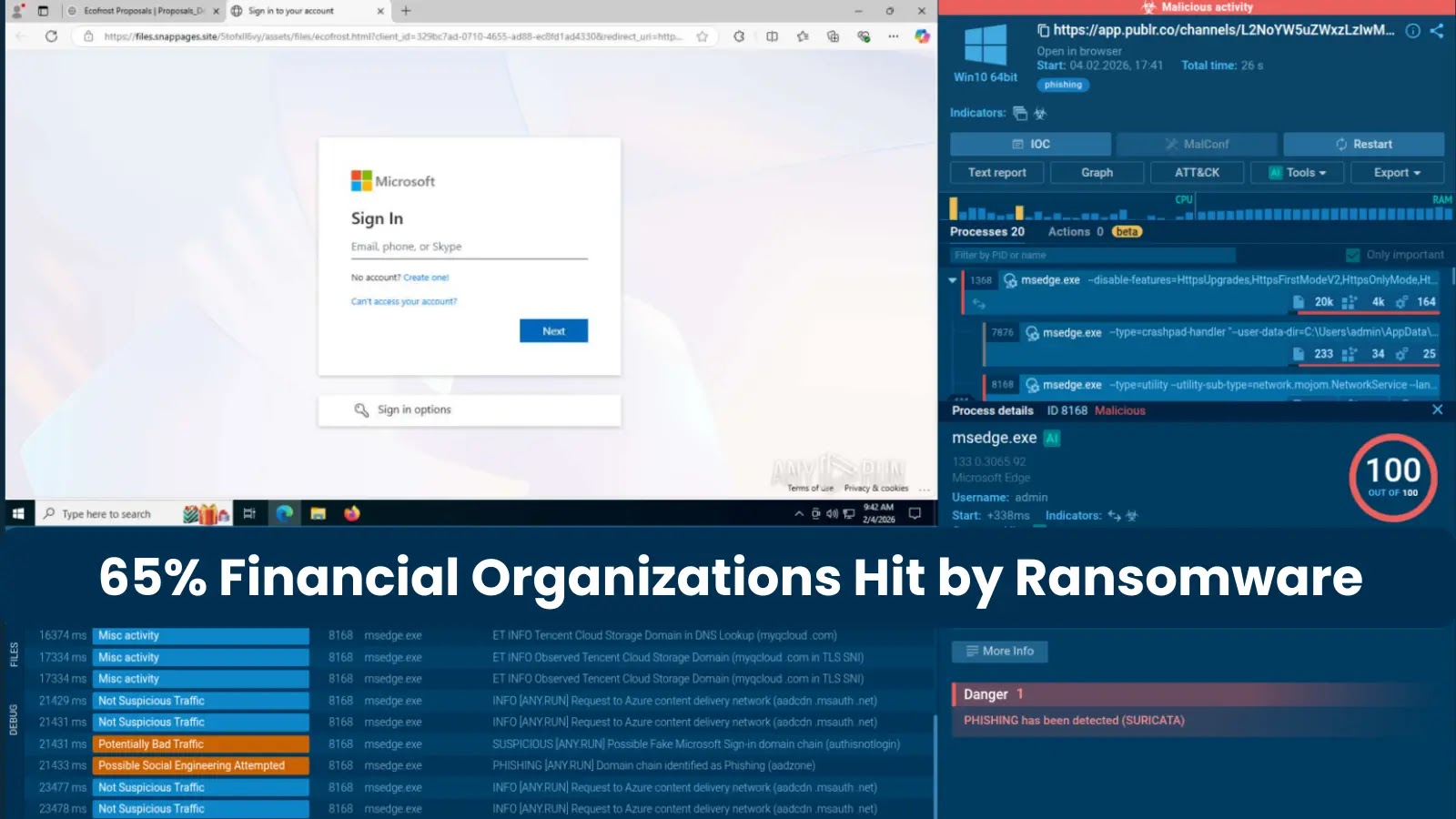
Cybercriminals have intensified their focus on the financial sector, employing sophisticated methods such as phishing, ransomware, and data theft. Analyses reveal that a staggering 90% of these attacks originate from phishing schemes, highlighting the critical need for rapid behavioral insights and proactive defense mechanisms.
Despite substantial investments in cybersecurity, nearly one-third of these assaults successfully bypass traditional defenses. Reports indicate that prevention efficacy in the financial sector hovers between 62% and 69%, leaving significant vulnerabilities exposed. Compounding the issue, underground markets have listed 14.5 million stolen credit cards in 2024 alone—a 20% increase from the previous year—posing severe risks to transactional integrity and consumer trust.
Operational and Financial Repercussions
The consequences of these cyberattacks are multifaceted, leading to operational downtime, regulatory penalties, and erosion of customer confidence. Even minor delays in detection can result in substantial financial losses. On average, recovery costs excluding ransom payments have reached $2.73 million per incident, placing a significant financial burden on affected organizations.
Challenges in Traditional Security Operations
Traditional Security Operations Centers (SOCs) in the financial sector deploy tools like Security Information and Event Management (SIEM) systems, Endpoint Detection and Response (EDR) solutions, and email gateways. However, these measures often fall short due to alert fatigue, delayed threat visibility, and the manual validation of indicators. Analysts frequently spend excessive time cross-referencing Indicators of Compromise (IOCs) without definitive verdicts, while threat intelligence often arrives post-incident. This prolongs the Mean Time to Response (MTTR), elevates costs, and exposes gaps in rapidly evolving attack campaigns targeting payment flows and data repositories.
Advancements in Threat Intelligence Solutions
To address these challenges, advanced Threat Intelligence solutions have been developed, offering sandbox-powered feeds and lookups for proactive defense. These solutions provide contextual IOCs—such as IPs, domains, and URLs—for seamless integration into SIEM and Security Orchestration, Automation, and Response (SOAR) platforms via APIs and standardized formats.
Implementing these advanced tools has led to a 36% increase in detection rates, reduced false positives, and faster triage processes. This enables early blocking of finance-specific threats, such as the Lumma Stealer campaigns observed in banking sectors across Europe and the United States.
Enhancing Threat Detection and Response
Threat Intelligence Lookup services offer instant verdicts on over 40 IOC types, reducing MTTR by an average of 21 minutes through comprehensive attack chain context. For example, querying a suspicious domain can reveal its ties to active malware campaigns, while filtering by industry and threat type exposes real-time phishing flows for targeted threat hunting.
This proactive approach shifts SOCs from a reactive stance to actively hunting hidden patterns, enhancing detection rules and coverage before alerts are triggered.
Building Business Resilience
Integrating these advanced threat intelligence tools fosters business resilience by lowering breach probabilities, ensuring compliance with standards like PCI DSS and DORA, improving operational efficiencies, and achieving cost savings through minimized forensic investigations. Financial firms can avoid disruptions, regulatory fines, and trust erosion, demonstrating the return on investment in preserving revenue amid relentless cyber threats.
The evolving threat landscape necessitates that financial organizations adopt proactive and advanced cybersecurity measures to safeguard their operations and maintain customer trust.