Positron Secures $230M Series B to Challenge Nvidia in AI Chip Market
In a significant move within the semiconductor industry, Reno-based startup Positron has successfully closed a $230 million Series B funding round, elevating its valuation to $1 billion. This substantial investment aims to expedite the deployment of Positron’s high-speed memory chips, essential components for artificial intelligence (AI) workloads.
The funding round was co-led by Arena Private Wealth, Jump Trading, and Unless. Notably, the Qatar Investment Authority (QIA), the sovereign wealth fund of Qatar, participated as a strategic investor. QIA’s involvement underscores its commitment to enhancing AI infrastructure, aligning with its broader strategy to position Qatar as a leading AI services hub in the Middle East.
Positron’s latest funding comes at a time when major tech companies and AI firms are seeking alternatives to Nvidia’s dominance in the AI chip market. For instance, OpenAI, a significant customer of Nvidia, has reportedly expressed dissatisfaction with some of Nvidia’s recent AI chips and has been exploring other options since last year.
Qatar’s investment in Positron aligns with its broader initiative to develop sovereign AI infrastructure. This strategy was highlighted at the recent Web Summit Qatar in Doha, emphasizing the nation’s focus on building robust AI capabilities to remain competitive on the global economic stage. A testament to this commitment is Qatar’s $20 billion AI infrastructure joint venture with Brookfield Asset Management, announced in December.
Founded three years ago, Positron has now raised over $300 million in total funding. The company’s previous $75 million funding round included investors such as Valor Equity Partners, Atreides Management, DFJ Growth, Flume Ventures, and Resilience Reserve.
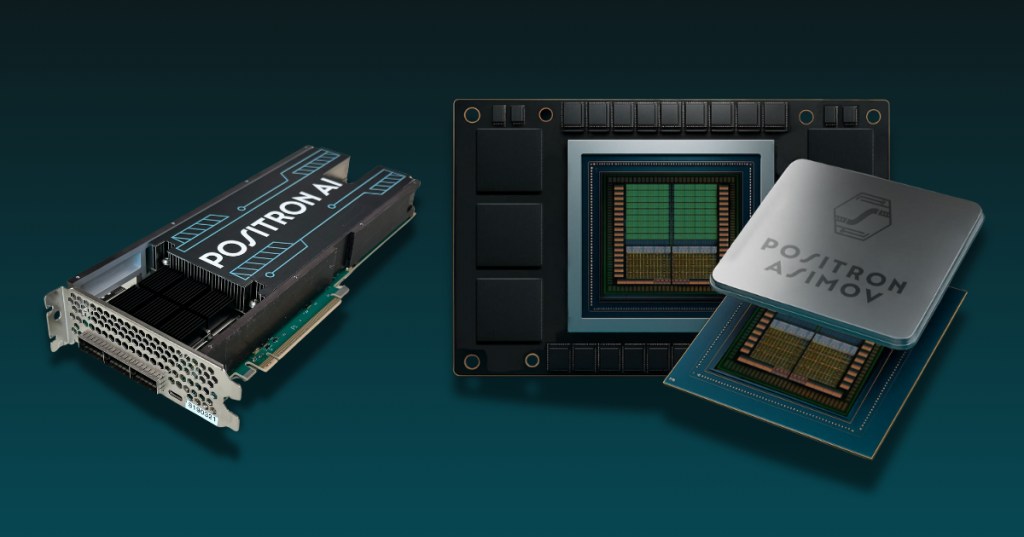
Positron’s flagship product, the Atlas chip, is manufactured in Arizona and is designed to match the performance of Nvidia’s H100 GPUs while consuming less than a third of the power. The company focuses on inference computing, which is crucial for running AI models in real-world applications, rather than training large language models. This focus positions Positron advantageously as the demand for inference hardware grows, with businesses increasingly shifting from building large models to deploying them at scale.
With the new funding, Positron plans to accelerate its roadmap, aiming to ship its next-generation Asimov silicon chip by early 2027. Beyond its memory capabilities, Positron’s chips are reported to perform strongly in high-frequency and video-processing workloads, further enhancing their appeal in the competitive AI chip market.