Physical Intelligence Poised for Major Expansion with $1 Billion Funding Round
Physical Intelligence Inc., a San Francisco-based robotics startup founded in 2024, is reportedly in discussions to secure approximately $1 billion in new funding, potentially elevating its valuation to over $11 billion. This development, as reported by Bloomberg, would effectively double the company’s valuation from just four months prior.
The anticipated funding round is expected to include participation from prominent investors such as Founders Fund and Lightspeed Venture Partners, alongside returning backers Thrive Capital and Lux Capital. While these discussions are still in the early stages and subject to change, the substantial interest underscores the growing confidence in Physical Intelligence’s innovative approach to robotics.
Company Background and Technological Vision
Physical Intelligence was established by a team of esteemed researchers, including Karol Hausman, Sergey Levine, Chelsea Finn, Brian Ichter, Lachy Groom, Adnan Esmail, and Quan Vuong. These founders brought experience from leading institutions such as Google DeepMind, Stanford University, and the University of California, Berkeley. The company’s mission is to develop machine learning models capable of controlling robots and other physical devices, aiming to create general-purpose AI systems that can perform a wide array of tasks in real-world environments.
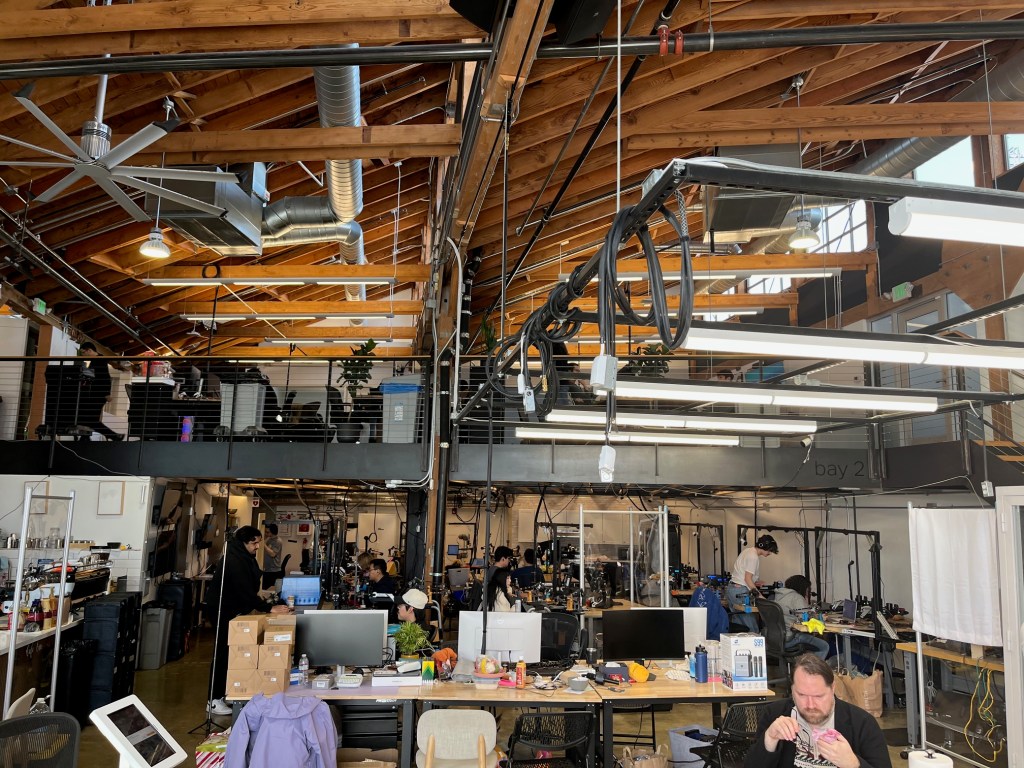
In a January 2026 visit to Physical Intelligence’s headquarters, co-founder Sergey Levine described the company’s ambition as creating a system akin to ChatGPT, but for robots. At that time, the company had raised just over $1 billion and employed approximately 80 individuals dedicated to building AI models that enable robots to perform diverse tasks, from folding laundry to peeling vegetables.
Funding History and Investor Confidence
Since its inception, Physical Intelligence has demonstrated a remarkable ability to attract significant investment. In 2024, the company raised $400 million at a valuation of approximately $2.4 billion, with investors including Jeff Bezos, OpenAI, Thrive Capital, Lux Capital, and Bond Capital. The following year, it secured an additional $600 million in funding at a valuation of around $5.6 billion, led by CapitalG and featuring participation from Lux Capital, Thrive Capital, Jeff Bezos, Index Ventures, and T. Rowe Price.
The current discussions to raise another $1 billion reflect sustained investor confidence in Physical Intelligence’s vision and technological advancements. Co-founder Lachy Groom has indicated that the company has no immediate timeline for commercialization, emphasizing the ongoing need for substantial investment to advance their AI models. There’s no limit to how much money we can really put to work, Groom stated, highlighting the continuous demand for computational resources to tackle complex problems.
Industry Context and Competitive Landscape
Physical Intelligence operates within a rapidly evolving robotics and artificial intelligence sector, characterized by significant investments and technological breakthroughs. For instance, Skild AI, another robotics startup, raised $1.4 billion in January 2026, bringing its valuation to over $14 billion. Similarly, Figure announced a Series C funding round exceeding $1 billion in September 2025, aiming to accelerate the deployment of general-purpose humanoid robots.
These substantial investments underscore a broader trend of increasing capital flow into AI and robotics companies, reflecting the growing recognition of their potential to revolutionize various industries.
Future Prospects and Strategic Implications
As Physical Intelligence continues to develop its AI models and expand its capabilities, the potential $1 billion funding round could significantly bolster its research and development efforts. The company’s focus on creating versatile AI systems for physical devices positions it to address a wide range of applications, from household tasks to industrial automation.
The sustained investor interest and substantial funding rounds suggest a strong belief in Physical Intelligence’s potential to lead in the AI-driven robotics space. As the company progresses, it will be crucial to monitor how it translates its technological innovations into practical, real-world applications and navigates the competitive landscape of the rapidly evolving robotics industry.