Strengthening Security: ownCloud Advocates for Multi-Factor Authentication Amid Credential Theft Concerns
In light of recent security incidents, ownCloud, a prominent open-source file-sharing platform, has issued an urgent call to its Community Edition users to implement multi-factor authentication (MFA) to bolster account security.
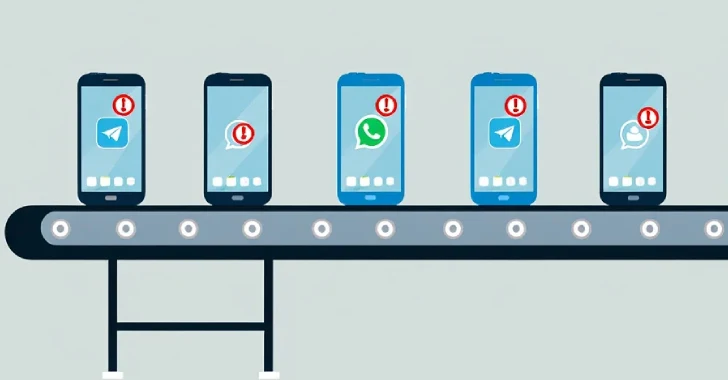
A comprehensive threat intelligence report by Hudson Rock has brought to attention a series of attacks targeting self-hosted file-sharing services, including certain ownCloud instances. The report clarifies that these breaches did not stem from inherent vulnerabilities within ownCloud’s architecture. Instead, attackers exploited a straightforward method: deploying infostealer malware such as RedLine, Lumma, or Vidar to infiltrate employee devices and harvest login credentials. These stolen credentials were then used to access ownCloud accounts that lacked MFA protection. The report emphasizes, These catastrophic security failures were not the result of zero-day exploits in the platform architecture and No exploits, no cookies, just a password.
ownCloud has responded to these findings by asserting that its platform remains uncompromised. The company attributes the breaches to misconfigurations in self-hosted environments, particularly the omission of MFA, despite its availability. This situation highlights a recurring issue in the deployment of self-managed open-source tools, where the security of the system heavily relies on the diligence of administrators.
To mitigate the risk of unauthorized access, ownCloud recommends users take the following immediate actions:
– Enable Multi-Factor Authentication (MFA): Activate MFA for all user accounts using the platform’s built-in two-factor authentication applications.
– Reset and Strengthen Passwords: Implement strong, unique passwords for all user accounts to enhance security.
– Monitor Access Logs: Regularly review access logs to identify any unusual or suspicious activity.
– Invalidate Active Sessions: Terminate all active sessions to prompt re-authentication, ensuring that only authorized users have access.
Implementing these measures adds a critical layer of security, rendering stolen credentials ineffective. Cybersecurity experts underscore the importance of MFA, noting that it can prevent over 99% of account takeover attempts. However, statistics reveal that only about 30% of self-hosted platforms have organization-wide MFA enforcement.
The proliferation of infostealer malware on dark web markets poses an increasing threat to platforms like ownCloud, Nextcloud, and Seafile. Users are advised to prioritize the activation of MFA and employ endpoint detection tools to combat malware at its source.
For ownCloud users, the urgency to implement MFA cannot be overstated. Delaying this critical security measure leaves systems vulnerable to exploitation, especially in an era where credentials are frequently compromised through infected devices. This situation serves as a stark reminder that robust security begins with proper configuration and proactive measures.