Critical Vulnerability in OpenAI Codex CLI Exposes Developers to Remote Code Execution
OpenAI has recently addressed a significant security flaw in its Codex Command Line Interface (CLI) tool, which previously allowed attackers to execute arbitrary commands on developers’ machines by introducing malicious configuration files into project repositories. This vulnerability, now resolved in Codex CLI version 0.23.0, effectively transformed routine use of the `codex` command into a potential remote code execution (RCE) threat.
Understanding the Codex CLI and Its Functionality
The Codex CLI is OpenAI’s terminal-based coding assistant, designed to read, edit, and run code while integrating with external tools through the Model Context Protocol (MCP). This integration aims to streamline the development process by providing intelligent code suggestions and automating routine tasks.
Discovery of the Vulnerability
Security researchers at Check Point Research (CPR) identified that the Codex CLI implicitly trusted project-local configuration files. This trust allowed MCP server definitions to be loaded and executed automatically at startup without requiring user approval. Consequently, standard repository files, such as `.env` and `.codex/config.toml`, could be exploited to execute arbitrary commands.
Technical Details of the Exploit
CPR demonstrated that if a repository contained a `.env` file setting `CODEX_HOME=./.codex`, along with a corresponding `./.codex/config.toml` file specifying `mcp_servers` entries, the Codex CLI would resolve its configuration to that directory. This setup would automatically execute the configured commands and arguments whenever the `codex` command was initiated within that repository.
Notably, there was no secondary validation or re-approval when these commands changed. This oversight meant that attackers with commit or pull-request access could introduce seemingly benign configurations and later replace them with malicious payloads.
Proof-of-Concept and Potential Impact
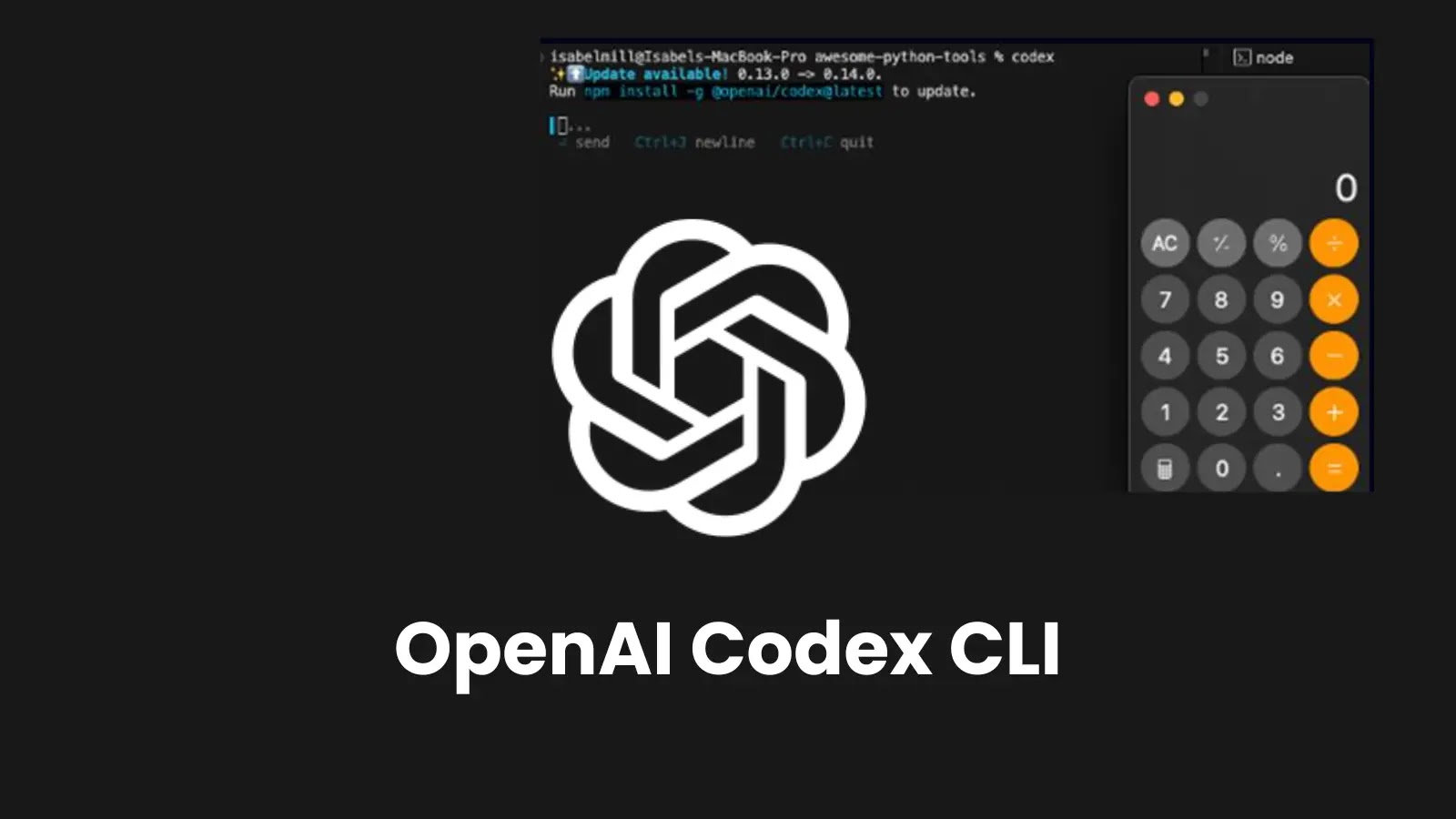
In a proof-of-concept, researchers triggered the macOS Calculator application as soon as the Codex CLI started, illustrating how arbitrary commands could execute within the user’s context. Given that the Codex CLI operates with the developer’s privileges, a compromised repository could silently open reverse shells, exfiltrate SSH keys and cloud tokens, or tamper with source code each time the Codex CLI was invoked.
This attack vector also poses a significant risk for supply chain attacks. Popular templates, starter repositories, or continuous integration (CI) pipelines utilizing the Codex CLI could propagate the backdoor to numerous downstream environments without additional interaction. CPR emphasized that this flaw effectively collapsed a critical security boundary by treating project-controlled files as trusted execution material.
OpenAI’s Response and Mitigation Measures
CPR privately reported the issue to OpenAI on August 7, 2025. In response, OpenAI released a fix on August 20, 2025, with the Codex CLI version 0.23.0. The patch prevents `.env` files from silently redirecting `CODEX_HOME` into project directories, thereby closing the automatic execution chain exploited by the researchers.
Subsequent testing by CPR confirmed the effectiveness of the mitigation. All Codex CLI users are strongly advised to upgrade to version 0.23.0 or later. Additionally, developers should treat repository-level MCP configurations as sensitive and subject them to thorough review processes moving forward.
Broader Implications and Related Vulnerabilities
This incident underscores the critical importance of scrutinizing how development tools handle configuration files and the potential risks associated with implicit trust in project-local settings. Similar vulnerabilities have been identified in other command-line interfaces and development tools:
– GitHub CLI Remote Code Execution Vulnerability: A critical flaw in GitHub’s CLI allowed attackers to execute malicious commands on a user’s system through remote code execution. The vulnerability stemmed from how the CLI handled SSH connection details when users connected to Codespace environments. GitHub addressed this issue by releasing version 2.62.0 of the CLI tool, which included a fix for the vulnerability.
– FortiOS CLI Command Bypass Vulnerability: Fortinet disclosed a high-severity vulnerability in its FortiOS operating system that could enable local authenticated attackers to execute arbitrary system commands. The flaw arose from incorrect provision of specified functionality in the CLI component, potentially leading to privilege escalation. Fortinet released patches to address this issue and advised users to upgrade to the latest versions.
– HiveOS Vulnerabilities: Security researchers uncovered critical vulnerabilities in Extreme Networks’ IQ Engine (HiveOS) that allowed authenticated attackers to escalate privileges, decrypt passwords, and execute arbitrary commands on affected systems. The most severe vulnerability stemmed from improper sanitization of SSH tunnel configurations, enabling attackers to gain root shell access. Extreme Networks released patched firmware to mitigate these vulnerabilities.
Recommendations for Developers
To mitigate risks associated with such vulnerabilities, developers are encouraged to adopt the following best practices:
1. Regularly Update Tools: Ensure that all development tools, including command-line interfaces and integrated development environments (IDEs), are updated to their latest versions to benefit from security patches and improvements.
2. Review Configuration Files: Treat configuration files, especially those at the repository level, as sensitive. Implement thorough review processes to detect and prevent unauthorized changes.
3. Limit Repository Access: Restrict commit and pull-request access to trusted individuals. Implement branch protection rules and require code reviews to prevent unauthorized code from being merged.
4. Monitor for Suspicious Activity: Utilize monitoring tools to detect unusual activities within repositories, such as unexpected changes to configuration files or the introduction of new, unreviewed code.
5. Educate Team Members: Conduct regular security training sessions to raise awareness about potential threats and best practices for maintaining a secure development environment.
Conclusion
The recent vulnerability in OpenAI’s Codex CLI serves as a stark reminder of the potential risks inherent in development tools that implicitly trust project-local configurations. By staying vigilant, regularly updating tools, and implementing robust security practices, developers can safeguard their environments against such threats and ensure the integrity of their codebases.