OpenAI Introduces Prominent Ads in ChatGPT: A New Era for AI Chatbots
OpenAI has announced a significant update to ChatGPT, introducing advertisements into user interactions. This development marks a notable shift in the AI chatbot landscape, as ChatGPT will begin displaying ads within user queries.
Historically, AI chatbots have operated without advertisements, providing users with uninterrupted conversational experiences. However, OpenAI’s recent decision aligns ChatGPT with the broader internet trend where advertising is a primary revenue source. This move comes despite other AI platforms, such as Google’s Gemini, explicitly stating they have no plans to incorporate ads into their chatbot experiences.
The introduction of ads in ChatGPT is set to roll out in the coming weeks, targeting users on the free tier and those subscribed to the new $8 per month Go plan. This Go plan offers users ten times more messages, file uploads, and image creation capabilities compared to the free tier, along with enhanced memory for ChatGPT. In contrast, the existing ChatGPT Plus subscription, priced at $20 per month, will remain ad-free.
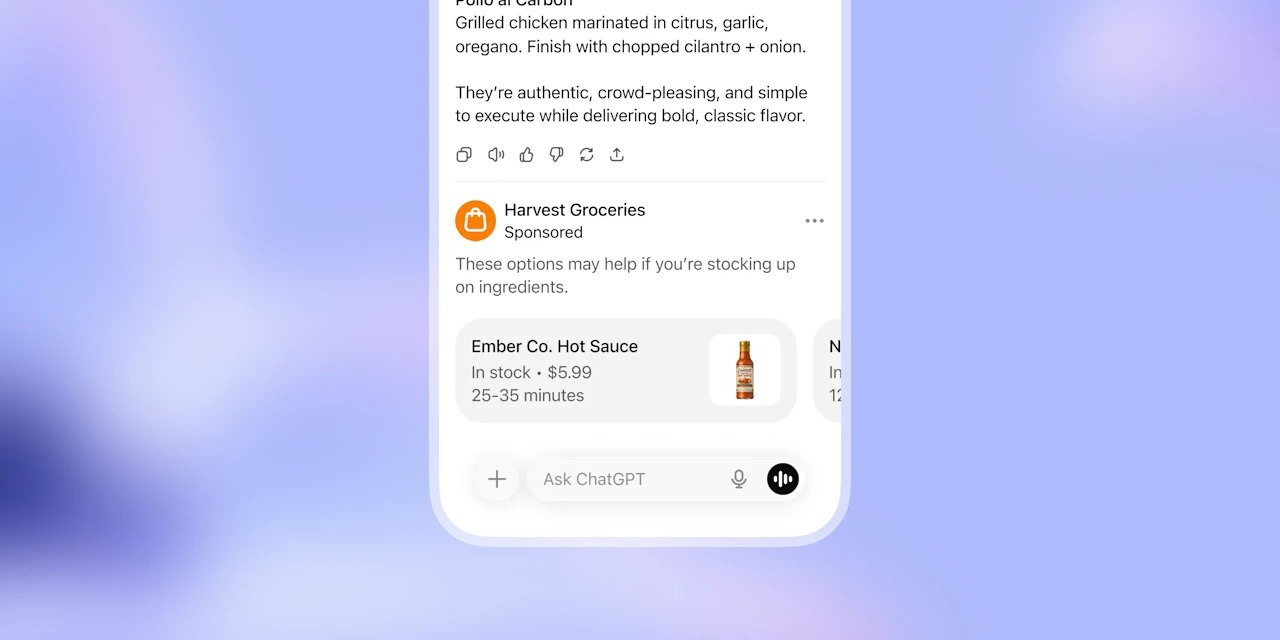
Initially, this advertising feature will be tested in the United States. Ads will appear at the bottom of ChatGPT’s responses when there’s a relevant sponsored product or service related to the user’s current conversation. For instance, if a user inquires about authentic Mexican dish ideas, ChatGPT might display an ad for a grocery delivery app featuring hot sauce. Similarly, a query about lodging in a specific city could prompt an advertisement for accommodations in that location, with an option to chat with the sponsor for more information.
Users have noted that these ads occupy a significant portion of the screen, potentially impacting the overall user experience. The prominence of these ads suggests a strategic move by OpenAI to integrate advertising seamlessly into the chatbot’s interface.
OpenAI emphasizes that the best ads are those that are useful, entertaining, and help users discover new products and services. The company is excited to develop new experiences over time that users find more helpful and relevant than traditional ads. They believe that conversational interfaces offer possibilities for users to go beyond static messages and links. For example, in the near future, users might see an ad and be able to directly ask questions to make informed purchase decisions.
To address potential concerns, OpenAI has stated that advertisements will not appear near sensitive or regulated topics such as health, mental health, or politics. Additionally, users under the age of 18 will not be exposed to these ads.
This move by OpenAI reflects a broader trend in the tech industry, where companies are exploring new revenue streams through advertising within AI-driven platforms. As AI chatbots become more integrated into daily life, the balance between monetization and user experience will be crucial.
In comparison, Google’s Gemini has taken a different approach. Despite reports suggesting that Google might introduce ads into its AI chatbot, the company has firmly denied these claims. Dan Taylor, Google’s Vice President of Global Ads, stated that there are no ads in the Gemini app and no current plans to change that. This stance highlights the varying strategies tech companies are adopting concerning advertising in AI platforms.
The introduction of ads in ChatGPT also raises questions about user privacy and data usage. While OpenAI has not provided detailed information on how user data will be utilized for ad targeting, the company has previously allowed users to opt out of data gathering. It remains to be seen how these new advertising features will align with OpenAI’s existing data policies.
As the AI chatbot market continues to evolve, the integration of advertising presents both opportunities and challenges. For users, the key will be to assess whether the value provided by these AI platforms outweighs the potential intrusiveness of ads. For companies like OpenAI, the challenge lies in implementing advertising in a way that enhances rather than detracts from the user experience.
In conclusion, OpenAI’s decision to introduce ads into ChatGPT signifies a pivotal moment in the development of AI chatbots. As this feature rolls out, both users and industry observers will be keenly watching to see how it impacts the functionality and appeal of ChatGPT. The balance between monetization and maintaining a seamless user experience will be critical in determining the success of this initiative.