OpenAI Introduces Ads in ChatGPT for U.S. Users on Free and Go Plans
In a significant shift in its business model, OpenAI has announced plans to incorporate advertisements into ChatGPT for logged-in adult users in the United States who are on the Free and ChatGPT Go tiers. This initiative is set to roll out in the coming weeks, coinciding with the company’s global expansion of its affordable subscription services.
OpenAI has emphasized its commitment to user privacy and data security. The company assures users that their data and conversations will remain protected and will not be sold to advertisers. To maintain a high standard of user experience, OpenAI plans to provide control over the ad experience, ensuring that users see only relevant, high-quality ads. Additionally, users will have the option to disable ad personalization if they choose.
The introduction of advertising is positioned as a strategy to make the benefits of artificial general intelligence more accessible to a broader audience. OpenAI believes that this approach can be transformative for small businesses and emerging brands striving to compete in the market.
Key aspects of the advertising implementation include:
– Non-Influence on Chatbot Responses: Advertisements will not affect the responses generated by ChatGPT, preserving the integrity of user interactions.
– User Data Privacy: User data and conversations will remain confidential and will not be shared with advertisers.
– User Control: Users will have the ability to manage their ad experience, including understanding why specific ads are shown, dismissing unwanted ads, and providing feedback.
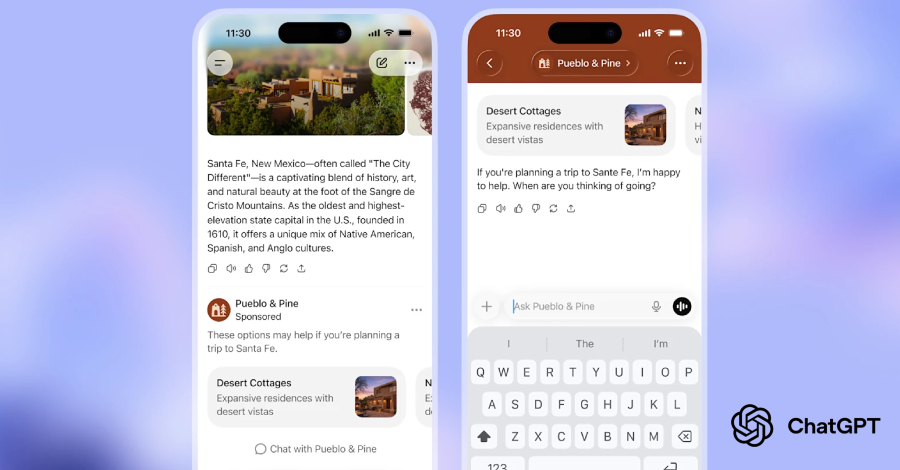
– Clear Labeling: Ads will be distinctly labeled and will appear at the bottom of user conversations to avoid confusion.
OpenAI has not specified the exact data that will be collected to serve relevant ads. However, the company has stated that users will have access to information about why they are seeing specific ads and will have the option to dismiss them or provide feedback. Notably, users subscribed to the higher-tier Plus, Pro, Business, and Enterprise plans will not encounter ads.
The initial phase of this advertising strategy involves testing ads at the bottom of ChatGPT responses when a relevant sponsored product or service aligns with the user’s current conversation. During this testing period, ads will not be displayed to users under the age of 18, and they will not appear near sensitive or regulated topics such as health, mental health, or politics.
OpenAI CEO Sam Altman has addressed concerns about the potential influence of advertisers on ChatGPT’s responses. He has stated that the company will not accept payments to alter the chatbot’s outputs. Altman acknowledges the demand for AI services and expresses hope that this advertising model will enable broader access without compromising the quality of the service.
This development marks a departure from OpenAI’s previous reliance primarily on subscription-based revenue. In May 2024, Altman described advertising as a last resort for the company’s business model, noting that the combination of ads and AI could be uniquely unsettling. The shift towards incorporating ads indicates OpenAI’s recognition of advertising as a viable revenue stream to support the costly endeavor of developing and maintaining advanced AI systems. As of early October 2025, ChatGPT boasted 800 million weekly active users, underscoring the platform’s widespread adoption and the potential impact of this new advertising strategy.