Nuro’s Autonomous Vehicles Navigate Tokyo’s Complex Streets
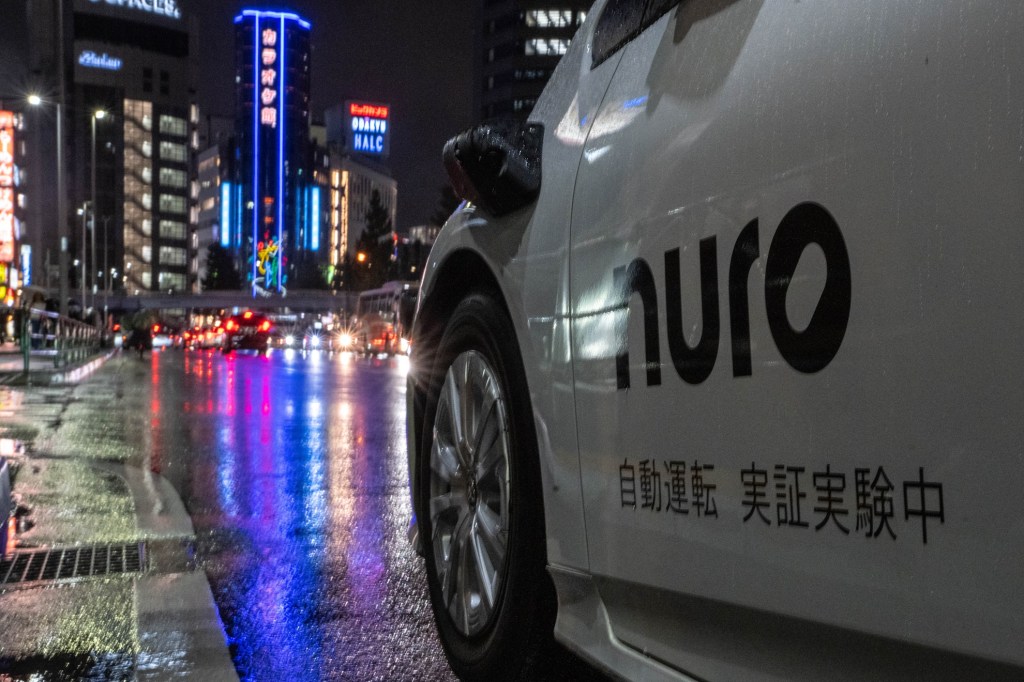
Nuro, a Silicon Valley-based autonomous vehicle startup, has initiated testing of its self-driving technology on Tokyo’s public roads. This marks the company’s first foray into international markets, utilizing Toyota Prius vehicles equipped with Nuro’s advanced self-driving software. Human safety operators are present during these tests to ensure safety and compliance.
Navigating Tokyo’s Unique Driving Environment
Tokyo presents a distinctive set of challenges for autonomous vehicles. The city’s traffic operates on the left side of the road, and its streets are densely populated with vehicles and pedestrians. Additionally, road signs and lane markings differ significantly from those in the United States. Nuro’s expansion into Tokyo is a strategic move to adapt its technology to diverse driving conditions and regulatory environments.
Strategic Expansion and Future Prospects
In a recent blog post, Nuro emphasized the significance of this expansion, stating, Our autonomous operations in Tokyo are the beginning of the compounding benefits of global deployment. This suggests that the company views its Tokyo operations as a stepping stone toward broader international applications of its autonomous technology.
Evolution of Nuro’s Business Model
Founded in 2016 by former Google self-driving project engineers Dave Ferguson and Jiajun Zhu, Nuro initially focused on developing and operating a fleet of low-speed, on-road delivery robots. The company’s innovative approach attracted significant investment, including a $940 million infusion from SoftBank Vision Fund in 2019.
However, the high costs associated with developing and deploying these delivery robots led Nuro to reassess its business strategy. In 2024, the company shifted its focus toward licensing its autonomous vehicle technology to automakers and mobility providers, such as ride-hailing and delivery companies. This pivot aims to leverage Nuro’s technological advancements while mitigating the financial burdens of operating a proprietary fleet.
Innovative AI Approach: Zero-Shot Autonomous Driving
A cornerstone of Nuro’s technology is its end-to-end AI foundation model, which enables the system to learn and adapt as it operates. This approach, termed zero-shot autonomous driving, allows Nuro’s software to navigate public roads in Tokyo without prior exposure to Japanese driving data. This capability underscores the robustness and adaptability of Nuro’s AI system.
The zero-shot methodology signifies that the AI can generalize its learning to new environments without specific training data from those settings. This is particularly advantageous for scaling autonomous vehicle operations across diverse geographic regions with varying traffic laws and driving behaviors.
Commitment to Safety and Rigorous Testing
Despite the ambitious AI strategy, Nuro maintains a strong commitment to safety. The company conducts extensive closed-course testing for each new release of its universal autonomy model, evaluating performance and addressing potential edge cases through simulation.
During initial public road testing, Nuro’s vehicles operate in shadow mode, where the AI system generates decisions without executing them, allowing for real-time assessment without risk. This cautious approach ensures that the system is thoroughly vetted before full autonomous operation is permitted.
Investor Confidence and Financial Backing
Nuro’s innovative approach and strategic pivots have garnered continued investor confidence. In the previous year, the company secured $203 million in a Series E funding round. This round included contributions from existing investor Baillie Gifford and new participants such as Icehouse Ventures, Kindred Ventures, Nvidia, and Pledge Ventures. Additionally, Uber, which had announced plans for a substantial investment in Nuro as part of a broader agreement with electric car manufacturer Lucid, also participated in this funding round.
Broader Implications for the Autonomous Vehicle Industry
Nuro’s expansion into Tokyo reflects a broader trend in the autonomous vehicle industry, where companies are increasingly seeking to test and deploy their technologies in diverse international markets. This move aligns with similar initiatives by other industry players:
– Waymo’s International Testing: Waymo announced plans to begin testing its autonomous vehicle technology in Tokyo in early 2025. This marked the company’s first venture onto public roads outside the United States, aiming to adapt to Tokyo’s left-hand driving and dense urban environment.
– TuSimple’s Operations in Japan: TuSimple, a company specializing in self-driving trucks, commenced regular test runs on Japan’s Tomei Expressway in 2023. This initiative was part of TuSimple’s strategy to address labor shortages in Japan’s logistics industry through autonomous technology.
– GM, Cruise, and Honda’s Joint Venture: In 2023, General Motors, Cruise, and Honda announced plans to launch a robotaxi service in Japan. The service, utilizing the custom-built Cruise Origin vehicles, was slated to begin in central Tokyo in early 2026, with plans to expand the fleet and service area over time.
Conclusion
Nuro’s testing of its autonomous vehicle technology on Tokyo’s streets signifies a pivotal step in the company’s evolution and its commitment to global deployment. By addressing the unique challenges of Tokyo’s driving environment and leveraging its innovative AI approach, Nuro aims to refine its technology for broader international applications. This initiative not only highlights Nuro’s adaptability but also reflects the dynamic and rapidly evolving landscape of the autonomous vehicle industry.