North Korean Hackers Masquerade as Korean TV Writers to Deploy Malware
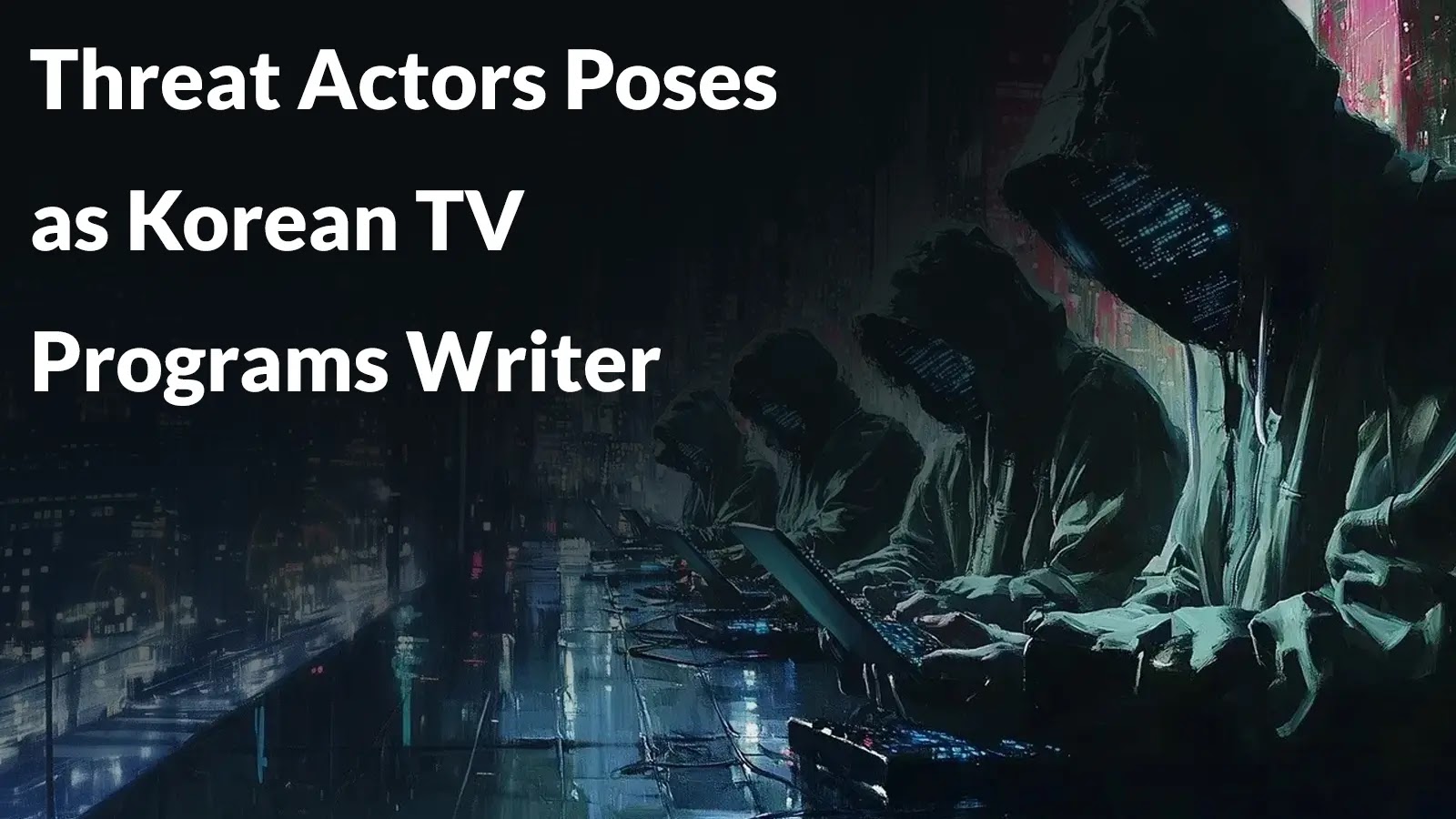
Cybersecurity researchers have uncovered a sophisticated campaign, dubbed Operation Artemis, where North Korean threat actors impersonate writers from major Korean broadcasting networks to distribute malicious documents. This operation marks a significant evolution in social engineering tactics, leveraging the credibility of trusted media personalities to deceive victims and deploy malware.
Deceptive Social Engineering Tactics
In this campaign, attackers initiate contact through emails that appear to be legitimate interview requests or professional collaboration opportunities. They pose as established writers from well-known Korean television programs, presenting proposals related to North Korean affairs and human rights issues. This approach is particularly effective in targeting academics, journalists, and policy experts who frequently engage with media organizations on these topics.
Technical Execution and Malware Deployment
The attackers employ a multi-stage strategy that combines deception with advanced technical evasion methods. They send malicious Hangul Word Processor (HWP) documents—commonly used in South Korea—as email attachments. These documents are disguised as interview questionnaires or event guides. When a recipient opens the document and clicks on embedded hyperlinks, the infection chain is silently initiated.
A notable aspect of this attack is the use of DLL side-loading, a technique where legitimate system utilities are exploited to load malicious DLL files. The malware places these malicious DLLs alongside legitimate executables, causing Windows to load the corrupted libraries instead. This method helps the malware evade detection by traditional security tools, as the parent processes appear legitimate.
The malicious DLLs employ multiple encryption layers using XOR operations to conceal their true purpose. Depending on the target system’s capabilities, the malware selects between standard byte-wise XOR decryption or high-speed Streaming SIMD Extensions (SSE) methods, processing 16 bytes simultaneously. This adaptive approach enhances processing speed while maintaining stealth against pattern-matching security systems.
Deployment of RoKRAT Malware
The ultimate goal of the infection chain is to deploy RoKRAT, a sophisticated data-stealing tool. The process involves executing OLE objects within the HWP documents, deploying executable files and malicious DLLs in temporary folders, and sequentially decrypting the payload before activating the final shellcode. Forensic analysis revealed that the threat actors maintained command-and-control infrastructure through Yandex Cloud services in Russia, with account tokens indicating sustained operational capability from October 2023 to February 2025.
Detection and Mitigation Strategies
Detecting such sophisticated attacks requires behavioral monitoring through Endpoint Detection and Response (EDR) solutions rather than relying solely on conventional file scanning. Security teams should monitor for abnormal DLL loading from temporary directories, suspicious child processes spawned from legitimate executables, and outbound connections to cloud infrastructure immediately following document execution.
Broader Context of North Korean Cyber Operations
This campaign is part of a broader pattern of North Korean cyber operations targeting various sectors through innovative methods. For instance, the Lazarus Group has been known to exploit job seekers in the cryptocurrency industry by using fake job interview websites to deploy malware on both Windows and macOS systems. Similarly, the Kimsuky group has launched multi-platform campaigns targeting users across Facebook, email, and Telegram platforms, employing coordinated social engineering tactics to infiltrate and compromise high-value targets.
These operations underscore the persistent and evolving nature of North Korean cyber threats, highlighting the need for heightened vigilance and advanced security measures to protect against such sophisticated attacks.