STX RAT: The Stealthy Malware Redefining Cyber Threats in 2026
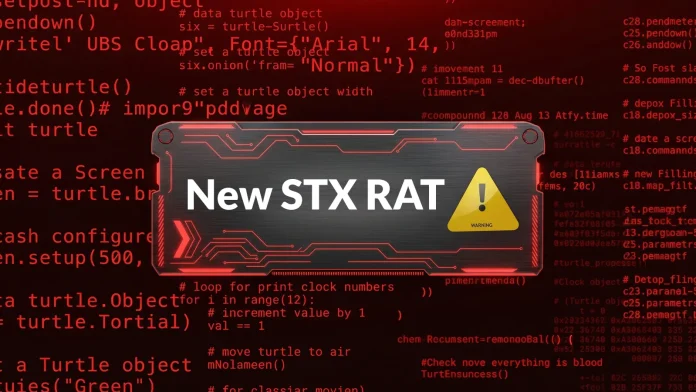
In the ever-evolving landscape of cyber threats, a new adversary has emerged in 2026: the STX Remote Access Trojan (RAT). This sophisticated malware combines hidden remote desktop capabilities with credential-stealing features, enabling attackers to infiltrate systems undetected and maintain prolonged access.
Discovery and Initial Deployment
STX RAT was first identified in late February 2026 when a financial sector organization was targeted through a browser-downloaded VBScript file. This script initiated a complex infection chain, dropping a JScript file that fetched a TAR archive. Subsequently, a PowerShell loader injected the final payload into memory, effectively bypassing traditional security measures. By early March, Malwarebytes reported a separate campaign distributing STX RAT via trojanized FileZilla installers, indicating the malware’s rapid adoption and diverse delivery methods.
Technical Sophistication and Evasion Techniques
Researchers from eSentire’s Threat Response Unit (TRU) conducted an in-depth analysis of STX RAT, revealing its advanced design and robust anti-analysis defenses. The malware performs checks for virtual environments such as VirtualBox, VMware, and QEMU. If these are detected, it executes a jitter exit, introducing a random delay before termination to evade detection in automated sandbox environments.
Further enhancing its stealth, STX RAT employs an AMSI-ghosting technique by patching a core Windows RPC function. This effectively disables the Antimalware Scan Interface (AMSI), a critical component that security tools use to scan running processes. Additionally, the malware conceals its terminal window from the Alt+Tab switcher and Taskbar, minimizing visible indicators of its presence.
Command-and-Control Communication
Once active, STX RAT establishes communication with its command-and-control (C2) server at 95.216.51.236. It sends an initial message containing detailed system information, including the hostname, username, operating system version, administrative status, installed RAM, and a list of detected antivirus products. All C2 traffic is secured through an Elliptic Curve Diffie-Hellman (ECDH) key exchange using X25519 and ChaCha20-Poly1305 authenticated encryption, ensuring that the communication remains confidential and resistant to decryption without session keys.
Credential Theft and Information Gathering
STX RAT’s infostealer module targets credentials stored in widely used applications such as FileZilla, WinSCP, and Cyberduck. These applications are commonly utilized by developers and IT administrators, making them valuable targets for attackers. The malware also captures desktop screenshots, providing attackers with a visual overview of the compromised system.
Hidden Remote Desktop Control
One of the most alarming features of STX RAT is its Hidden Virtual Network Computing (HVNC) module. Unlike traditional remote desktop tools that visibly take over a user’s display, HVNC creates a separate, invisible desktop session running in the background. This allows attackers to interact with the system—browsing websites, opening files, and launching applications—without the victim’s knowledge.
The HVNC functionality is initiated through a `start_hvnc` command from the C2 server. Attackers can then inject keystrokes via `key_press`, simulate mouse movements with `mouse_input`, scroll applications using `mouse_wheel`, and paste content directly with the `paste` command, all utilizing Windows’ SendInput API. The `switch_desktop` command enables management of multiple hidden desktop sessions simultaneously. Upon completion, `connection_lost` and `channel_closed` commands quietly terminate sessions and clean up desktop handles, leaving minimal traces of the intrusion.
Implications and Broader Context
The emergence of STX RAT underscores a significant evolution in cyber threats, where attackers are increasingly leveraging advanced techniques to maintain stealth and persistence. The use of HVNC is not unique to STX RAT; other malware families, such as CrySome RAT, have also incorporated similar capabilities. CrySome RAT, for instance, features HVNC alongside an AVKiller module designed to disable antivirus software, further enhancing its stealth and control over infected systems.
Additionally, the exploitation of legitimate software installers to distribute malware has become a common tactic. Campaigns involving trojanized FileZilla installers have been observed delivering various RATs, including STX RAT. Similarly, malicious npm packages have been used to deliver PylangGhost RAT, highlighting the diverse methods attackers employ to infiltrate systems.
Mitigation Strategies
To defend against threats like STX RAT, organizations and individuals should adopt a multi-layered security approach:
1. Regular Software Updates: Ensure that all operating systems and applications are up-to-date with the latest security patches to mitigate vulnerabilities that malware exploits.
2. Endpoint Detection and Response (EDR): Deploy advanced EDR solutions capable of identifying and responding to suspicious activities, including the presence of HVNC sessions and unauthorized credential access.
3. User Education: Educate users about the risks associated with downloading and executing files from untrusted sources, emphasizing the importance of verifying the authenticity of software installers.
4. Network Monitoring: Implement network monitoring tools to detect unusual outbound traffic patterns that may indicate communication with C2 servers.
5. Application Whitelisting: Utilize application whitelisting to prevent unauthorized software from executing, thereby reducing the risk of malware infections.
Conclusion
STX RAT represents a formidable advancement in malware capabilities, combining stealth, persistence, and comprehensive control over infected systems. Its emergence highlights the need for continuous vigilance and adaptive security measures to counteract the evolving tactics of cyber adversaries. By understanding the mechanisms and implications of such threats, organizations can better prepare and fortify their defenses against future attacks.