NASA’s Artemis II: The Final Frontier Before Silicon Valley’s Lunar Leap
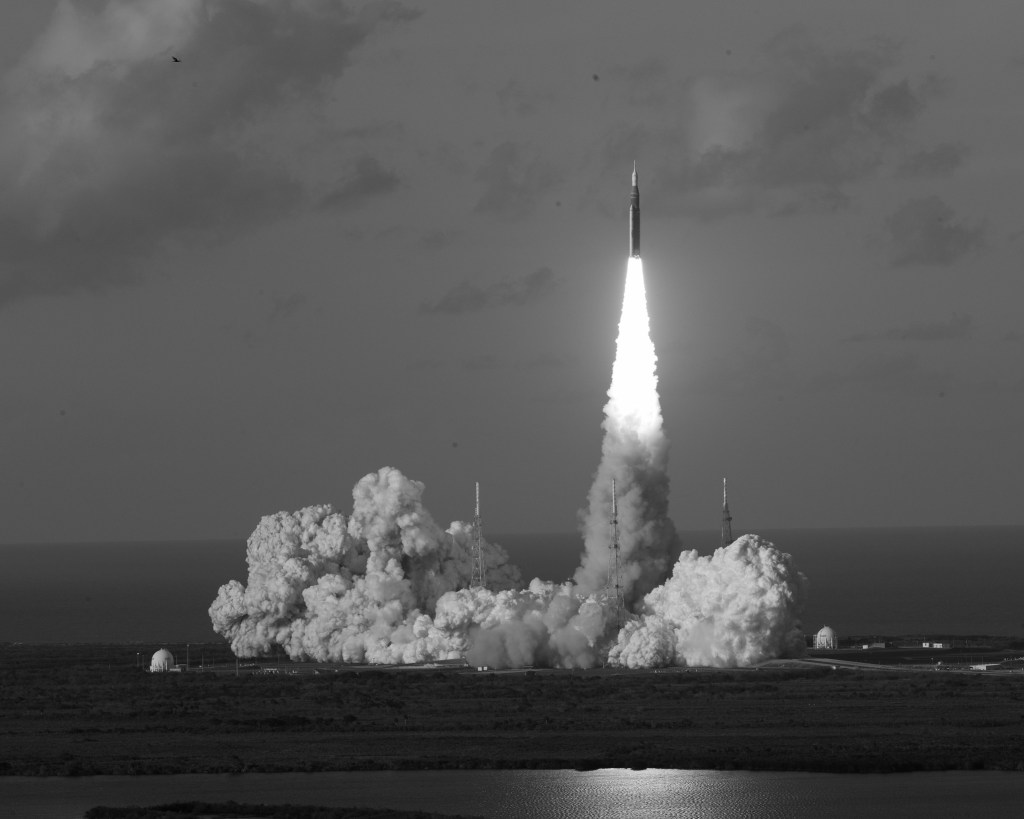
On April 1, 2026, NASA’s Artemis II mission marked a historic milestone by sending astronauts to the Moon for the first time in over half a century. This mission not only signifies a monumental achievement in space exploration but also represents the culmination of an era where traditional aerospace contractors led deep-space missions. As the landscape of space exploration evolves, future lunar endeavors are poised to be significantly influenced by Silicon Valley’s innovative private space companies.
The Genesis of Artemis II
The journey to Artemis II began during the early 2000s under the administration of President George W. Bush. NASA initiated the development of the Space Launch System (SLS), an immense rocket, and the Orion spacecraft, both designed to facilitate human missions to the Moon. However, by 2010, escalating costs and delays prompted a strategic shift. NASA began collaborating with private companies to develop new orbital rockets, leading to a transformative era in space technology.
This pivot proved pivotal for companies like SpaceX, which secured critical contracts that not only ensured their survival but also attracted substantial venture capital investments into the burgeoning private space sector. The culmination of these efforts is the SLS, currently the most powerful operational rocket globally, now propelling a crew of three Americans and one Canadian around the Moon and back.
The Role of Traditional Aerospace Contractors
The SLS and Orion spacecraft were developed by established aerospace giants Boeing and Lockheed Martin, with additional contributions from Europe’s Airbus Defense and Space. Despite their successful deployment, these projects were marred by significant cost overruns and delays. In contrast, companies like SpaceX were revolutionizing the industry with cost-effective, reusable rockets, sparking a surge of investment into private space ventures.
When NASA reaffirmed its commitment to lunar exploration in 2019, the agency opted to continue utilizing the SLS and Orion systems. However, a critical component was missing: a lunar lander capable of transporting astronauts from lunar orbit to the Moon’s surface. To address this, NASA turned to the new generation of venture-backed space firms, signaling a shift towards greater private sector involvement in space exploration.
The Emergence of Private Space Companies
In 2021, SpaceX proposed using its Starship rocket as a lunar lander and secured the contract for this mission. This decision was not without controversy, as the plan required multiple launches to refuel the Starship for its journey to the Moon. Recognizing the challenges, NASA adjusted its timeline, delaying the lunar landing attempt to accommodate the development of this new architecture.
Former NASA Administrator Jim Bridenstine expressed concerns about this approach, stating, This is an architecture that no NASA administrator that I’m aware of would have selected had they had the choice. His remarks highlighted the unconventional nature of relying on multiple launches and in-orbit refueling for a lunar mission.
To diversify its options, NASA awarded a contract to Blue Origin in 2023 to develop an alternative human landing system. The agency plans to conduct a series of tests in 2027 to evaluate the capability of the Orion spacecraft to rendezvous with these landers in lunar orbit, setting the stage for potential crewed landings in 2028.
A New Era Under New Leadership
The appointment of Jared Isaacman, a billionaire entrepreneur with firsthand spaceflight experience, as NASA Administrator in late 2025 marked a significant shift in the agency’s approach. Isaacman, who had previously funded private space missions, prioritized collaboration with private space companies. In March 2026, he announced the cancellation of plans for a lunar space station known as Gateway and halted further investments in costly upgrades for the SLS. This strategic realignment underscored NASA’s commitment to leveraging the capabilities of private industry to achieve its lunar exploration goals.
Geopolitical Implications and the Future of Lunar Exploration
As NASA and its private partners advance their lunar ambitions, they are mindful of the competitive landscape. China has announced plans to land astronauts on the Moon by 2030, adding a geopolitical dimension to the new space race. Silicon Valley’s involvement in lunar missions offers an opportunity to demonstrate technological leadership and innovation on a global scale.
The success of companies like SpaceX has inspired entrepreneurs worldwide, particularly in China, to emulate their models. As the race to the Moon intensifies, Silicon Valley’s role in shaping the future of space exploration becomes increasingly significant.
Conclusion
Artemis II represents the culmination of NASA’s traditional approach to lunar missions, relying on established aerospace contractors. As the agency transitions to greater collaboration with private space companies, the landscape of lunar exploration is set to change dramatically. The integration of Silicon Valley’s innovative spirit and technological prowess promises to usher in a new era of space exploration, characterized by increased efficiency, reduced costs, and unprecedented achievements.