Meta Unveils Advanced AI-Powered Tools to Combat Online Scams Across Platforms
In a decisive move to bolster user security, Meta has introduced a suite of advanced anti-scam tools across its platforms—WhatsApp, Facebook, and Messenger. This initiative leverages artificial intelligence (AI) and strategic partnerships to proactively identify and neutralize fraudulent activities, reflecting Meta’s commitment to safeguarding its global user base.
Enhanced Security Features Across Platforms
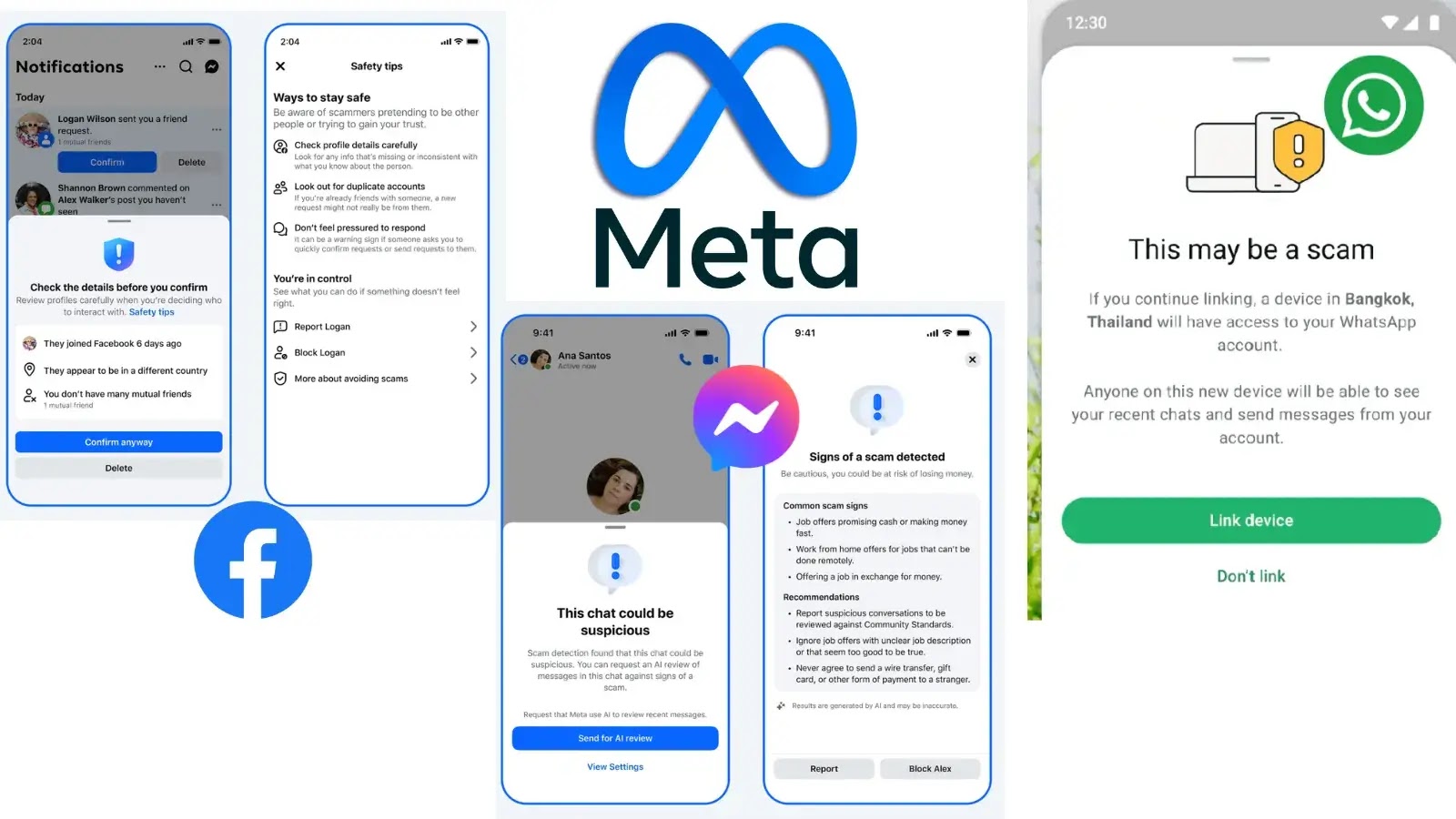
WhatsApp Device Linking Alerts: Scammers often employ tactics such as fake QR codes or deceptive messages to gain unauthorized access to users’ accounts. To counter this, WhatsApp now issues alerts when a device linking request appears suspicious. These notifications provide details about the origin of the request, enabling users to assess its legitimacy before proceeding.
Facebook Suspicious Friend Request Warnings: On Facebook, users will receive alerts when friend requests exhibit signs of suspicious activity. Indicators include a lack of mutual friends or profile information that suggests falsified details. This feature empowers users to make informed decisions about accepting or declining connections.
Messenger Advanced Scam Detection: Messenger has expanded its scam detection capabilities to more countries, utilizing sophisticated algorithms to identify patterns associated with common scams, such as fraudulent job offers. When a conversation with a new contact displays these patterns, users are prompted to review recent messages for potential scams and are provided with options to block or report the account.
Leveraging AI to Detect and Prevent Scams
Traditional security measures often fall short against the evolving tactics of online scammers. To address this, Meta has deployed advanced AI systems capable of analyzing text, images, and contextual information simultaneously. This technology enhances the detection of:
– Impersonation of Public Figures and Brands: AI algorithms can identify accounts that mimic celebrities, public figures, or reputable brands by analyzing user engagement patterns, profile information, and content.
– Deceptive Links and Domain Impersonation: The AI proactively detects and blocks content that redirects users to phishing sites designed to steal personal information.
Proactive Measures and Global Collaborations
In 2025, Meta removed over 159 million scam advertisements globally, with 92% taken down proactively before user reports. In India alone, more than 12.1 million pieces of fraudulent ad content were banned. Additionally, Meta dismantled 10.9 million accounts associated with criminal scam centers.
A significant operation involved disabling over 150,000 accounts linked to Southeast Asian scam networks. This effort was part of a collaborative initiative with international law enforcement agencies, including the Royal Thai Police, the FBI, and the U.S. Department of Justice’s Scam Center Strike Force.
Strengthening Advertiser Verification
To enhance transparency and trust within its advertising ecosystem, Meta is expanding its advertiser verification program. The goal is to ensure that verified advertisers account for 90% of ad revenue by the end of 2026, up from the current 70%. This initiative aims to limit attempts to misrepresent advertiser identities and reduce the prevalence of scam advertisements.
Educational Campaigns and User Awareness
Recognizing the importance of user education in combating online scams, Meta has partnered with the Indian Cyber Crime Coordination Centre (I4C) and the Securities and Exchange Board of India (SEBI) to launch the third edition of the Scams se Bacho campaign. This initiative features digital creators and public figures to help users identify and avoid online scams, promoting safer digital practices.
Conclusion
Meta’s introduction of AI-powered anti-scam tools across its platforms represents a significant advancement in the fight against online fraud. By combining technological innovation with proactive measures and educational initiatives, Meta aims to provide a safer online environment for its users worldwide.