Memories AI: Pioneering Visual Memory for Wearables and Robotics
In the rapidly evolving landscape of artificial intelligence, the ability for systems to recall and interpret visual data is becoming increasingly crucial. Memories AI, a forward-thinking startup, is at the forefront of this innovation, developing a visual memory layer tailored for wearables and robotics.
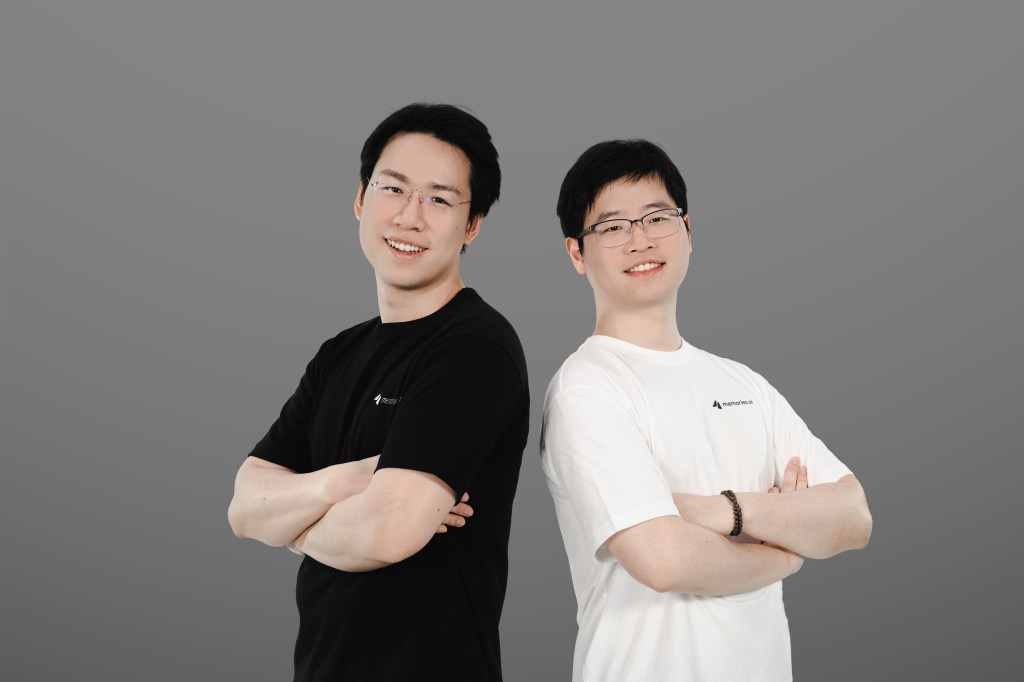
Founded by Shawn Shen and Ben Zhou, both former engineers at Meta, Memories AI emerged from their work on the AI system behind Meta’s Ray-Ban smart glasses. During this project, they identified a significant gap: while AI could capture vast amounts of visual data, there was no efficient mechanism for recalling and utilizing this information in real-world applications. This realization led them to establish Memories AI in 2024, aiming to bridge this gap by enabling AI systems to remember and interpret visual experiences.
The startup’s mission is to equip AI with the capability to process and recall visual data, thereby enhancing its interaction with the physical world. This is particularly vital for applications in wearables and robotics, where understanding and remembering visual inputs can significantly improve functionality and user experience.
A pivotal development for Memories AI was its collaboration with Nvidia, announced at Nvidia’s GTC conference. This partnership grants Memories AI access to Nvidia’s advanced AI tools, including Cosmos-Reason 2, a reasoning vision language model, and Nvidia Metropolis, an application designed for video search and summarization. These resources are instrumental in advancing Memories AI’s visual memory technology, enabling more sophisticated processing and recall of visual data.
The concept of memory in AI systems has traditionally been associated with text-based data. Platforms like OpenAI’s ChatGPT introduced memory features in 2024, focusing on retaining information from past text interactions. However, Shen and Zhou recognized that text-based memory is inherently structured and easier to index, whereas visual memory presents unique challenges due to its unstructured nature. Addressing these challenges is essential for AI applications that rely heavily on visual inputs, such as autonomous vehicles, robotic assistants, and augmented reality devices.
Since its inception, Memories AI has secured $16 million in funding. The initial $8 million seed round in July 2025 was led by Susa Ventures, with participation from Seedcamp, Fusion Fund, and Crane Venture Partners. An additional $8 million extension followed, underscoring investor confidence in the company’s vision and technological advancements.
The development of a visual memory layer involves two primary components: creating the infrastructure to embed and index video data into a retrievable format, and gathering the extensive data necessary to train models capable of effective visual recall. Memories AI is dedicated to building this infrastructure, ensuring that AI systems can not only capture but also meaningfully interpret and remember visual experiences.
The implications of this technology are vast. In the realm of wearables, devices equipped with visual memory can offer users enhanced experiences, such as recalling past interactions or providing context-aware assistance. For robotics, visual memory enables machines to navigate and interact with their environments more effectively, learning from past experiences to improve performance and adaptability.
Memories AI’s innovative approach positions it as a leader in the field of visual memory for AI. By focusing on the unstructured nature of visual data and developing solutions to process and recall this information, the company is paving the way for more intelligent and responsive AI systems in both consumer and industrial applications.
As AI continues to integrate into various aspects of daily life, the ability to remember and interpret visual data will be a defining factor in the success and utility of these technologies. Memories AI’s work represents a significant step toward achieving this goal, promising a future where AI systems can interact with the world in a more human-like and intuitive manner.