iPhone’s Emergency SOS via Satellite: A Lifesaver in Tahoe Avalanche
In a harrowing incident near Lake Tahoe, six skiers owe their survival to the iPhone’s Emergency SOS via satellite feature. While on a multi-day backcountry expedition in the Sierra Nevada mountains, the group was caught in a devastating avalanche. Tragically, eight individuals lost their lives, and one remains missing and is presumed dead. Amidst the chaos, the survivors utilized their iPhones to maintain communication with rescue teams for several hours, despite the absence of cellular or Wi-Fi coverage.
The New York Times reported that the skiers employed the Emergency SOS via satellite to stay connected with the Nevada County Sheriff’s Office. This functionality enabled them to send and receive messages, facilitating real-time updates and coordination during the rescue operation.
Don O’Keefe, Chief of Law Enforcement for the California Office of Emergency Services, emphasized the significance of this communication:
> “One of my personnel was communicating with one of the guides over a four-hour period, giving information back to the Nevada sheriff’s office and coordinating what rescues could be permitted.”
This statement underscores the critical role that continuous, live updates played in shaping the rescue efforts amidst perilous and unstable conditions.
Understanding Emergency SOS via Satellite
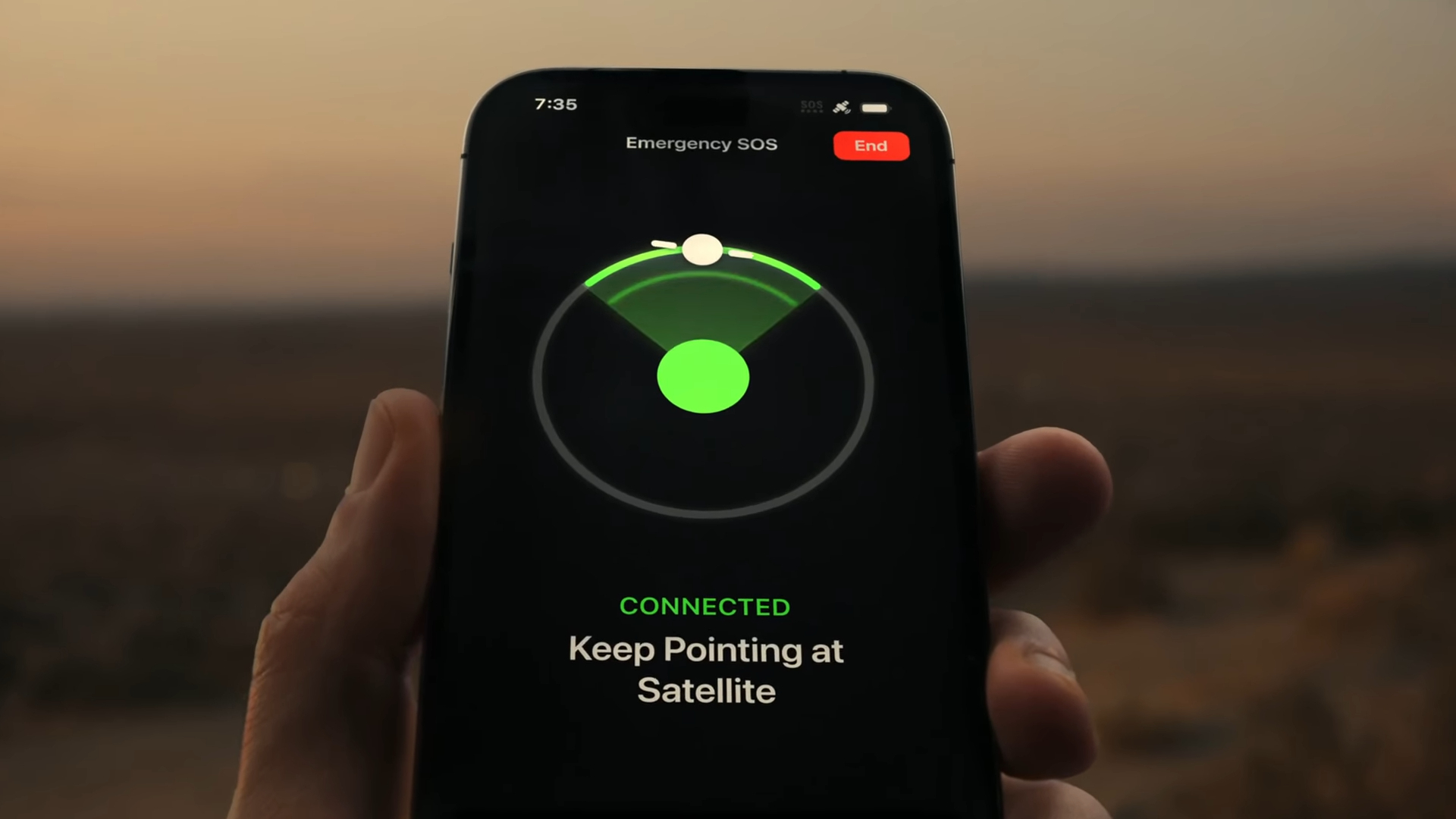
Introduced with the iPhone 14 series and available on subsequent models, as well as the Apple Watch Ultra 3, the Emergency SOS via satellite feature is designed for situations where traditional network services are unavailable. When a user attempts to contact emergency services without cellular or Wi-Fi connectivity, the device prompts them to establish a satellite connection. The process involves answering a brief series of questions to provide essential details about the emergency, followed by on-screen guidance to align the device with an overhead satellite.
Apple offers this feature free of charge for two years following the activation of a compatible device. Beyond emergency messaging, satellite connectivity allows users to send iMessages, SMS texts, and share their location through the Find My app when off the grid.
Real-World Applications and Expansions
The Lake Tahoe avalanche is not the first instance where Emergency SOS via satellite has proven invaluable. The feature has been instrumental in various emergencies, including car accidents and wildfires, where traditional communication methods failed.
Recognizing its potential, Apple has been expanding this service to more regions. In December 2025, the company activated Messages via satellite for users in Japan, enabling them to stay connected even without network coverage. This expansion allows users to send and receive iMessages, SMS texts, emojis, and Tapbacks directly from the lock screen or within the Messages app. Notably, messages sent through satellites are protected with end-to-end encryption, ensuring user privacy.
Furthermore, in November 2025, Apple extended the Emergency SOS via satellite service to Mexico, allowing iPhone 14, iPhone 15, and Apple Watch Ultra 3 users to contact emergency services and notify loved ones when mobile or Wi-Fi networks are unavailable. This expansion underscores Apple’s commitment to enhancing user safety globally.
Enhancements and Future Prospects
Apple continues to refine and expand its satellite communication capabilities. With the release of iOS 18.5, the company extended satellite connectivity to the iPhone 13 lineup, allowing users to access carrier-supported satellite services for the first time. This update enables support for satellite services provided through mobile carriers, such as Emergency SOS and SMS messaging via satellite in areas with no cellular signal.
Additionally, Apple introduced Roadside Assistance via Satellite in collaboration with AAA for the iPhone 14 and 15 series. This feature provides swift assistance for issues like flat tires and fuel shortages directly from the device. The service is free for two years with the activation of the iPhone 14 and 15 series, then available on a pay-per-use basis.
Conclusion
The survival of the six skiers in the Lake Tahoe avalanche serves as a poignant testament to the life-saving potential of the iPhone’s Emergency SOS via satellite feature. As Apple continues to expand and enhance this technology, it reinforces the importance of reliable communication tools in emergencies, especially in remote or disaster-stricken areas. Users are encouraged to familiarize themselves with this feature, as it could prove crucial in unforeseen situations.