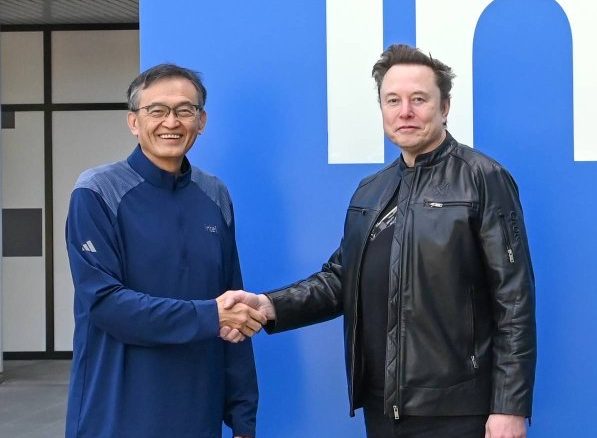
Intel Joins Forces with Elon Musk’s Terafab Initiative to Revolutionize Semiconductor Manufacturing
In a groundbreaking development, Intel has announced its collaboration with Elon Musk’s ambitious Terafab project, a joint venture between SpaceX and Tesla aimed at establishing a state-of-the-art semiconductor manufacturing facility in Texas. This partnership signifies a strategic alignment of technological prowess and visionary leadership to address the escalating global demand for advanced computing power.
The Genesis of Terafab
Elon Musk unveiled the Terafab initiative in March 2026, articulating a bold vision to produce chips tailored for artificial intelligence (AI) computations, satellite operations, and the burgeoning fields of autonomous vehicles and robotics. The project’s objective is to manufacture semiconductors capable of delivering up to one terawatt of computing power annually, thereby fueling future innovations in AI and related technologies.
Intel’s Strategic Involvement
Intel’s decision to join the Terafab project marks a significant milestone in the company’s strategic evolution. In a corporate statement on X (formerly Twitter), Intel emphasized its commitment to the initiative: Our ability to design, fabricate, and package ultra-high-performance chips at scale will help accelerate Terafab’s aim to produce 1 TW/year of compute to power future advances in AI and robotics. This collaboration is poised to leverage Intel’s extensive experience in semiconductor fabrication to realize Terafab’s ambitious goals.
Challenges in Semiconductor Manufacturing
The establishment of a semiconductor fabrication plant, commonly known as a fab, is an endeavor fraught with complexity and substantial financial investment. Such facilities require years of meticulous planning and construction, with costs often exceeding $20 billion. The process involves creating expansive clean rooms housing thousands of precision instruments designed to etch intricate circuits onto silicon wafers. Given the absence of prior experience in semiconductor manufacturing within SpaceX and Tesla, Intel’s involvement provides the necessary expertise and infrastructure to navigate these challenges effectively.
Intel’s Foundry Business and Market Dynamics
Intel’s participation in Terafab aligns with its broader strategy to revitalize its foundry business. Historically, Intel has been a dominant force in U.S. semiconductor production. However, in recent years, competitors like Nvidia and AMD have gained market share by adopting a fabless model, outsourcing chip manufacturing to specialized foundries. By collaborating with Terafab, Intel not only secures substantial anchor customers in SpaceX and Tesla but also reinforces its position in the semiconductor industry.
Financial Implications and Market Response
The announcement of Intel’s involvement in the Terafab project has been met with positive reactions from the financial markets. Intel’s stock experienced an uptick of over 3%, trading at $52.28, approximately 2.9% higher than its opening price on the day of the announcement. This market response reflects investor confidence in Intel’s strategic direction and the potential of the Terafab collaboration to yield significant advancements in semiconductor technology.
Broader Industry Context
The semiconductor industry is at a pivotal juncture, with increasing demand for chips driven by advancements in AI, machine learning, and the Internet of Things (IoT). The COVID-19 pandemic exposed vulnerabilities in global supply chains, leading to widespread chip shortages and underscoring the need for domestic manufacturing capabilities. Initiatives like Terafab are critical in addressing these challenges by enhancing the resilience and capacity of the U.S. semiconductor industry.
Intel’s Recent Strategic Moves
Intel’s engagement with Terafab is part of a series of strategic initiatives aimed at bolstering its position in the semiconductor market. In recent years, Intel has received substantial federal grants to support domestic chip production, reflecting the U.S. government’s commitment to strengthening the nation’s technological infrastructure. Additionally, Intel has explored partnerships with other industry leaders, such as the reported joint venture with Taiwan Semiconductor Manufacturing Company (TSMC), to enhance its manufacturing capabilities and competitiveness.
Elon Musk’s Expanding Technological Ventures
Elon Musk’s involvement in semiconductor manufacturing through the Terafab project is a natural extension of his broader technological ambitions. Musk’s companies, including SpaceX, Tesla, and Neuralink, are at the forefront of innovation in space exploration, electric vehicles, and neural interfaces. The integration of advanced semiconductor capabilities is essential for the continued development and success of these ventures, particularly in areas requiring high-performance computing and AI integration.
Implications for AI and Robotics
The successful realization of the Terafab project holds profound implications for the fields of AI and robotics. High-performance semiconductors are the backbone of AI computations, enabling complex algorithms and machine learning models to process vast amounts of data efficiently. By producing chips capable of delivering one terawatt of computing power annually, Terafab aims to provide the necessary hardware to support breakthroughs in AI research and the deployment of intelligent systems across various industries.
Conclusion
The collaboration between Intel and Elon Musk’s Terafab project represents a significant convergence of expertise and vision in the semiconductor industry. By combining Intel’s manufacturing capabilities with the innovative drive of SpaceX and Tesla, this partnership is poised to address critical challenges in chip production and propel advancements in AI, robotics, and beyond. As the project progresses, it will be closely watched for its potential to reshape the technological landscape and reinforce the United States’ position as a leader in semiconductor manufacturing.