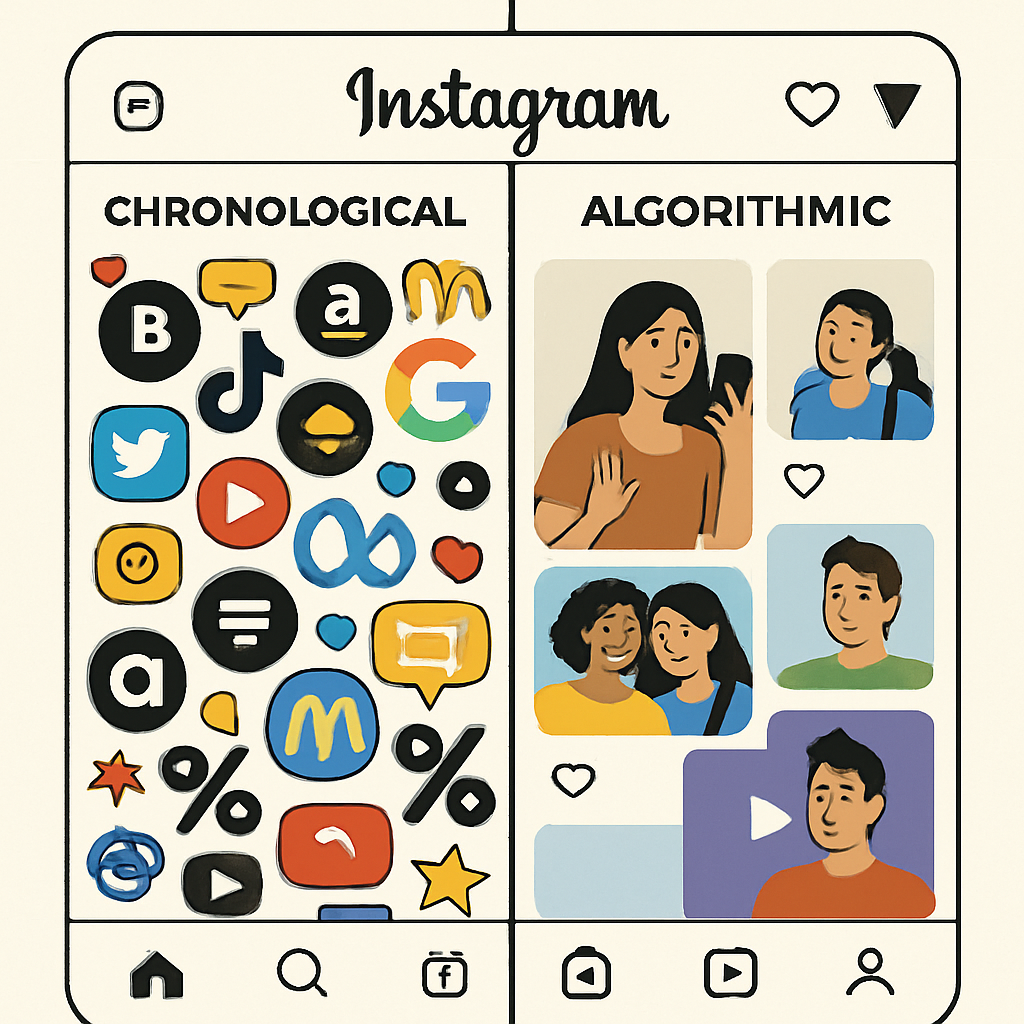
Instagram’s head of product shared a blunt assessment of chronological feeds this week, calling them “much worse” than the algorithmic timelines most users see now. Adam Mosseri’s comments came amid new proposals in Australia that would force social media platforms to allow users to opt out of algorithmic feeds. While creators and publishers often push for chronological order, Mosseri believes the trade-offs are too steep.
Why Instagram Thinks Chronology Falls Short
In Mosseri’s view, a feed based strictly on timing leads to an overload of content from brands, publishers, and influencers. He argues that this swamps out the posts from creators, close friends, or personal connections. Based on past experiments, Instagram noticed that when it reactivated chronology, people saw fewer posts overall and spent much less time on the platform. Mosseri estimates that engagement dropped by as much as 50% in some cases when switching from algorithmic to chronological order.
Currently, everywhere users can choose between feed styles—such as Australia, the Netherlands, and other markets—Instagram defaults to algorithmic ranking when the app is opened. The option to switch to a chronological feed exists, but the platform claims it’s not optimal for most users based on its measurements of reach, interaction, and total time spent.
Policy Push Meets Product Philosophy
The timing of Mosseri’s remarks aligns with Australia’s proposed law to give users the official right to bypass algorithmic suggestions in favor of purely chronological sorting. The company has already complied with similar regulations in the Netherlands, where users can select a chronological view—though again, the algorithmic version remains the default.
For Instagram, this isn’t just about meeting regulatory demands—it reflects its belief that recommendation engines offer the better experience. When content is sorted with human relationships in mind instead of date, Instagram claims it boosts meaningful engagement. The platform’s data suggests that forcing strict chronology isn’t just about showing older posts—it also reduces the total volume of engaging content people see, leading to a less active and less satisfying user experience.
Creators and brands—who often publish more frequently—tend to benefit relatively from chronological visibility. But Mosseri’s argument is that gains for them come at the expense of relationships and interactions users value more. He emphasizes that the algorithm is better at elevating posts from friends and creators over noise from high-volume accounts.
Many users may still prefer the simplicity and transparency of non-algorithmic feeds. However, Mosseri’s stance is clear: past data shows that, overall, users spend less time and engage less when they’re dropped into a chronological stream without curation.
Instagram’s assertion underscores a wider conflict in social media design: the tension between user control, content fairness, and platform engagement. As regulatory pressure mounts globally—Australia being the most recent—platforms must carefully navigate these trade-offs.
Analyst’s Take: Instagram’s blunt dismissal of chronological feeds signals its commitment to algorithmic ranking as central to user experience. For those advocating simplicity or chronological choice, the debate isn’t only ideological—it’s grounded in metrics. Keep an eye on how forthcoming rules, especially in Australia, might force Instagram to balance defaults, options, and transparency. Users and creators should watch for how control over feeds may evolve, not just as a perk, but as legally mandated design.