Article Title:
“Bridging the Digital Divide: The Drive for Affordable $40 Smartphones Gains Traction Amid Cost Challenges”
Article Text:
In an ambitious effort to bridge the digital divide, a coalition comprising telecom operators, device manufacturers, and industry groups is striving to introduce smartphones priced at approximately $40. This price point is considered pivotal in connecting tens of millions of individuals who remain offline due to the prohibitive costs of internet-enabled devices.
During the recent Mobile World Congress in Barcelona, the Global System for Mobile Communications Association (GSMA) announced collaborations with leading African mobile operators—including Airtel, Axian Telecom, Ethio Telecom, MTN Group, Orange, and Vodafone—and smartphone manufacturers. The initiative aims to pilot ultra-low-cost 4G devices in six African nations: the Democratic Republic of the Congo, Ethiopia, Nigeria, Rwanda, Tanzania, and Uganda. The goal is to make smartphones more accessible and bring an additional 20 million people online.
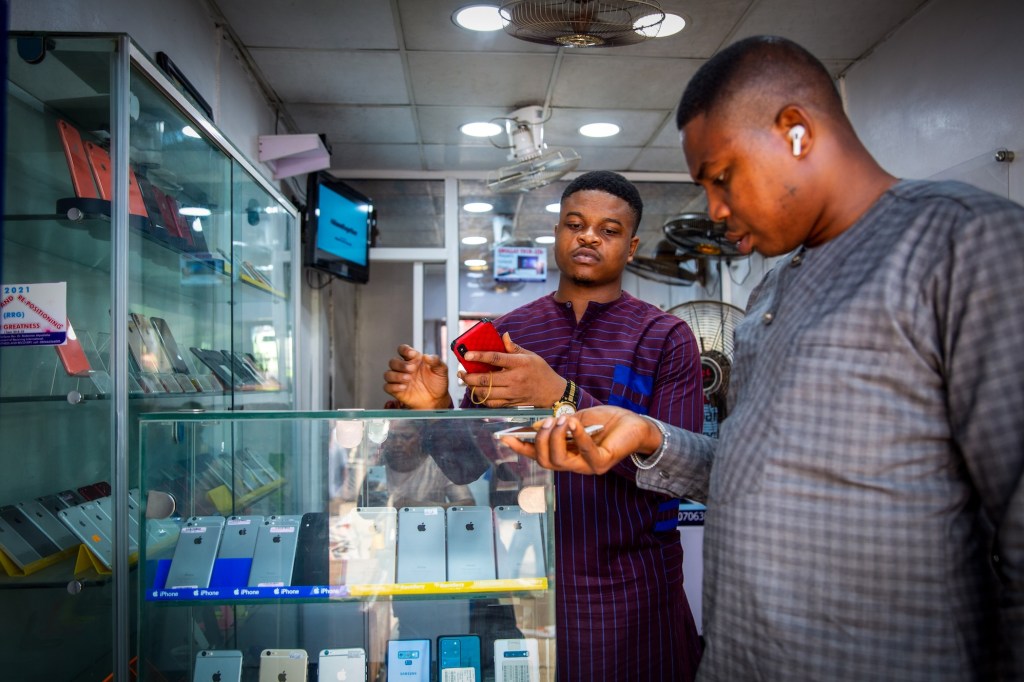
Affordable smartphones are widely recognized as essential tools for narrowing the digital divide in developing regions. Despite the availability of mobile broadband coverage, millions remain offline, often because internet-enabled devices are too expensive. Through its Handset Affordability Coalition, the GSMA is collaborating with operators and manufacturers to promote devices priced around $40 to help close this gap.
The initiative is still in its early stages, with ongoing commercial negotiations between mobile operators and smartphone manufacturers to develop devices that meet the targeted price range. The GSMA has engaged with over 15 smartphone manufacturers, with seven expressing interest in supporting the initiative, according to Alix Jagueneau, the group’s head of external affairs.
“The $30–$40 price point is an ambition, based on GSMA intelligence research on affordability and is to be understood as a best effort intent,” Jagueneau stated, highlighting that rising memory costs are adding urgency and complexity to the effort.
The final price of these devices will depend on various factors, including financing schemes and tax policies. Development banks, donors, and other financial institutions could help mitigate risks for mobile operators investing in these devices. Additionally, import duties and taxes on smartphones—sometimes classified as luxury items—can add up to 30% to handset prices in certain markets, Jagueneau noted.
The GSMA has not yet confirmed which manufacturers will produce the devices, as commercial discussions are still ongoing. However, the group hopes that initial proof-of-concept devices could be produced this year, with early consumer offerings potentially reaching markets by late 2026.
None of the six countries identified for the pilot program have committed to reducing import duties or taxes on entry-level smartphones. The GSMA is working with operators to establish an ongoing dialogue with governments in the coming months.
“We believe there is an urgency for the public sector to address this part of the equation for digital inclusion purposes,” Jagueneau emphasized. She welcomed South Africa’s removal last year of a 9% luxury excise duty on smartphones priced below R2,500 (approximately $150), suggesting that more countries should take similar steps.
Thin Margins and Rising Component Costs
Analysts caution that the industry may struggle to produce smartphones near the $40 price point under current component cost conditions.
“Pushing smartphones priced in the $30–$40 range could have been historically feasible when memory costs were significantly lower,” said Ahmad Shehab, research analyst at Counterpoint Research.
Devices at that price would likely come with extremely basic specifications and thin profit margins. Securing low-capacity memory components can also be challenging, as suppliers increasingly prioritize higher-capacity chips.
The average selling price of smartphones in the Middle East and Africa stood at about $188 in the fourth quarter of 2025, highlighting the gap between current market prices and the targeted $40 level.
“Although a few brands have achieved ASP levels below $40, these sales volumes remain negligible and are largely absent from major global vendors,” Shehab noted.
Previous attempts to introduce ultra-low-cost smartphones to emerging markets have faced challenges. In 2014, Google launched the Android One initiative to promote affordable smartphones in markets including India, Pakistan, Bangladesh, and Indonesia before expanding the program to Africa in 2015. However, it struggled to achieve widespread adoption.
Google continued the program in some markets for several years, including Japan, but it never became a dominant platform for entry-level smartphones.
Jagueneau emphasized that the effort would require coordinated action across operators, manufacturers, and governments, but added that improving access to affordable smartphones remains critical to bringing more people online.