H&M Partners with Rubi to Transform CO₂ into Sustainable Textiles
The fashion industry faces significant environmental challenges, with approximately one garbage truck’s worth of textiles discarded every second and generating more carbon emissions than international flights and maritime shipping combined. In response, companies are exploring innovative solutions to mitigate their environmental impact.
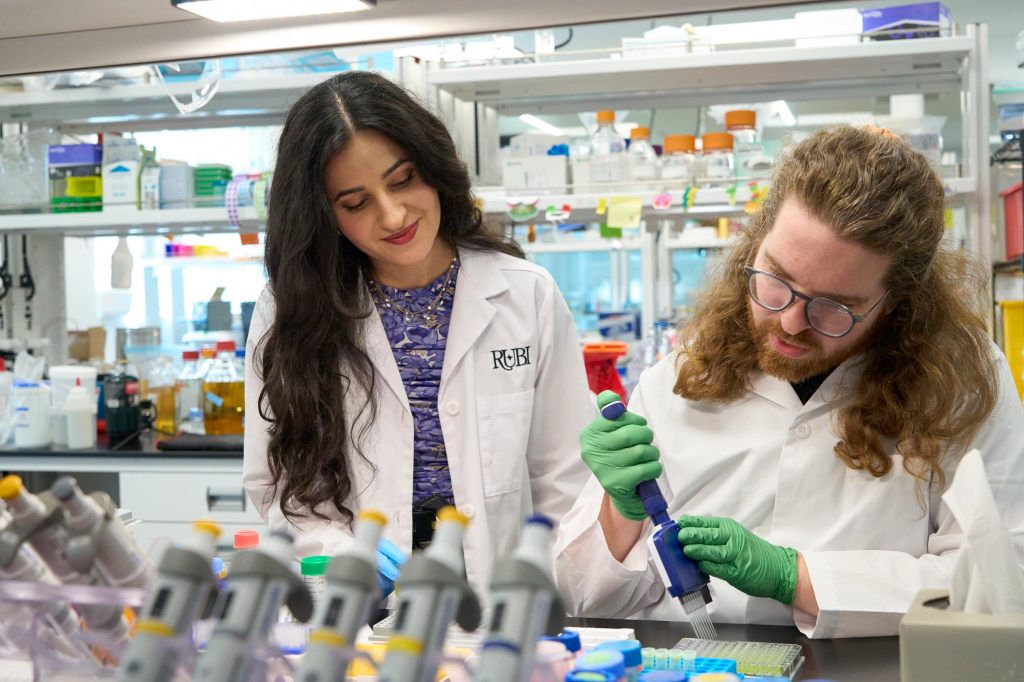
One such initiative involves H&M’s collaboration with Rubi, a pioneering startup that converts carbon dioxide (CO₂) into cellulose, a fundamental component for producing textiles like lyocell and viscose. Rubi’s technology utilizes enzymes to transform CO₂ into cellulose, offering a sustainable alternative to traditional methods that rely on harvesting trees from plantations and virgin rainforests.
Neeka Mashouf, co-founder and CEO of Rubi, explained that their approach involves taking the machinery of biology outside of the cell to create cellulose from captured CO₂. This method not only reduces reliance on deforestation but also addresses the pressing issue of carbon emissions.
To advance this technology, Rubi recently secured $7.5 million in funding to develop a demonstration-scale production system capable of producing tens of tons of cellulose using CO₂ as the primary input. The funding round was led by AP Ventures and FH One Investments, with participation from CMPC Ventures, H&M Group, Talis Capital, and Understorey Ventures.
Rubi has already garnered over $60 million in non-binding off-take agreements with partners, including H&M, Patagonia, and Walmart. These collaborations signify a growing commitment within the fashion industry to adopt sustainable practices and materials.
The use of enzymes in Rubi’s process is noteworthy. Unlike other methods that may employ engineered bacteria or chemical catalysts, Rubi’s enzyme-based approach leverages existing industrial capacities, such as those used in producing high-fructose corn syrup and wastewater treatment. This strategy not only enhances efficiency but also reduces costs, making sustainable textile production more accessible.
By integrating Rubi’s technology, H&M aims to revolutionize its supply chain, reducing its carbon footprint and promoting environmental stewardship. This partnership exemplifies a broader industry trend towards sustainability, demonstrating that innovative technologies can drive significant environmental benefits while meeting consumer demand for eco-friendly products.