Pixel Weather’s Forecast Accuracy Falls Short During Major Ice Storm
A significant ice and snow storm has recently impacted vast regions of the United States, prompting residents to rely heavily on weather forecasts for safety and planning. In this context, the accuracy of various weather applications has come under scrutiny, with Google’s Pixel Weather app notably underperforming in comparison to its counterparts.
In Winston-Salem, North Carolina, the storm’s trajectory and intensity were of particular concern. To prepare adequately, multiple weather applications were consulted, including AccuWeather, Weather Underground (Wunderground), Hyperlocal Dark Sky Tech & Radar, Foreca, The Weather Channel, and Google’s Pixel Weather. Among these, AccuWeather emerged as the most reliable, accurately predicting that the storm would bring more ice than snow and correctly forecasting its onset on Saturday evening. This consistency aligns with AccuWeather’s track record of providing dependable long-range forecasts.
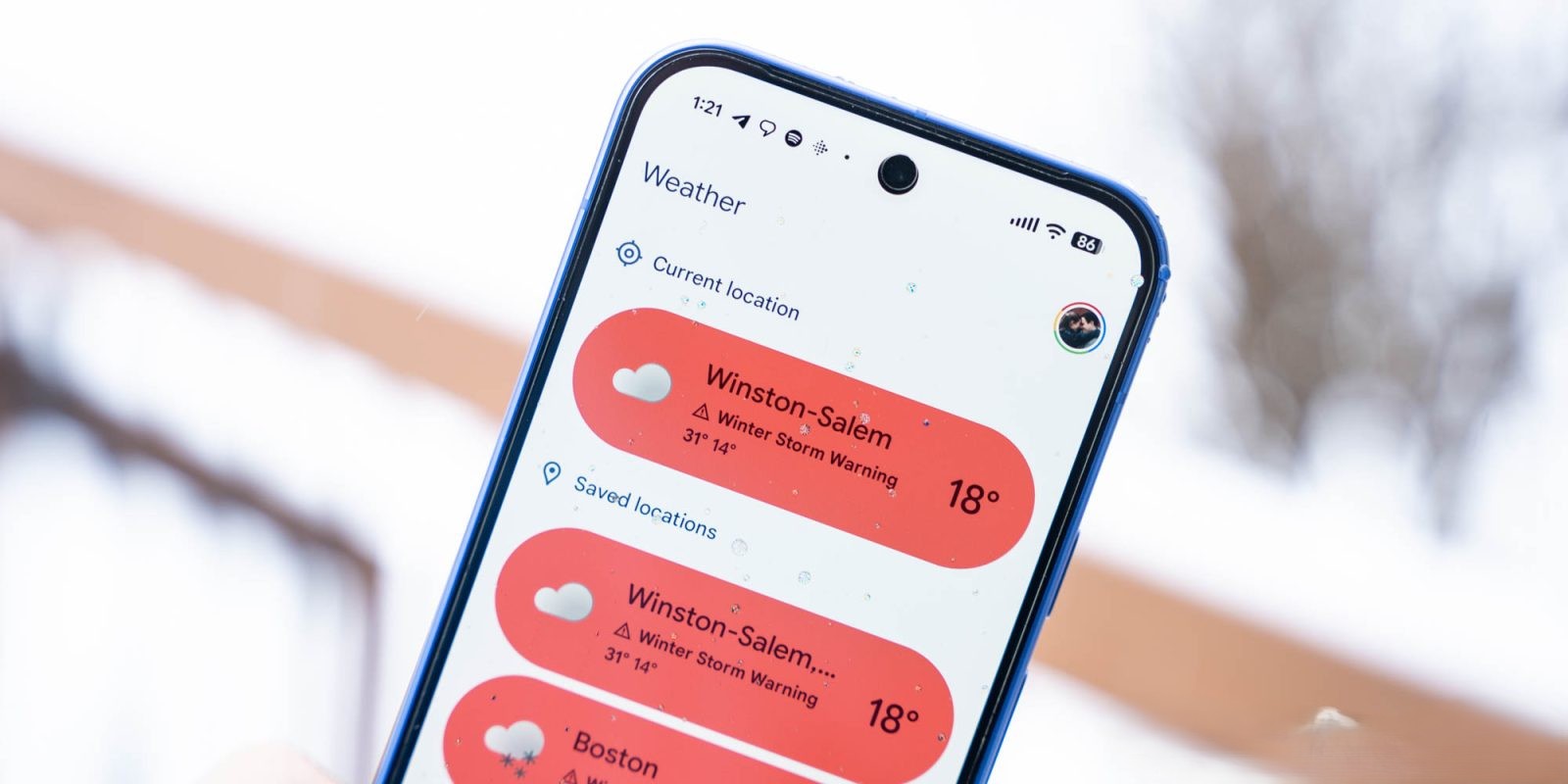
Conversely, Pixel Weather’s predictions were less precise. The app consistently forecasted substantial snowfall for the area, with estimates fluctuating between 10 to 30 inches. Additionally, the predicted start times for the precipitation varied widely, ranging from mid-morning to late at night. This inconsistency stood in contrast to other applications, which more accurately anticipated the storm’s timing and nature.
The disparity in forecasts underscores the importance of consulting multiple sources when preparing for significant weather events. While no single application can guarantee absolute accuracy, patterns observed across various platforms can offer a more comprehensive understanding of impending conditions.
The performance of Pixel Weather during this storm highlights the challenges inherent in weather prediction, even with advanced technology and data models. Users are encouraged to cross-reference multiple forecasts and remain vigilant, especially when planning around severe weather events.