Google’s Circle to Search Enhances Scam Detection with AI Integration
In an era where digital scams are becoming increasingly sophisticated, Google has introduced a significant update to its Circle to Search feature, aiming to bolster user security. This enhancement leverages artificial intelligence to identify and analyze potentially fraudulent messages and web content, providing users with detailed insights and recommended actions.
Understanding Circle to Search’s New Capability
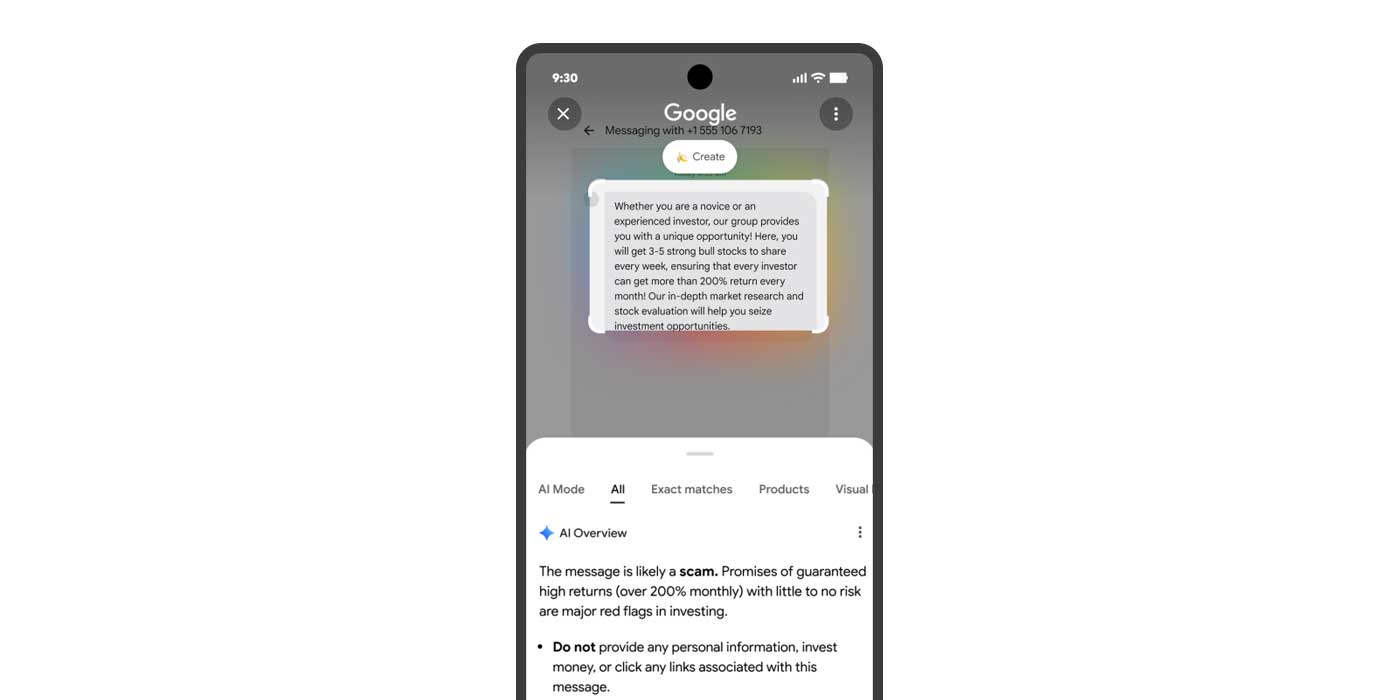
Circle to Search, initially designed to facilitate intuitive searches by allowing users to circle or tap on-screen elements, has now been augmented with AI-driven scam detection. When users encounter a suspicious message or piece of content, they can activate Circle to Search and highlight the questionable text. The system then processes this selection and presents an AI Overview, elucidating why the content may be deceptive and suggesting appropriate next steps.
The Mechanics Behind AI-Powered Scam Detection
The integration of AI into Circle to Search enables the feature to recognize common patterns and indicators associated with scams. By analyzing linguistic cues, contextual information, and known scam tactics, the AI can discern subtle signs of fraudulent intent that might escape the average user’s notice. This proactive approach empowers users to make informed decisions and avoid potential pitfalls.
Complementary Features and Accessibility
Beyond Circle to Search, Google has extended this scam detection functionality to its Lens application. Users can capture a screenshot of the suspicious content and upload it to Lens, which will then analyze the image and provide an AI-generated assessment. This dual-platform availability ensures that users have multiple avenues to verify content authenticity.
Integration with Android 16 QPR2 Update
This advancement is part of Google’s broader Android 16 Quarterly Platform Release 2 (QPR2) update, which introduces several safety-centric features. Notably, the update includes:
– Enhanced Group Chat Management: Users can now opt out of unwanted group chats more efficiently, reducing exposure to potential spam or scam messages.
– Urgent Call Marking: The Phone app now allows users to mark outgoing calls as urgent, ensuring critical communications are prioritized.
Global Rollout and Quality Assurance
Google has announced that the updated Circle to Search feature will be rolled out globally. However, the deployment will be phased, with availability contingent upon the system’s confidence in the quality of responses. This measured approach underscores Google’s commitment to delivering reliable and accurate tools to its user base.
The Broader Implications of AI in Digital Security
The incorporation of AI into everyday tools like Circle to Search signifies a pivotal shift in digital security strategies. By embedding intelligent analysis directly into user interfaces, technology companies can offer real-time protection against evolving threats. This proactive defense mechanism not only enhances user trust but also sets a new standard for integrating security features seamlessly into daily digital interactions.
User Empowerment Through Informed Decision-Making
With scams becoming more intricate and harder to detect, providing users with accessible tools to assess content credibility is crucial. Google’s initiative with Circle to Search exemplifies a move towards empowering individuals with the knowledge and resources needed to navigate the digital landscape safely. By demystifying the tactics used by scammers and offering clear guidance, users are better equipped to protect themselves from potential harm.
Conclusion
Google’s enhancement of Circle to Search with AI-driven scam detection represents a significant advancement in user security. By combining intuitive search capabilities with intelligent analysis, this feature offers a robust defense against digital scams. As this update becomes widely available, it is poised to become an indispensable tool for users seeking to safeguard their digital interactions.