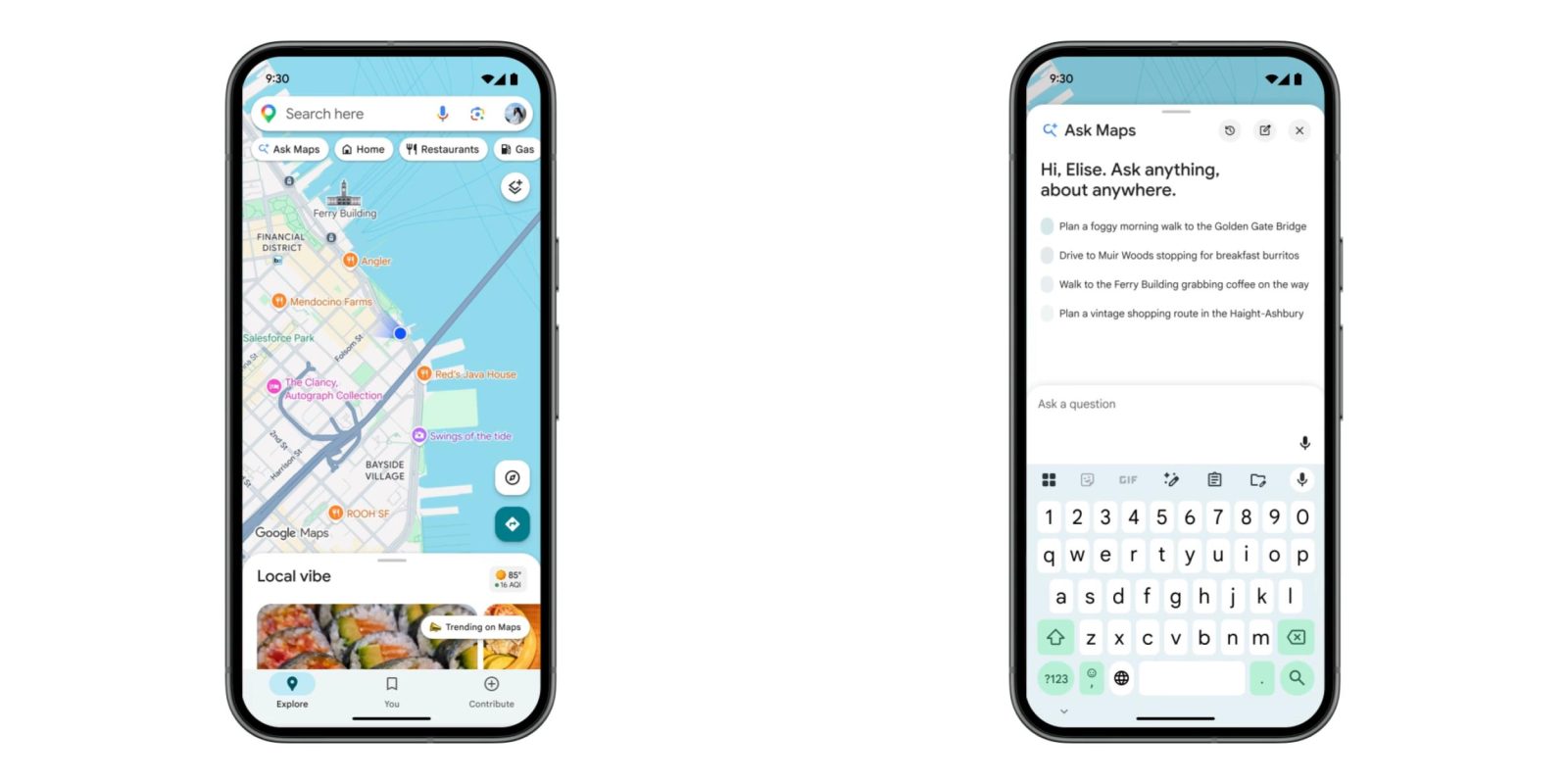
Google Maps has unveiled Ask Maps, a groundbreaking feature that leverages advanced AI to transform how users interact with the app. This innovation allows for natural, conversational queries, providing personalized and context-aware responses.
Understanding ‘Ask Maps’
Ask Maps is an AI-driven conversational interface integrated into Google Maps, enabling users to pose complex, real-world questions in natural language. Powered by Google’s Gemini models, this feature interprets nuanced queries and delivers tailored recommendations. For instance, instead of a generic search like restaurants near me, users can ask, Find me a quiet café with parking. The AI processes these detailed requests, offering precise suggestions that align with individual preferences.
Key Features and Functionalities
The Ask Maps feature introduces several enhancements to the Google Maps experience:
– Conversational Interaction: Users can engage with Maps using natural language, making the search process more intuitive.
– Contextual Understanding: The AI considers various factors such as time, location, and user preferences to provide relevant suggestions.
– Personalized Recommendations: By analyzing past searches and saved locations, Ask Maps offers tailored results that resonate with individual tastes.
– Comprehensive Data Integration: Drawing from a vast database of over 300 million places and 500 million reviews, the feature ensures accurate and up-to-date information.
Practical Applications
Ask Maps caters to a wide range of user needs, including:
– Event Planning: Users can request suggestions for venues that match specific criteria, such as ambiance, proximity, and availability.
– Solo Outings: The feature can identify suitable spots for individual activities, considering factors like crowd levels and atmosphere.
– Photography Locations: Photographers can find optimal spots based on current lighting conditions and scenic views.
– Scenic Routes: Travelers can plan routes that highlight picturesque locations, timed to coincide with events like sunsets.
– Trip Itineraries: Ask Maps can craft detailed plans for multi-day trips, focusing on specific interests such as history, culture, or shopping.
– Dining Options: Users can discover restaurants that meet specific requirements, including distance, ratings, and amenities.
Access and Availability
As of March 2026, Ask Maps is widely available to users in the United States and India on Android and iOS platforms. The feature is accessible directly under the search bar in the Google Maps app. While currently limited to these regions and platforms, plans are underway to expand its availability to desktop users and additional countries.
Implications for Businesses
The introduction of Ask Maps signifies a shift in how businesses should approach their online presence:
– Enhanced Visibility: Businesses with detailed, accurate, and up-to-date information are more likely to be recommended by the AI.
– Importance of Reviews: Positive and comprehensive reviews can influence the AI’s recommendations, making customer feedback more crucial than ever.
– Data Management: Ensuring that business information is correctly listed and regularly updated across platforms will be vital in maintaining visibility within Ask Maps.
User Experience and Feedback
Early user experiences with Ask Maps have been varied. Some users have praised the feature for its intuitive interface and accurate recommendations, noting that it simplifies the search process and provides more relevant results. However, others have encountered challenges, such as the AI misinterpreting queries or providing less accurate suggestions. These mixed reviews highlight the ongoing need for refinement and user education to maximize the feature’s potential.
Future Prospects
The launch of Ask Maps is part of Google’s broader strategy to integrate AI into its services, enhancing user engagement and satisfaction. As the feature evolves, we can anticipate improvements in accuracy, expanded availability, and integration with other Google services. This development underscores the growing role of AI in everyday applications, paving the way for more personalized and efficient digital experiences.
Conclusion
Ask Maps represents a significant advancement in digital mapping, offering users a more interactive and personalized way to explore their surroundings. By understanding and responding to complex queries, it sets a new standard for user engagement in navigation apps. As Google continues to refine this feature, it is poised to become an indispensable tool for users seeking tailored and context-aware information.