Google Introduces Emergency Live Video Sharing for Android Users
In a significant advancement for emergency response capabilities, Google has unveiled the Emergency Live Video feature for Android devices. This innovative tool allows users to share live video feeds directly with emergency dispatchers, enhancing situational awareness and facilitating more effective assistance during crises.
How It Works
When an individual initiates an emergency call or text from their Android smartphone, dispatchers have the option to request access to the device’s camera. This request is made when visual information could be instrumental in assessing the situation and providing appropriate guidance. For instance, in scenarios like medical emergencies, dispatchers can offer real-time instructions for procedures such as CPR, potentially saving lives.
User Consent and Privacy
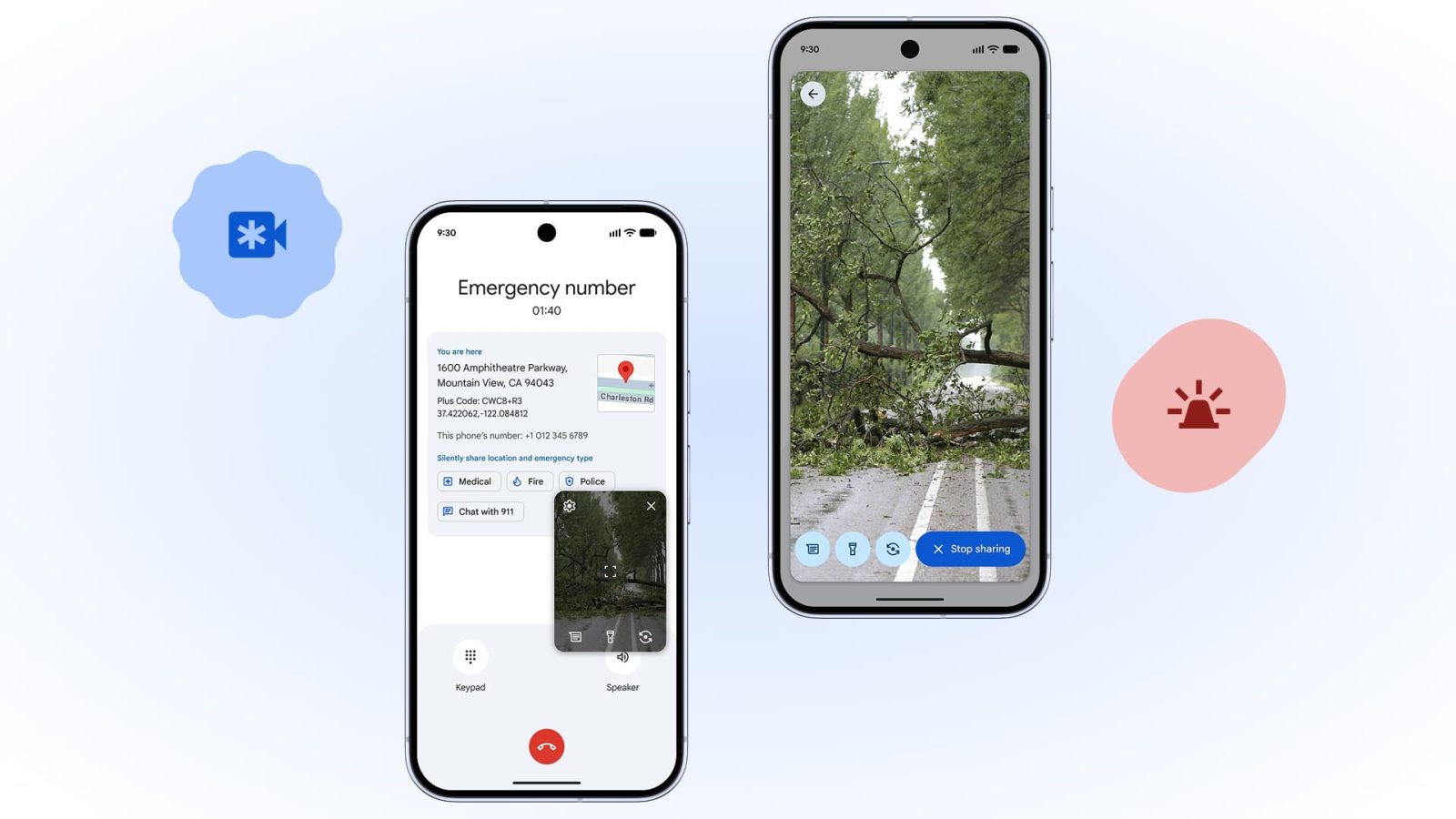
Upon receiving a video sharing request, users are presented with the choice to accept or decline. If they consent, the live feed is activated, appearing as a picture-in-picture window on their screen. Users retain control throughout the session, with the ability to stop sharing at any moment. Additional functionalities include toggling the flashlight and switching between front and rear cameras. Importantly, all video transmissions are encrypted by default, ensuring user privacy and data security.
Availability and Expansion Plans
The Emergency Live Video feature is initially rolling out to Android devices running version 8 or higher with Google Play services in the United States, as well as select regions in Germany and Mexico. Google is actively collaborating with public safety organizations worldwide to broaden the availability of this feature, aiming to equip more regions with this vital tool.
Enhancing Emergency Response
The introduction of live video sharing addresses a critical challenge in emergency situations: the difficulty of accurately conveying the nature and severity of an incident under stress. By providing dispatchers with a real-time visual context, they can make informed decisions more swiftly, allocate resources more effectively, and offer precise guidance to those in need.
User Experience and Interface
The user interface for this feature is designed with simplicity and ease of use in mind. When a video sharing request is received, a clear prompt appears, allowing users to either Share or select No thanks. If sharing is initiated, the live feed appears in a small, movable window, ensuring that users can continue to interact with their device as needed. The option to stop sharing is always accessible, empowering users to maintain control over their privacy.
Technical Considerations
To utilize this feature, users must have an active internet connection, as the live video feed requires data transmission. The feature is optimized to function efficiently even on networks with limited bandwidth, ensuring that video quality remains sufficient for dispatchers to assess the situation without significant delays or interruptions.
Future Developments
Google’s commitment to enhancing emergency response tools is evident in its ongoing efforts to expand and refine this feature. Future updates may include integration with wearable devices, allowing for even more immediate access to live video feeds. Additionally, partnerships with local emergency services are expected to grow, ensuring that the feature is tailored to meet the specific needs and protocols of different regions.
Conclusion
The launch of Emergency Live Video sharing marks a pivotal step in leveraging technology to improve public safety. By bridging the communication gap between individuals in distress and emergency responders, this feature has the potential to save lives and streamline the provision of aid during critical moments. As Google continues to develop and expand this service, it underscores the transformative impact that innovative technology can have on emergency response systems worldwide.