Google Elevates Amin Vahdat to Chief Technologist for AI Infrastructure Amidst Intensifying AI Competition
In a strategic move to bolster its position in the rapidly evolving artificial intelligence (AI) landscape, Google has appointed Amin Vahdat as the Chief Technologist for AI Infrastructure, a newly established role reporting directly to CEO Sundar Pichai. This decision underscores the company’s commitment to enhancing its AI capabilities, especially as it plans to invest up to $93 billion in capital expenditures by the end of 2025—a figure anticipated to grow significantly in the coming years.
Amin Vahdat’s Pioneering Contributions
Amin Vahdat, a distinguished computer scientist with a PhD from the University of California, Berkeley, began his career as a research intern at Xerox PARC in the early 1990s. Before joining Google in 2010 as an Engineering Fellow and Vice President, Vahdat held academic positions as an associate professor at Duke University and later as a professor and SAIC Chair at UC San Diego. With approximately 395 published papers to his name, his research has consistently focused on optimizing large-scale computing systems.
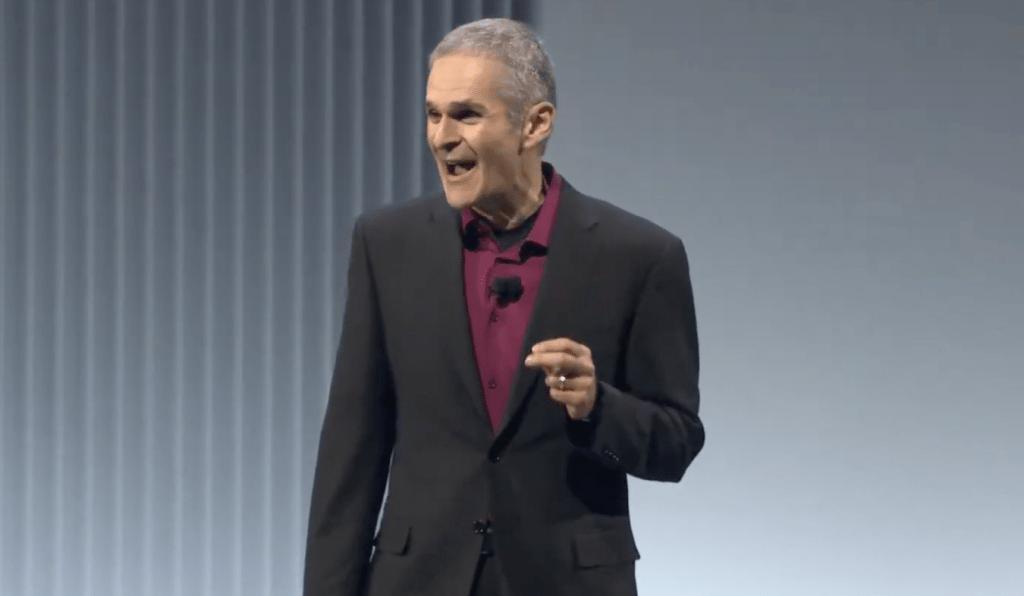
Over the past 15 years at Google, Vahdat has been instrumental in developing the company’s AI infrastructure. Notably, at the Google Cloud Next event eight months ago, he introduced the seventh-generation Tensor Processing Unit (TPU), codenamed Ironwood. This advanced TPU boasts over 9,000 chips per pod, delivering 42.5 exaflops of compute power—surpassing the capabilities of the world’s leading supercomputer at that time. Vahdat highlighted the exponential growth in AI compute demand, noting a 100-million-fold increase over eight years.
Architect of Google’s AI Backbone
Beyond hardware innovations, Vahdat has played a pivotal role in several foundational projects that form the backbone of Google’s AI operations:
– Custom TPU Chips: Vahdat has overseen the development of specialized TPU chips tailored for AI training and inference, providing Google with a competitive edge over rivals like OpenAI.
– Jupiter Network: He has been instrumental in creating the Jupiter network, an ultra-fast internal system that facilitates seamless communication between servers and the efficient transfer of vast data volumes. As of late last year, Jupiter scaled to 13 petabits per second, theoretically enabling simultaneous video calls for all 8 billion people on Earth.
– Borg Software System: Vahdat has significantly contributed to the Borg system, Google’s cluster management software that orchestrates tasks across its extensive data centers.
– Axion CPUs: He led the development of Axion, Google’s inaugural custom Arm-based general-purpose CPUs designed specifically for data centers, unveiled last year and currently in production.
Strategic Implications of Vahdat’s Promotion
Elevating Vahdat to the C-suite reflects Google’s recognition of the critical importance of AI infrastructure in maintaining its competitive stance. In an industry where top AI talent is highly sought after and commands substantial compensation, this promotion also serves as a strategic move to retain a key figure who has been central to Google’s AI strategy for over a decade.
The Broader AI Infrastructure Arms Race
Google’s substantial investment in AI infrastructure is part of a broader trend among tech giants vying for dominance in the AI sector. For instance, Meta has announced plans to invest up to $72 billion in AI infrastructure in 2025, aiming to enhance its computational capabilities. Additionally, Meta is constructing a data center, named Hyperion, expected to supply its new AI lab with five gigawatts of computational power, underscoring the escalating competition in AI infrastructure development.
Conclusion
Amin Vahdat’s promotion to Chief Technologist for AI Infrastructure signifies Google’s strategic emphasis on strengthening its AI capabilities through robust infrastructure development. His extensive experience and leadership are poised to drive innovations that will be crucial in the company’s efforts to lead in the competitive AI landscape.