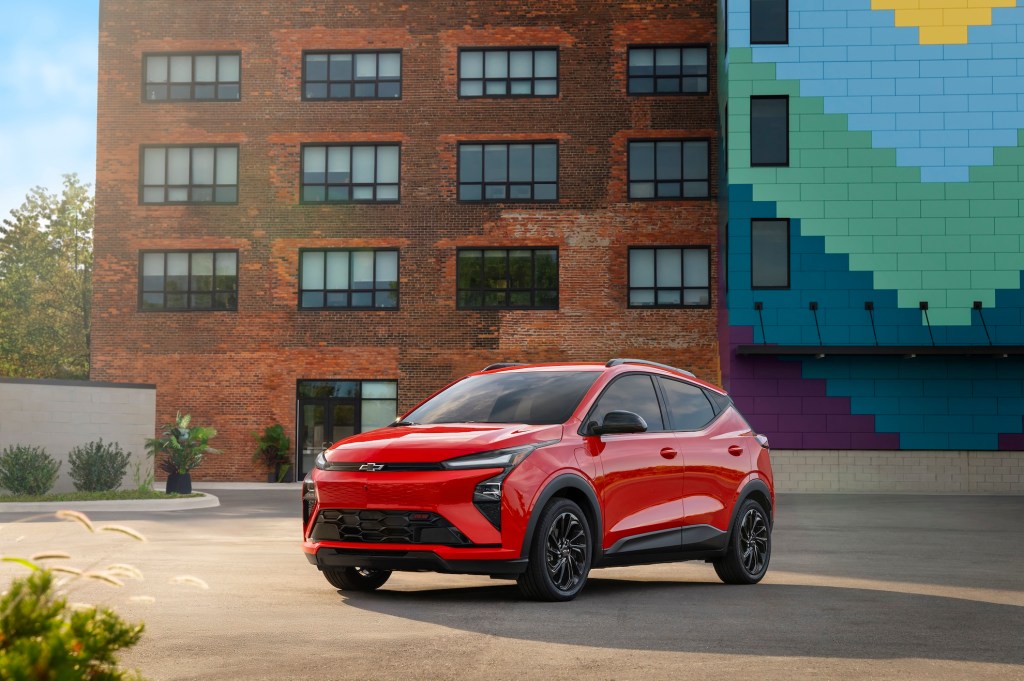
GM Reshapes Production Strategy: Chevy Bolt EV to Cease, Buick Envision Moves to U.S.
General Motors (GM) is undertaking a significant realignment of its manufacturing operations, signaling a strategic shift in response to evolving economic and political landscapes. This restructuring will see the cessation of the Chevrolet Bolt EV’s production and the relocation of the Buick Envision’s assembly from China to the United States.
End of the Road for Chevy Bolt EV
The Chevrolet Bolt EV, GM’s pioneering affordable electric vehicle, is set to conclude its production run. Introduced in 2016, the Bolt EV quickly became a symbol of GM’s commitment to electric mobility, offering consumers an accessible entry point into the EV market. However, production is slated to end in approximately 18 months, marking the end of an era for this model.
This decision aligns with GM’s broader strategy to transition its production focus. The Fairfax Assembly Plant in Kansas, currently dedicated to the Bolt EV, will undergo a transformation to accommodate new models. This move reflects GM’s response to changing market demands and its commitment to optimizing manufacturing processes.
Buick Envision’s Journey to Kansas
In a notable shift, GM plans to relocate the production of the next-generation Buick Envision from China to the Fairfax Assembly Plant in Kansas, beginning in 2028. The Buick Envision, a compact SUV, has been a significant player in GM’s lineup, particularly in the Chinese market. By moving its production to the U.S., GM aims to mitigate the financial impacts of tariffs and align with domestic manufacturing incentives.
This relocation is part of GM’s broader initiative to repatriate vehicle production, reducing reliance on international manufacturing and strengthening its U.S. operations. The move is expected to bolster the local economy and create job opportunities within the Kansas region.
Economic and Political Influences
GM’s manufacturing realignment is heavily influenced by recent economic policies and political decisions. The previous administration’s tariff policies and the discontinuation of the federal EV tax credit, which offered up to $7,500 off qualifying electric vehicles, have increased the costs associated with producing vehicles in China and Mexico for the U.S. market. These factors have prompted GM to reassess and adjust its production strategies to maintain competitiveness and profitability.
Future of GM’s Electric Vehicle Lineup
While the Bolt EV’s production is ending, GM remains committed to expanding its electric vehicle portfolio. The company continues to offer other EV models, including the electric Chevrolet Equinox and Chevrolet Blazer. Additionally, GM has announced plans to invest in the Fairfax Assembly Plant for the production of future affordable EVs, though specific timelines and models have yet to be disclosed.
This strategic shift underscores GM’s dedication to innovation and adaptability in the rapidly evolving automotive industry. By realigning its production facilities and focusing on emerging market trends, GM aims to position itself as a leader in the next generation of electric vehicles.