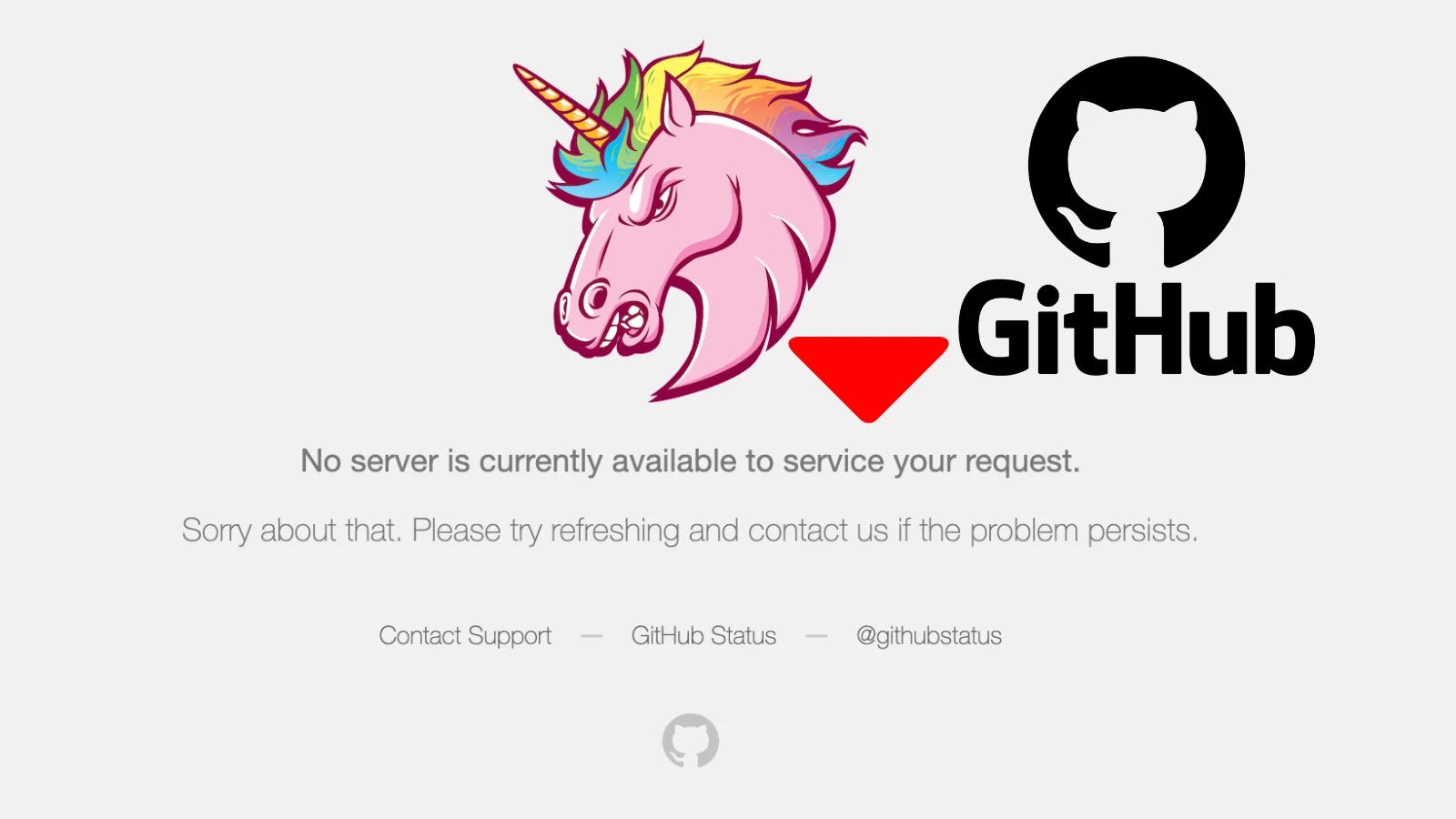
On December 11, 2025, GitHub, the world’s leading platform for software development collaboration, experienced a significant service disruption that left developers worldwide facing the frustrating No server is currently available to service your request error message. This incident disrupted access to repositories, code pushes, and user logins, causing substantial workflow interruptions for millions who rely on GitHub for their development projects.
Incident Overview
The outage began in the early hours of December 11, 2025, with reports surfacing from various regions, notably India during peak evening hours. Users encountered intermittent access issues, with the error message prominently displayed alongside GitHub’s unicorn mascot. These disruptions were not uniform across all users but were significant enough to impede critical development activities.
GitHub’s status page acknowledged the issue, stating, We are investigating a rise in request failures on several services, which encompassed core functionalities such as Git operations, Actions, and Pages. This acknowledgment indicated a widespread impact across multiple services integral to the platform’s operation.
User Impact and Community Response
Developers took to various forums and monitoring sites to share their experiences and seek solutions. The error messages persisted for durations ranging from 2 to 5 minutes per occurrence, significantly affecting continuous integration and deployment (CI/CD) pipelines and remote repository interactions. In response, some developers resorted to using local mirrors or alternative platforms like GitLab to maintain their workflows.
Cybersecurity professionals, who depend on GitHub for monitoring threat repositories, faced additional challenges in tracking vulnerabilities due to these delays. While basic troubleshooting steps such as refreshing pages, toggling VPN connections, or accessing cached clones provided temporary relief, persistent issues led many to escalate the problem through support channels.
Historical Context and Recurring Issues
This incident is not an isolated event in GitHub’s recent history. The platform has experienced several outages over the past year, each with varying causes and impacts:
– November 17, 2025: Dependabot faced a rate limit issue with the GitHub Container Registry, leading to a 57% job failure rate within the Service Level Objective (SLO). The problem was mitigated by adjusting job initiation rates and increasing the rate limit.
– November 18, 2025: All Git operations, including SSH and HTTP interactions, were disrupted due to an expired TLS certificate used for internal service communications. The issue was resolved by updating the certificate.
– October 29, 2025: A widespread outage at a third-party provider caused severe connection issues for Codespaces users, with error rates peaking at 100% across all regions during the incident. GitHub Actions and other services also experienced failures and delays.
These recurring issues highlight the challenges GitHub faces in maintaining service reliability amidst its expansive user base and complex infrastructure.
Security Concerns and Recent Attacks
In addition to service disruptions, GitHub has been targeted by significant security threats. Notably, the Shai-Hulud malware resurfaced, infiltrating over 19,000 repositories and approximately 700 npm packages. This malware exploited compromised npm maintainer accounts to distribute malicious versions of legitimate packages, harvesting credentials and embedding itself into victims’ packages. High-profile targets included packages from Zapier, PostHog, Postman, and the Ethereum Name Service ecosystem.
In response to these attacks, GitHub announced major security enhancements for the npm package ecosystem. These measures include mandatory two-factor authentication (2FA) for local publishing, adoption of FIDO-based 2FA over time-based passwords, and deprecation of legacy tokens. Additionally, GitHub plans to implement granular tokens with a seven-day expiration and restrict publishing access by default, encouraging the use of Trusted Publishing and secured workflows.
Mitigation Strategies and Recommendations
To address the December 11 outage and prevent future incidents, GitHub’s engineering teams are likely focusing on several key areas:
1. Infrastructure Resilience: Enhancing server capacity and redundancy to handle unexpected surges in traffic and prevent overloads that can lead to service disruptions.
2. Monitoring and Alerting: Improving real-time monitoring systems to detect and respond to anomalies more swiftly, reducing the time to resolution during incidents.
3. Communication Protocols: Establishing clear and timely communication channels to inform users about ongoing issues, expected resolution times, and any necessary user actions.
For developers, it’s advisable to implement the following practices to mitigate the impact of potential future outages:
– Local Repositories: Maintain up-to-date local copies of critical repositories to ensure access to codebases during online service disruptions.
– Alternative Platforms: Familiarize yourself with alternative platforms like GitLab or Bitbucket to provide flexibility in case of prolonged outages.
– Regular Backups: Schedule regular backups of repositories and related data to prevent loss during unexpected service interruptions.
– Stay Informed: Monitor GitHub’s status page and subscribe to updates to stay informed about current issues and maintenance schedules.
Conclusion
The December 11, 2025, GitHub outage serves as a stark reminder of the platform’s critical role in the global software development ecosystem and the cascading effects that service disruptions can have on developers and organizations. While GitHub continues to implement measures to enhance reliability and security, developers must also adopt proactive strategies to safeguard their workflows against potential future incidents.
By combining GitHub’s ongoing improvements with individual preparedness, the development community can better navigate the challenges posed by service disruptions and maintain productivity in an increasingly interconnected digital landscape.
Twitter Post:
GitHub experienced a significant outage on Dec 11, 2025, disrupting developers worldwide. Learn about the incident, its impact, and how to safeguard your projects. #GitHubOutage #DevOps #CyberSecurity
Focus Key Phrase:
GitHub outage December 2025
Article X Post:
Hashtags:
Article Key Phrase:
Category: Security News