Article Title: French Court Upholds Apple’s App Tracking Transparency Amidst Ongoing Privacy Debates
In a significant legal development, a Parisian court has ruled in favor of Apple, allowing the continuation of its App Tracking Transparency (ATT) feature in France. This decision comes after a coalition of French advertising groups sought to challenge the feature, arguing that it adversely affected their ability to deliver targeted advertisements and resulted in substantial revenue losses.
Background on App Tracking Transparency
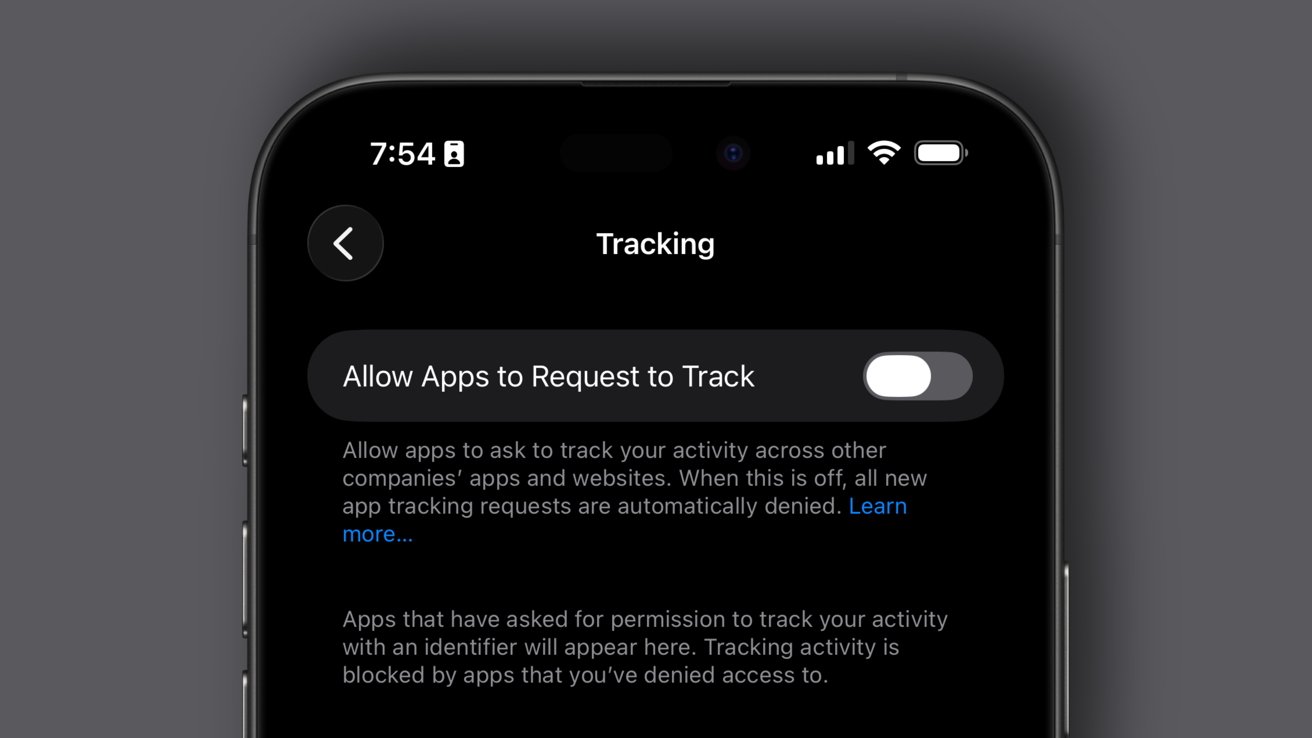
Introduced in April 2021 with the release of iOS 14.5, Apple’s ATT framework mandates that applications obtain explicit user consent before tracking their activities across other apps and websites. This initiative was designed to enhance user privacy by providing individuals with greater control over their personal data. Upon launching an app, users are presented with a prompt asking for permission to track their activity. If a user declines, the app is restricted from accessing the device’s Identifier for Advertisers (IDFA), a tool commonly used for personalized advertising.
Legal Challenges and Antitrust Concerns
The implementation of ATT has been met with resistance from various stakeholders in the advertising industry. In 2023, a consortium of French advertising organizations, including Alliance Digitale, IAB France, GESTE, MMA France, SRI, and UDECAM, initiated legal action against Apple. They contended that the ATT framework disrupted their capacity to target ads effectively, leading to a reported revenue decline of nearly 50%. The group argued that the feature imposed undue burdens on third-party developers and advertisers, while allegedly exempting Apple’s own services from similar restrictions.
In March 2025, the French Competition Authority imposed a €150 million ($162 million) fine on Apple, citing that the ATT framework constituted an abuse of the company’s dominant market position. The regulator criticized the implementation of ATT, stating that it was neither necessary nor proportionate to the company’s stated goal to protect user data and that it penalized third-party publishers. The authority highlighted that the framework’s complexity and the asymmetry in its application disadvantaged smaller publishers who rely heavily on third-party data collection to sustain their businesses.
Court’s Decision and Apple’s Response
Despite the earlier fine, the recent court ruling allows Apple to maintain the ATT feature in France. The court found that the allegations against Apple were unfounded and that the company did not engage in anti-competitive practices through the implementation of ATT. In response to the ruling, Apple expressed satisfaction, stating, We welcome the court’s decision that rejects these unfounded allegations. This feature has been widely adopted by our users and hailed by privacy advocates as well as by data protection authorities around the world, including in France. We will continue to support strong protections for the privacy of our users.
Implications for the Advertising Industry
The court’s decision underscores the ongoing tension between user privacy initiatives and the interests of the advertising industry. While ATT empowers users to control their data, it poses challenges for advertisers who rely on tracking to deliver personalized content. The ruling may set a precedent for similar cases in other jurisdictions, as regulators and industry stakeholders continue to navigate the balance between privacy rights and commercial interests.
Future Outlook
As digital privacy becomes an increasingly prominent issue, technology companies like Apple are likely to face continued scrutiny over their data practices. The outcome of this case may influence how other companies design and implement privacy features, as well as how regulators approach the enforcement of data protection laws. For now, Apple’s ATT framework remains intact in France, marking a victory for the company and privacy advocates, while leaving the advertising industry to adapt to a changing landscape.