Ford’s Innovative Approach to Delivering a $30,000 Electric Truck
Ford is set to introduce an electric truck priced at $30,000, aiming to rival Chinese manufacturers without compromising profit margins. This ambitious goal leverages a combination of 3D-printed modular components, Formula 1 engineering principles, and an internal incentive program.
This initiative is crucial for Ford, especially after a $19.5 billion loss in December and the cessation of its F-150 Lightning production. The company’s commitment to affordable electric vehicles (EVs) began years ago with a dedicated team led by Alan Clarke, a former Tesla engineer. In August, Ford announced a $2 billion investment to revamp its Louisville factory, aiming to enhance manufacturing efficiency by 15%.
Central to this strategy is the Universal EV Platform (UEV), designed to support various vehicle types, including midsize trucks, sedans, crossovers, three-row SUVs, and small commercial vans. This marks Ford’s first EV developed from scratch, moving away from adapting existing models like the Mustang Mach-E and F-150 Lightning.
The UEV emphasizes efficiency and affordability, incorporating single-piece aluminum unicastings to reduce parts and streamline assembly. Additionally, Ford plans to use lithium iron phosphate batteries, licensed from China’s CATL, to further cut costs.
To foster innovation, Ford has assembled a diverse team, including experts from Formula 1, Apple, Lucid Motors, Rivian, and Tesla. An internal bounty program assigns numerical metrics to aspects like vehicle mass and aerodynamics, encouraging engineers to make cost-effective decisions that enhance efficiency.
For instance, even the base model of the new EV truck will feature power-folding mirrors—a premium feature—because they reduce aerodynamic drag. By using a single motor for both mirror adjustment and folding, Ford achieves this without significant cost increases.
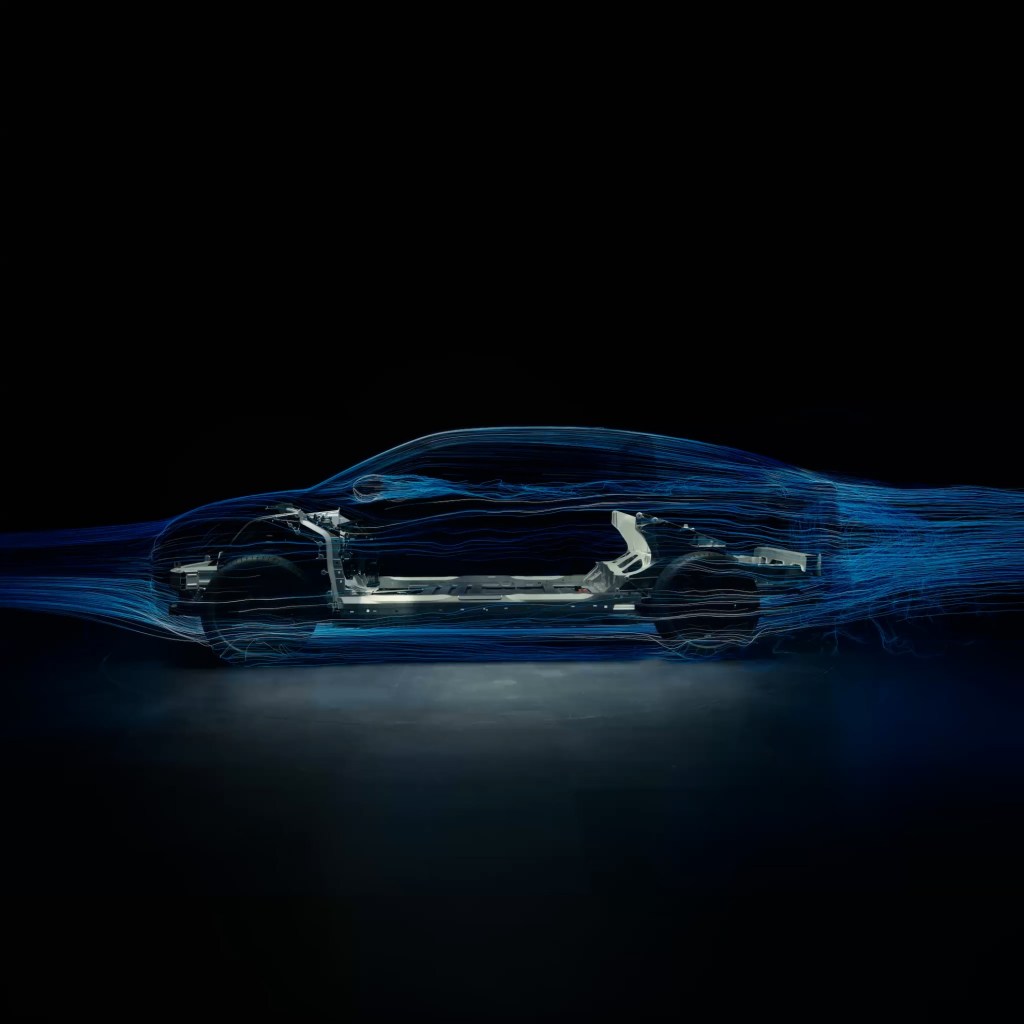
The collaboration with ex-Formula 1 engineers has resulted in a midsize EV truck that is 15% more aerodynamically efficient than any current pickup. Utilizing 3D-printed components, the team created modular prototypes for wind tunnel testing, allowing rapid design iterations and improved aerodynamics.
A key focus is the battery, which constitutes about 40% of a vehicle’s cost. By designing a lighter, more efficient vehicle, Ford can use a smaller, less expensive battery while still achieving a 15% increase in range—approximately 50 miles more than comparable gas-powered pickups.
Ford is also adopting manufacturing techniques popularized by Tesla, such as aluminum unicastings and transitioning from a 12-volt to a 48-volt power system for certain functions. The UEV’s architecture takes a zonal approach, consolidating multiple vehicle functions into five main modules. This reduces complexity, cost, and copper usage, resulting in a wire harness that is 4,000 feet shorter and 22 pounds lighter than previous models.
By developing proprietary software for these modules, Ford gains greater control over vehicle functions, enabling enhanced integration of sensors and systems. This holistic approach positions Ford to deliver a cost-effective, efficient, and competitive electric truck to the market.