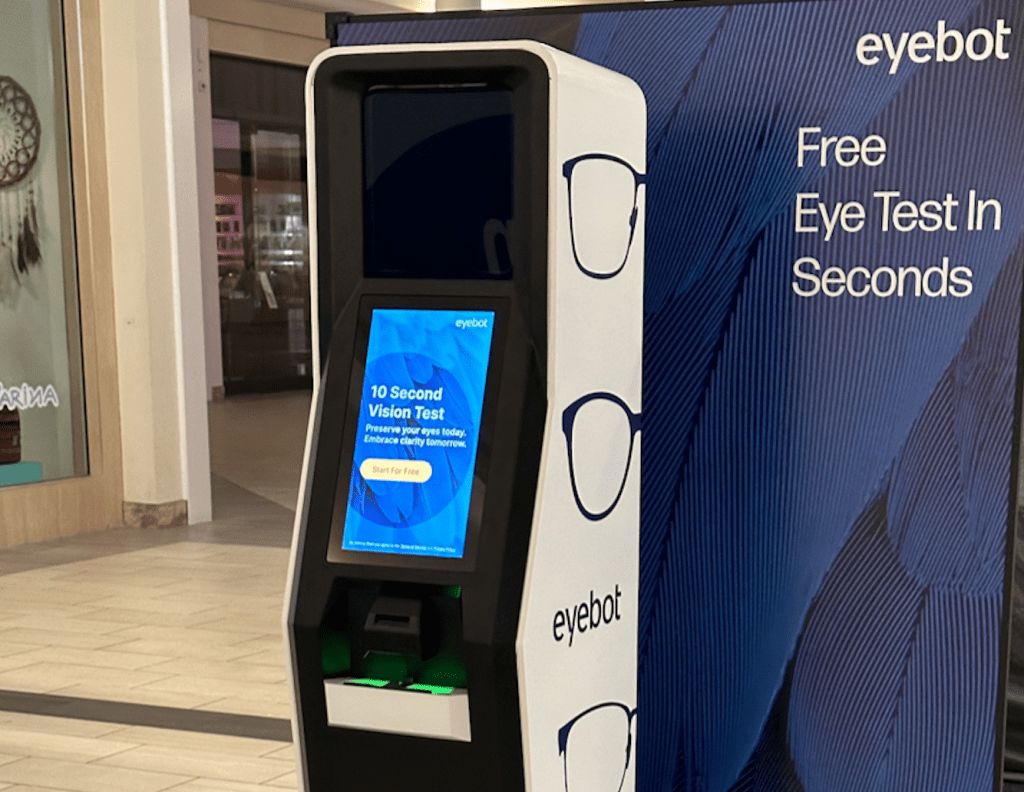
Eyebot, a Boston-based startup established in 2021, has recently secured $20 million in Series A funding to enhance its innovative approach to vision care. The company offers 90-second vision test kiosks that provide doctor-verified prescriptions, aiming to eliminate traditional barriers such as appointment delays, limited accessibility, complex insurance requirements, and high costs.
These kiosks are strategically placed in high-traffic areas including malls, universities, retail stores, pharmacies, grocery chains, schools, and airports. Users can undergo a free, quick vision test, and the results are reviewed and approved by licensed eye doctors, ensuring both convenience and reliability.
This latest funding round brings Eyebot’s total funding to over $30 million, following a $6 million seed round in June 2024. Since then, the company has conducted over 45,000 free vision tests and is on track to deliver more than half a million annually.
Matthias Hofmann, co-founder and CEO of Eyebot, highlighted the company’s rapid growth:
Since our seed round, the shift has been dramatic. We’ve gone from piloting to partnering with some of the largest companies in the U.S., launching kiosks all over the country, and delivering tens of thousands of vision tests. Revenue is scaling, and our team has doubled in size. Most importantly, we’ve proven the model works: people are using Eyebot, doctors are validating the results, and retailers are excited about the traffic it drives.
Eyebot’s unique combination of convenience and medical assurance sets it apart. Every test is reviewed by a doctor, and all prescriptions are issued under clinical supervision. If test results indicate any anomalies, patients are referred for comprehensive in-person exams, ensuring a balance between speed and clinical oversight.
Hofmann also noted the unexpected popularity of the kiosks among parents:
At our mall locations, we’ve seen surprising uptake from parents with kids. They’ll stop between stores, try Eyebot—sometimes even while holding their kids’ hands—and leave with a prescription in just a couple of minutes.
The Series A funding was led by General Catalyst, with participation from returning investors AlleyCorp, Baukunst, Village Global, Humba Venture, Ravelin, and Ubiquity Ventures. The funds will be used to scale kiosk deployment and expand the team across product development, clinical operations, and commercial growth.
Eyebot’s vision test is offered free to consumers. If a prescription is needed, one of the company’s doctors verifies it for a fee. Additionally, the company leases its kiosks to optical retailers, eyewear brands, and independent practices, creating a sustainable business model that benefits both consumers and partners.
Convincing traditional eye care providers to embrace this tech-first approach has been challenging. Early skepticism was prevalent, with doctors concerned about accuracy and patients questioning the reliability of such a quick process. However, this hesitancy has eased as providers recognize that experienced doctors review every result, many with over a decade of experience.
Eyebot’s innovative approach addresses a significant need in the eye care industry. Over half of Americans wear corrective glasses or contact lenses, yet obtaining a current prescription often requires a vision exam from an optometrist. Due to a nationwide shortage of eye care practitioners, especially in rural areas, securing an appointment can take weeks. Eyebot’s self-serve, vision-testing terminals aim to reduce this time to about 90 seconds without the direct involvement of an optometrist.
The company’s rapid growth and successful funding rounds reflect a broader trend in the healthcare industry towards leveraging technology to improve accessibility and efficiency. By providing quick, reliable, and doctor-verified vision tests, Eyebot is poised to make a significant impact on how people access eye care services.
As Eyebot continues to expand its reach and refine its technology, it stands as a testament to the potential of innovative solutions in addressing longstanding challenges in healthcare accessibility.