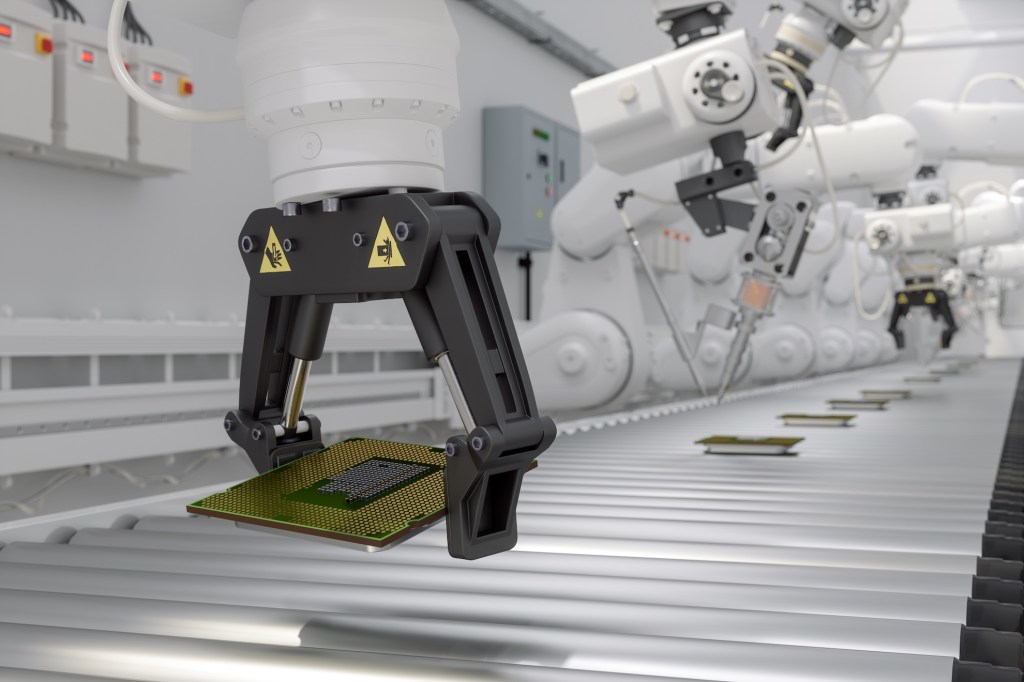
Eclipse Ventures Launches $1.3 Billion Fund to Propel ‘Physical AI’ Startups
Eclipse Ventures, a Palo Alto-based venture capital firm, has announced the establishment of a substantial $1.3 billion fund dedicated to supporting and developing ‘physical AI’ startups. This fund is divided into two segments: a $591 million early-stage incubation fund and a growth-oriented fund aimed at more mature startups. This strategic move underscores Eclipse’s commitment to advancing technologies that integrate artificial intelligence into tangible, real-world applications.
A Strategic Focus on the Physical World
Over recent years, Eclipse has demonstrated a clear investment trajectory towards companies that bridge the gap between digital intelligence and physical operations. Notable investments include:
– Arc: An electric boat developer revolutionizing maritime transportation.
– Redwood Materials: A company specializing in battery recycling and materials, addressing critical needs in the energy sector.
– Bedrock Robotics: A startup focused on autonomous construction vehicles, enhancing efficiency in the construction industry.
– Wayve: An autonomous vehicle technology company pushing the boundaries of self-driving capabilities.
– Mind Robotics: An industrial robotics lab developing advanced robotic solutions for various industries.
These investments reflect Eclipse’s dedication to fostering innovations that have a tangible impact on the physical world.
Embracing the Next Technological Era
Jiten Behl, a partner at Eclipse, articulates the firm’s vision: Over the last two decades, we’ve seen multiple waves of innovation, referencing the internet, mobile cloud, and social media eras. This is the first time where stuff is going to move from our screens into the physical world; we’re going to see advanced levels of intelligence, along with actual actions, in terms of solving problems in the real, physical world.
This perspective highlights a significant shift in technological focus—from purely digital solutions to those that interact directly with and enhance the physical environment.
The Convergence of AI and the Physical Realm
The term ‘physical AI’ encapsulates this emerging trend where artificial intelligence is applied to solve real-world, physical challenges. Behl identifies several factors driving this movement:
– Talent: A growing pool of skilled professionals dedicated to AI and robotics.
– Technological Advancements: Rapid progress in AI algorithms, sensors, and hardware capabilities.
– Market Demand: Increasing need for intelligent solutions in sectors like transportation, energy, and infrastructure.
– Policy Support: Government initiatives and regulations promoting innovation in AI and automation.
With these elements aligning, Eclipse is poised to make significant contributions to this evolving landscape.
Building an Ecosystem of Collaborative Startups
Eclipse’s investment strategy extends beyond individual companies. The firm aims to create a network of interconnected startups across various physical sectors, including transportation, energy, infrastructure, computing, and defense. Behl elaborates on this approach: Scale is so important, and if you can put it together in a way where companies partner early on to build scale, to build proof points, it just then enables them to go after the next set of demand.
By fostering early partnerships among portfolio companies, Eclipse intends to accelerate growth and establish a robust ecosystem where startups can collaborate, share resources, and collectively address complex challenges.
Incubating Innovation from Within
In addition to investing in existing startups, Eclipse plans to incubate new companies internally. While specific details remain under wraps, Behl confirms that the firm is actively developing several promising ideas. This proactive approach allows Eclipse to directly influence the direction and development of startups, ensuring alignment with their strategic vision.
Connecting Sectors Through Data and AI
A key component of Eclipse’s strategy is to bridge various sectors by leveraging data and AI. Behl poses critical questions: How do you connect these sectors? How do you build scale across sectors? And how do you use the data across sectors to build that moat? By integrating data from multiple industries, Eclipse aims to train smarter AI models that can benefit a broader range of applications, creating a competitive advantage for their portfolio companies.
Conclusion
Eclipse Ventures’ new $1.3 billion fund marks a significant commitment to advancing ‘physical AI’—the integration of artificial intelligence into real-world applications. By investing in and incubating startups that operate at the intersection of AI and the physical world, Eclipse is positioning itself at the forefront of this technological evolution. Their strategic focus on building an interconnected ecosystem of companies across various sectors underscores a holistic approach to innovation, aiming to solve complex physical challenges through intelligent solutions.