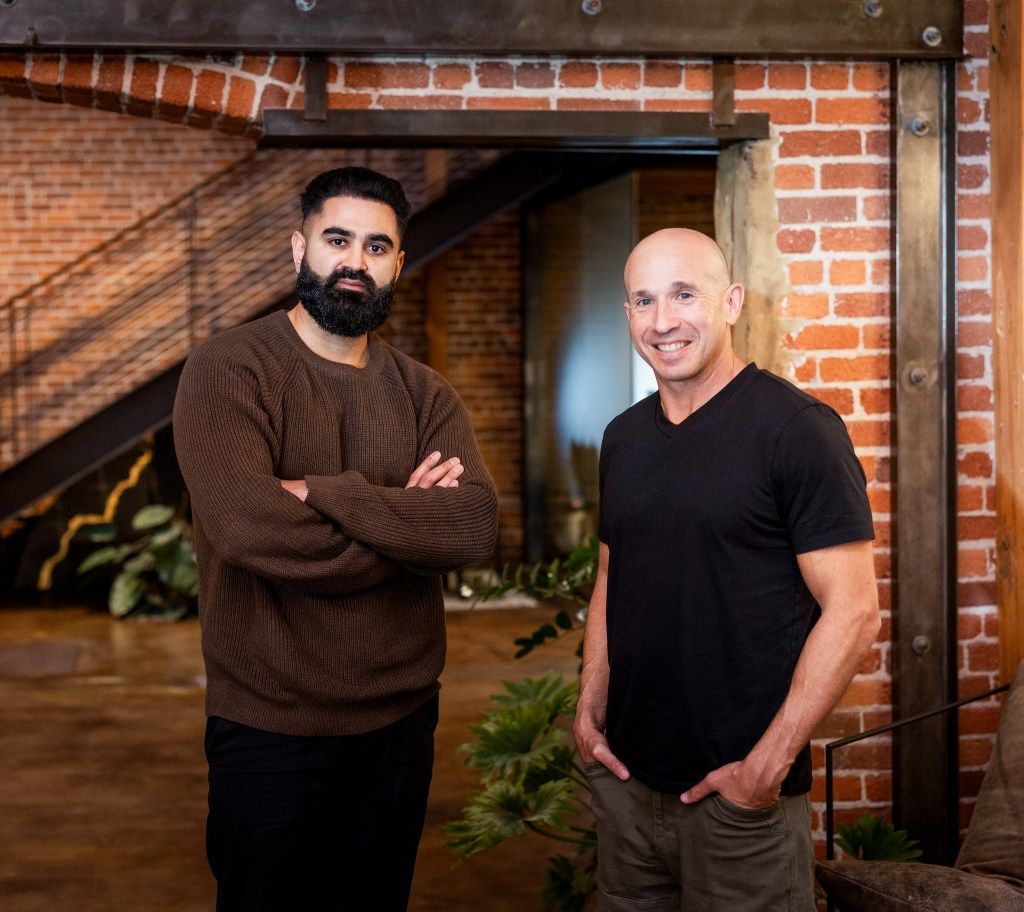
Digg, the pioneering online community from the early days of the internet, has officially launched its open beta to the public, marking a significant return under the leadership of its original founder, Kevin Rose, and Reddit co-founder Alexis Ohanian. This revival aims to reestablish Digg as a formidable competitor in the social news aggregation space, offering users a platform to discover, share, and discuss content across various interests.
A Storied Past and a Bold Revival
Founded in 2004, Digg quickly became a cornerstone of Web 2.0, allowing users to submit and vote on news stories, thereby determining their prominence on the site. At its peak in 2008, Digg was valued at $175 million. However, it faced challenges in maintaining its user base and relevance, leading to its division and sale in 2012. The largest portion was acquired by Betaworks, while other assets were purchased by LinkedIn and The Washington Post. Subsequent investments in 2016 and a sale to a digital advertising company in 2018 did little to restore its former glory.
In contrast, Reddit, launched shortly after Digg, continued to thrive, eventually going public and securing content licensing agreements with major AI companies like Google and OpenAI. Recognizing the evolving digital landscape and the potential of artificial intelligence, Rose and Ohanian reacquired Digg in March 2025 through a leveraged buyout involving True Ventures, Ohanian’s firm Seven Seven Six, and venture firm S32. The financial details of this acquisition remain undisclosed.
Harnessing AI to Foster Trust and Community
The resurgence of Digg is underpinned by a strategic emphasis on leveraging AI to enhance user experience and community trust. Rose and Ohanian believe that AI can address the prevalent issues of misinformation and toxicity that plague many social media platforms. Rather than implementing stringent know your customer (KYC) verification processes, Digg plans to utilize AI to gather subtle trust signals from user interactions, creating a composite measure of credibility.
For instance, Digg is exploring the use of zero-knowledge proofs—a cryptographic method that verifies information without exposing the underlying data—to confirm user authenticity. Additionally, the platform may require users in product-focused communities to verify ownership or usage of the discussed products. An example would be a community dedicated to Oura ring users, where members would need to prove they own the smart ring to participate. Furthermore, Digg is considering utilizing mobile device signals to confirm user participation in real-world events, such as meetups, thereby strengthening community bonds.
A Redesigned Platform with Community at Its Core
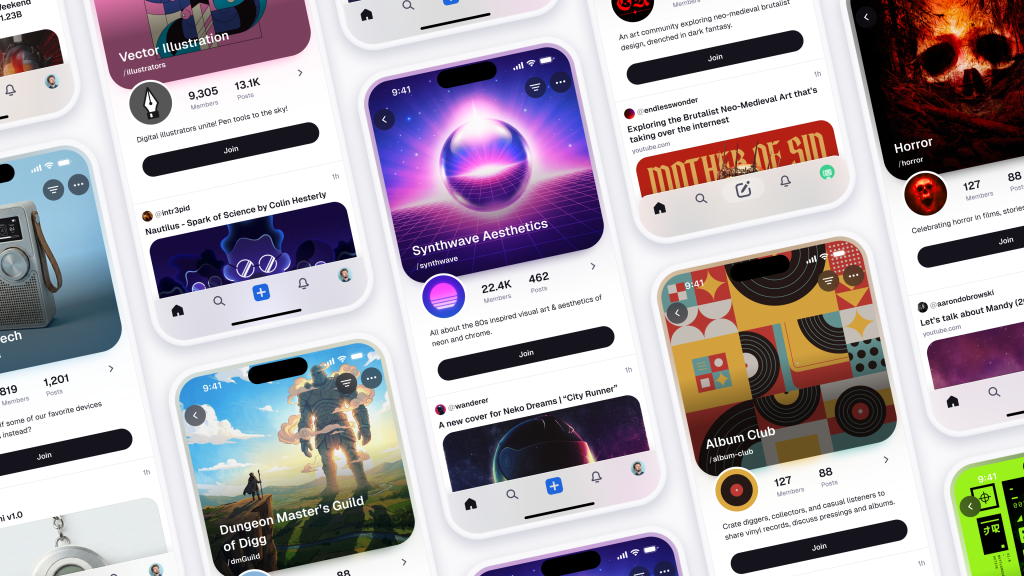
The new Digg offers both a website and mobile application where users can explore feeds featuring posts from a diverse array of communities. Users have the opportunity to join communities that align with their interests, where they can post content, comment, and upvote (or digg) submissions. Prior to the public beta launch, Digg hosted 21 general communities, including topics like gaming, technology, and entertainment, with access limited to 67,000 invite-only users. With the public beta, anyone can join and even create their own communities on virtually any topic, no matter how niche—a feature highly requested by early testers.
Community managers, or moderators, have the autonomy to establish their own rules, with moderation logs made publicly accessible to ensure transparency. The platform has undergone a comprehensive redesign, introducing a new sidebar for pinning favorite communities and a main feed optimized for visual content. Initially, communities will have a single manager, but plans are in place to expand this as more features are introduced, including customization options and integrations. For example, a movie reviews community could incorporate scores from platforms like Letterboxd.
Digg’s CEO, Justin Mezzell, emphasizes an iterative development approach, stating, We kind of opted for… let’s just keep building this plane as we fly it. This strategy involves continuously shipping new features based on user feedback and needs. To enhance the moderator experience, Digg has enlisted some Reddit moderators as advisors and is actively seeking input from community managers to build tools that support their roles effectively.
Looking Ahead: A Community-Driven Future
The Digg team is also considering transitioning its AI-generated podcast, which highlights interesting stories from the platform, to a human-hosted format in response to user requests. Rose expresses optimism about the platform’s future, noting that the current small team structure provides years of runway to achieve product-market fit. He adds, The beautiful thing about this launch is we’re finally at the place with Digg where… the foundational stuff is done, and now we can really start having fun.
The public beta rollout is scheduled to commence around 4 PM ET on January 14, 2026.