Cybercriminals Launch Over 2,000 Fake Holiday-Themed Online Stores to Steal Consumer Data
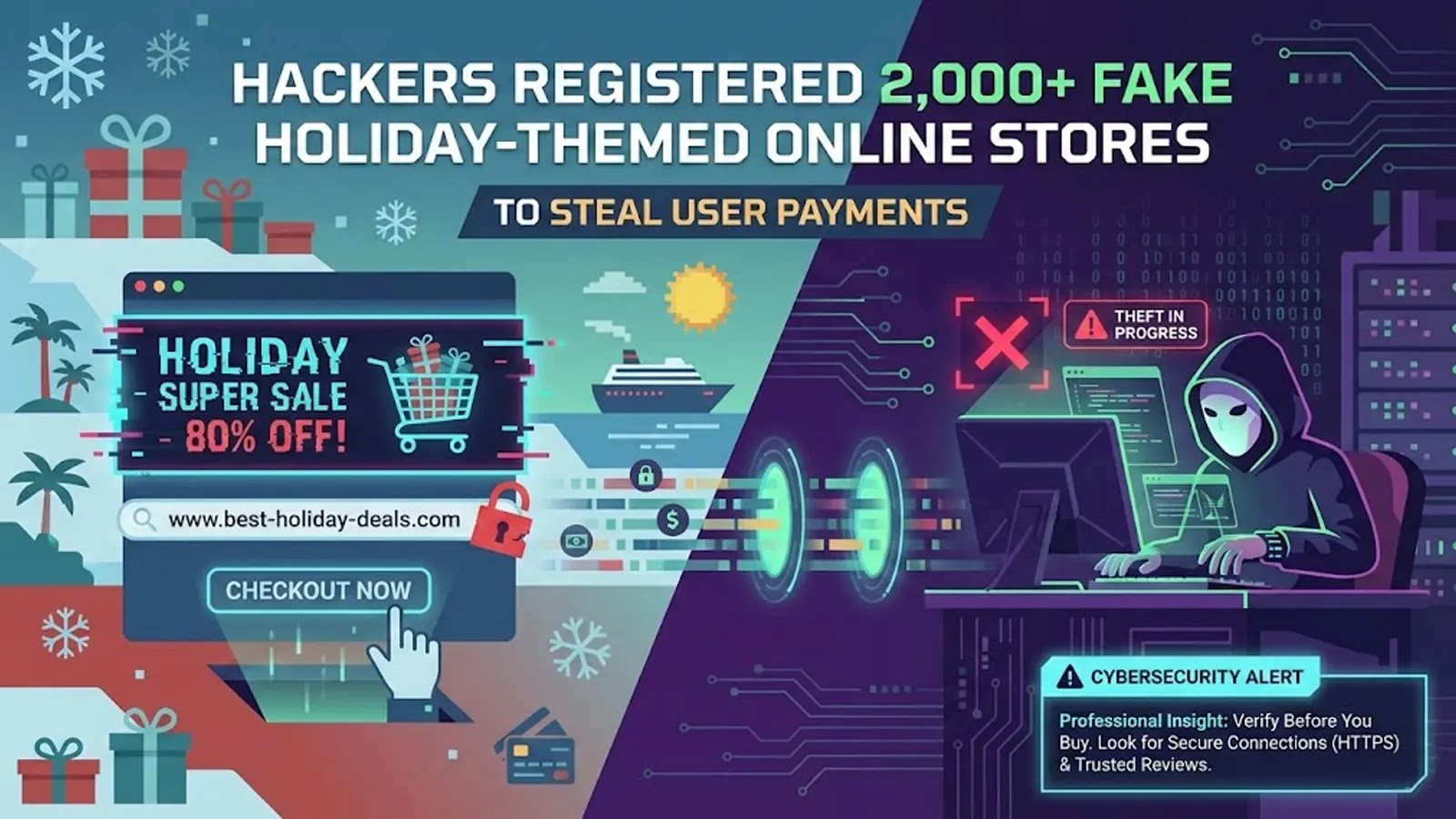
As the holiday shopping season reaches its peak, a significant cybersecurity threat has emerged, endangering online shoppers worldwide. Cybercriminals have orchestrated a large-scale campaign, registering over 2,000 fraudulent holiday-themed online stores designed to deceive consumers and steal their payment information and personal data.
Scope and Strategy of the Fraudulent Operation
This extensive operation involves two primary clusters of fake storefronts, each employing sophisticated tactics to appear legitimate:
1. Typosquatted Domains Mimicking Amazon: These fraudulent sites exploit common typographical errors made by users when entering web addresses, leading them to counterfeit versions of Amazon’s website. Examples include domains like `amaboxhub.com`, `amawarehousesale.com`, and `amaznshop.com`.
2. .shop Domains Impersonating Renowned Brands: This cluster encompasses a wide array of .shop domains that impersonate well-known brands such as Apple, Samsung, and Ray-Ban. Examples include `xiaomidea.shop` (mimicking Xiaomi), `jomalonesafe.shop` (imitating Jo Malone), and `samsungsafe.shop` (posing as Samsung).
These fake stores are not isolated incidents but part of a coordinated, automated campaign. The threat actors have strategically timed their attacks to coincide with peak shopping periods like Black Friday and Cyber Monday, capitalizing on consumers’ eagerness for bargains and their potential lapse in vigilance when encountering unfamiliar websites.
Tactics Employed to Deceive Consumers
The fraudulent websites employ a combination of social engineering and technical evasion techniques to trick users and avoid detection:
– Professional-Looking E-Commerce Platforms: The sites are meticulously designed to resemble legitimate online stores, complete with holiday-themed banners, countdown timers to create a false sense of urgency, and fake trust badges to build credibility.
– Fabricated Social Proof: Fake recent purchase pop-ups are used to create an illusion of high demand and encourage visitors to make a purchase.
– Shell Checkout Pages: When a user attempts to buy a product, they are redirected to a shell checkout page designed to harvest their billing and payment details. These shell websites often use unflagged domains to process transactions, allowing the attackers to bypass fraud detection systems.
Technical Infrastructure Supporting the Scam
The investigation revealed that a shared Content Delivery Network (CDN), `cdn.cloud360.top`, was used to serve assets to over 750 of the fake stores, highlighting the centralized nature of the campaign. Additionally, a recurring JavaScript file, identified by its unique SHA-256 hash, was found across numerous malicious .shop domains, controlling the fraudulent checkout process.
Impact on Consumers and the E-Commerce Ecosystem
The impact on consumers is severe, ranging from direct financial losses to the long-term risks of identity theft. Furthermore, these scams erode trust in legitimate online retailers and the e-commerce ecosystem as a whole.
Protective Measures for Online Shoppers
To safeguard against such fraudulent activities, consumers are advised to:
– Verify Website Authenticity: Carefully check the URL for any misspellings or unusual domain names.
– Look for Secure Connections: Ensure the website uses HTTPS and displays a padlock icon in the address bar.
– Be Skeptical of Unbelievable Deals: If an offer seems too good to be true, it likely is.
– Use Trusted Payment Methods: Opt for credit cards or secure payment gateways that offer fraud protection.
– Monitor Financial Statements: Regularly review bank and credit card statements for unauthorized transactions.
Conclusion
As cybercriminals continue to exploit the holiday shopping frenzy, it is imperative for consumers to remain vigilant and adopt proactive measures to protect their personal and financial information. By staying informed and cautious, shoppers can enjoy a safer online shopping experience during this festive season.