Cybercriminals Impersonate Korean TV Writers to Deploy Sophisticated Malware
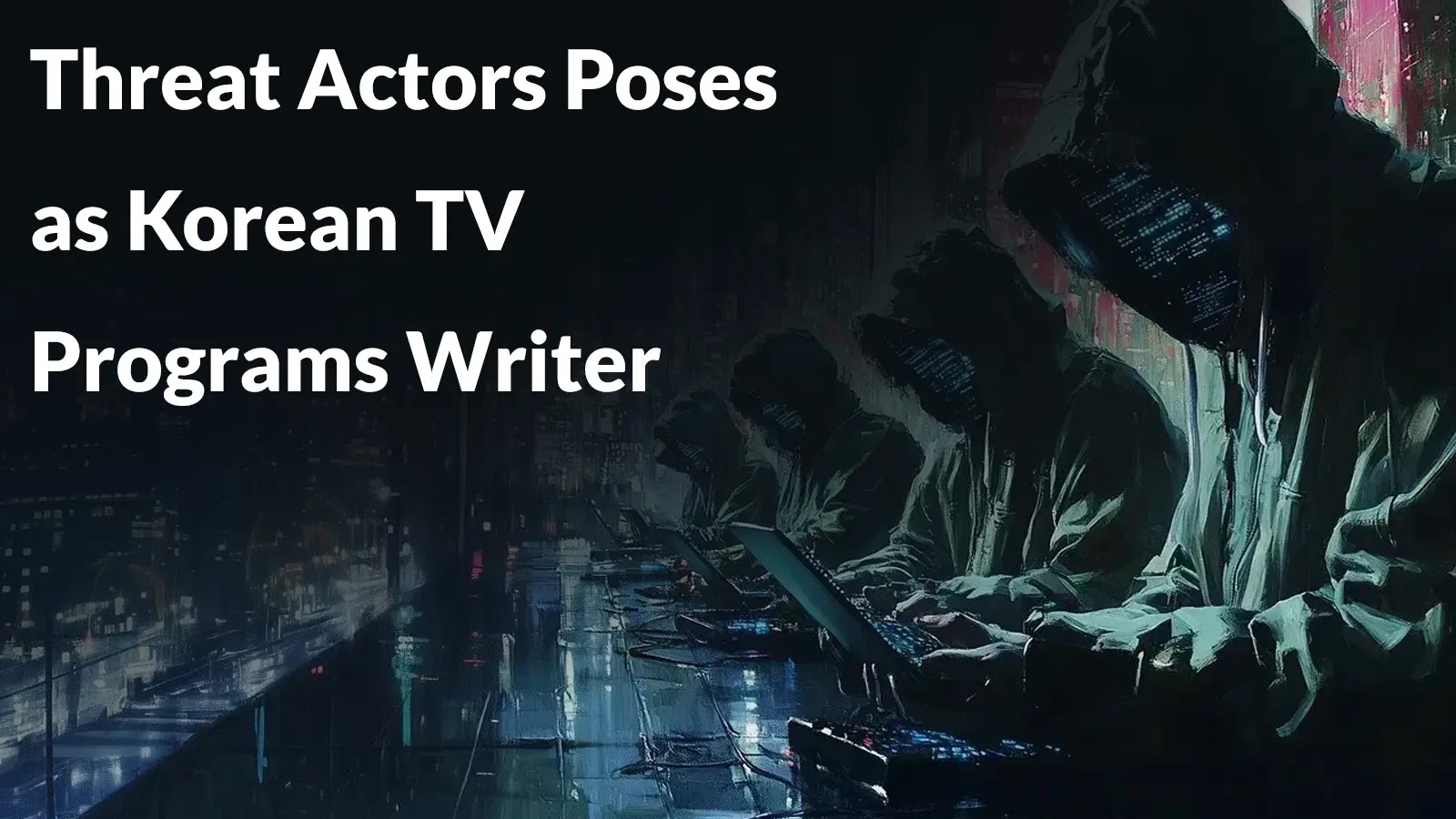
In a recent cybersecurity development, researchers have identified a complex campaign where threat actors masquerade as writers from prominent Korean broadcasting networks to distribute malicious software. This operation, dubbed Operation Artemis, signifies a significant advancement in social engineering tactics, exploiting the credibility of media professionals to deceive victims into executing harmful payloads.
Deceptive Communication Tactics
The attackers initiate contact through emails that appear to be legitimate interview requests or collaborative proposals. By posing as established writers from well-known Korean television programs, they craft messages that resonate with the interests of their targets, often focusing on topics like North Korean affairs and human rights issues. This method is particularly effective against academics, journalists, and policy experts who regularly engage with media entities.
Malicious Document Delivery
Central to this campaign is the use of Hangul Word Processor (HWP) files, a standard document format in South Korea. These files are disguised as interview questionnaires or event guides and contain embedded hyperlinks. When a recipient opens the document and clicks on these links, the infection process begins discreetly.
Advanced Malware Deployment Techniques
The technical sophistication of this attack is noteworthy. The perpetrators employ DLL side-loading, a method where malicious DLL files are placed alongside legitimate system utilities, causing Windows to load the compromised library. In this instance, files named version.dll are loaded by legitimate processes like vhelp.exe and mhelp.exe, allowing the malware to evade detection by traditional antivirus software.
Further analysis reveals that the malware utilizes multiple encryption layers, employing XOR operations with specific key values to obscure its functionality. Depending on the target system’s capabilities, the malware selects between standard byte-wise XOR decryption or high-speed Streaming SIMD Extensions (SSE) methods, enhancing processing speed while maintaining stealth.
Deployment of RoKRAT Malware
The ultimate payload in this attack is RoKRAT, a sophisticated data-stealing tool. The infection chain involves the execution of OLE objects within HWP documents, leading to the deployment of executable files and malicious DLLs in temporary folders. The payload undergoes sequential XOR decryption stages before activating as final shellcode. Investigations have traced the command-and-control infrastructure to Yandex Cloud services in Russia, with account tokens indicating sustained operational activity from October 2023 to February 2025.
Detection and Mitigation Strategies
Detecting such advanced threats requires behavioral monitoring through Endpoint Detection and Response (EDR) solutions rather than relying solely on conventional file scanning. Security teams should be vigilant for abnormal DLL loading from temporary directories, suspicious child processes spawned from legitimate executables, and outbound connections to cloud infrastructure immediately following document interactions.
Broader Context of North Korean Cyber Threats
This campaign is part of a broader pattern of sophisticated cyber operations attributed to North Korean state-sponsored groups. For instance, the Kimsuky group has been known to target users across multiple platforms, including Facebook, email, and Telegram, employing coordinated social engineering tactics to infiltrate and compromise high-value targets. Their Triple Combo attack demonstrates unprecedented coordination across communication channels, leveraging hijacked accounts and personalized communications to deliver malicious payloads.
Similarly, the APT37 group has been observed conducting reconnaissance activities against South Korean targets, focusing on entities such as human rights groups, defectors, journalists, and experts in unification, national defense, foreign affairs, and security. Their tactics include using shortcut (lnk) files as primary vectors for delivering malicious payloads, often disguised as legitimate documents to deceive targets.
Another notable campaign involves North Korean hackers exploiting npm, GitHub, and Vercel to deliver the OtterCookie malware. This operation targets software developers by embedding malicious packages across these platforms, demonstrating the threat actors’ adaptation to modern development workflows and their ability to infiltrate the software supply chain.
Implications for Cybersecurity
The increasing sophistication of these campaigns underscores the evolving landscape of cyber threats. Threat actors are continually refining their methods, combining advanced technical strategies with deceptive social engineering to achieve their objectives. This trend highlights the necessity for organizations and individuals to adopt comprehensive cybersecurity measures, including regular training on recognizing phishing attempts, implementing robust endpoint protection solutions, and maintaining vigilance against emerging threats.
Conclusion
The impersonation of Korean TV writers to distribute malware exemplifies the advanced tactics employed by cybercriminals today. By understanding these methods and implementing proactive security measures, organizations can better protect themselves against such sophisticated attacks.