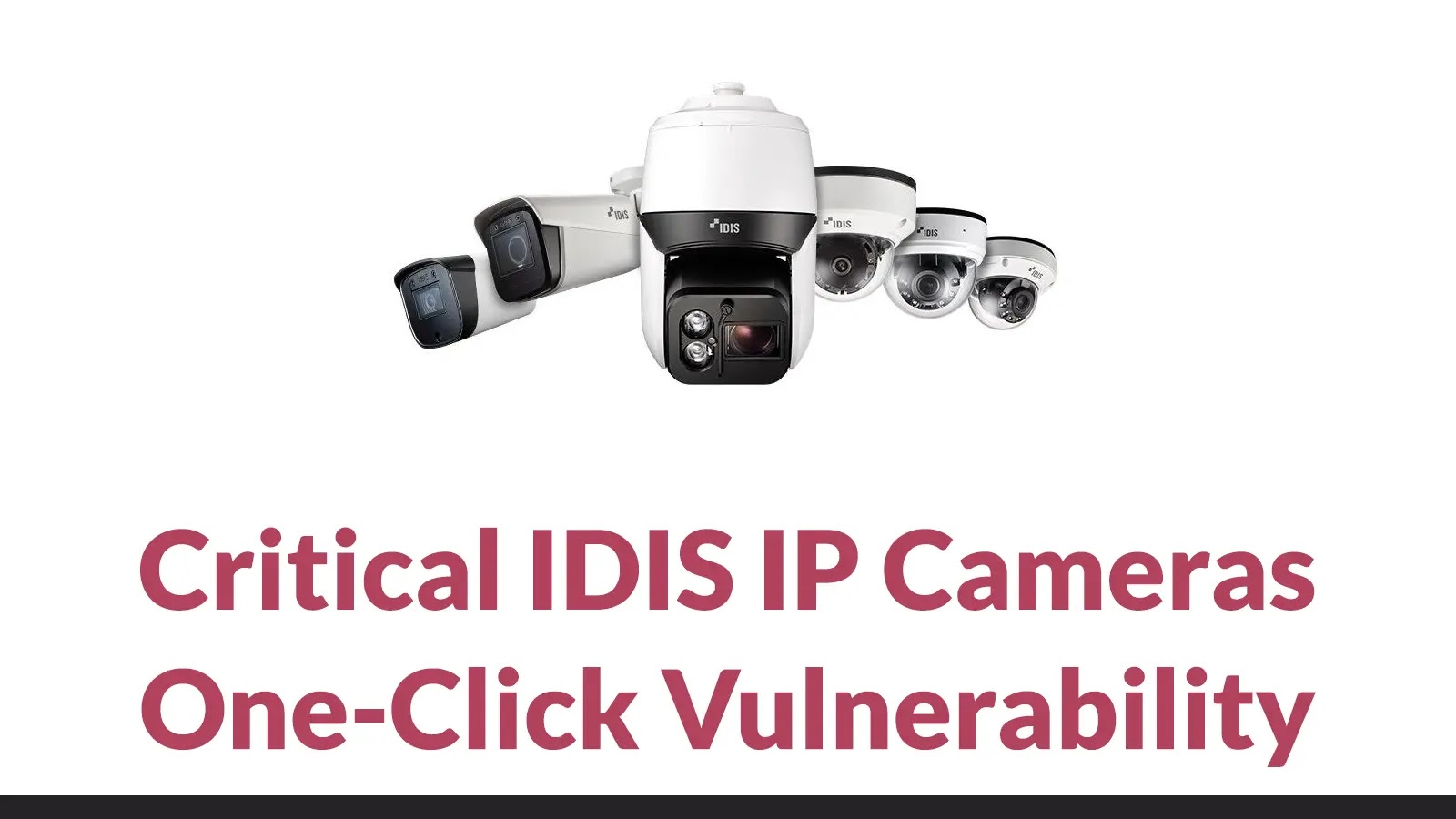
Critical Vulnerability in IDIS IP Cameras Enables Full System Compromise with a Single Click
A critical security vulnerability has been identified in IDIS IP cameras, posing a significant risk to organizations utilizing these surveillance systems. This flaw, designated as CVE-2025-12556, affects the IDIS Cloud Manager (ICM) Viewer—a Windows application designed for monitoring feeds from IDIS IP cameras deployed across various sectors, including enterprises, manufacturing facilities, and military installations. With a Common Vulnerability Scoring System (CVSS) score of 8.7, this issue represents a severe threat that could transform standard surveillance setups into gateways for extensive network breaches.
Understanding the Vulnerability
IDIS, a South Korean company specializing in video surveillance solutions, offers an integrated cloud management platform that connects IP cameras, network video recorders, and video management software through its ICM system. The identified vulnerability allows malicious actors to execute harmful code on a host machine by persuading users to click on a specially crafted link. This exploit bypasses the browser’s security measures, enabling direct code execution on the Windows operating system.
Technical Breakdown of the Exploit
Researchers from Claroty uncovered this security flaw during an analysis of modern cloud-enabled surveillance ecosystems. Their investigation revealed multiple security oversights within the ICM Viewer’s architecture, collectively creating a hazardous attack vector.
The core of the vulnerability lies in a Windows service named CWGService.exe, which listens on local port 16140 and accepts commands to launch the ICM Viewer with specific parameters. This service does not validate the origin of incoming commands or sanitize input arguments, allowing attackers to inject malicious instructions via a WebSocket connection initiated by JavaScript code on a compromised website.
Once exploited, this flaw grants attackers full access to the compromised system, enabling them to steal sensitive data, install additional malware, or move laterally across the network to target other devices. This scenario is particularly concerning for organizations relying on IDIS surveillance systems, as a single compromised workstation could serve as a launchpad for attacks against the broader infrastructure, including surveillance cameras and critical business systems.
Mechanism of the Attack
The exploitation process leverages a design flaw in how the ICM Viewer processes command-line arguments passed from the CWGService component. The ICM Viewer is built on the Chromium Embedded Framework (CEF), which accepts various command-line flags to modify browser behavior.
Attackers discovered they could inject the `–utility-cmd-prefix` debugging flag into the execution chain, allowing them to wrap the viewer’s utility processes with arbitrary commands. By hosting a malicious webpage containing JavaScript that connects to the local WebSocket service, attackers can send encrypted messages with injected arguments that trigger code execution when an unsuspecting user visits the page.
This attack requires no authentication beyond convincing the victim to click a link, making it particularly effective for spear-phishing campaigns. Claroty researchers successfully demonstrated the exploit by injecting commands that launched Notepad, proving the concept’s viability for more malicious payloads.
Implications for Organizations
The discovery of this vulnerability underscores the critical need for organizations to assess and secure their surveillance infrastructures. The potential for a single click to lead to full system compromise highlights the importance of robust cybersecurity measures, especially in systems that are often considered peripheral but can serve as entry points for attackers.
Recommended Mitigation Strategies
In response to this vulnerability, the Cybersecurity and Infrastructure Security Agency (CISA) has issued an advisory urging all IDIS ICM Viewer users to take immediate action. The recommended steps include:
– Update Software: Upgrade to ICM Viewer version 1.7.1 or later, which addresses the identified security flaw.
– Uninstall Unused Software: If the ICM Viewer is not in active use, uninstalling the software can eliminate the risk associated with this vulnerability.
– Enhance User Awareness: Educate users about the dangers of clicking on untrusted links and the potential consequences of such actions.
– Implement Network Segmentation: Isolate surveillance systems from critical business networks to limit the potential impact of a compromised device.
– Regular Security Audits: Conduct periodic reviews of all software and hardware components within the surveillance infrastructure to identify and address potential vulnerabilities proactively.
Conclusion
The CVE-2025-12556 vulnerability in IDIS IP cameras serves as a stark reminder of the evolving threats in the cybersecurity landscape. Organizations must remain vigilant, ensuring that all components of their network, including surveillance systems, are regularly updated and secured against potential exploits. By adopting a proactive approach to cybersecurity, businesses can safeguard their operations and maintain the integrity of their critical systems.