Chinese Front Companies Enhance APT Operations with Advanced Steganography Techniques
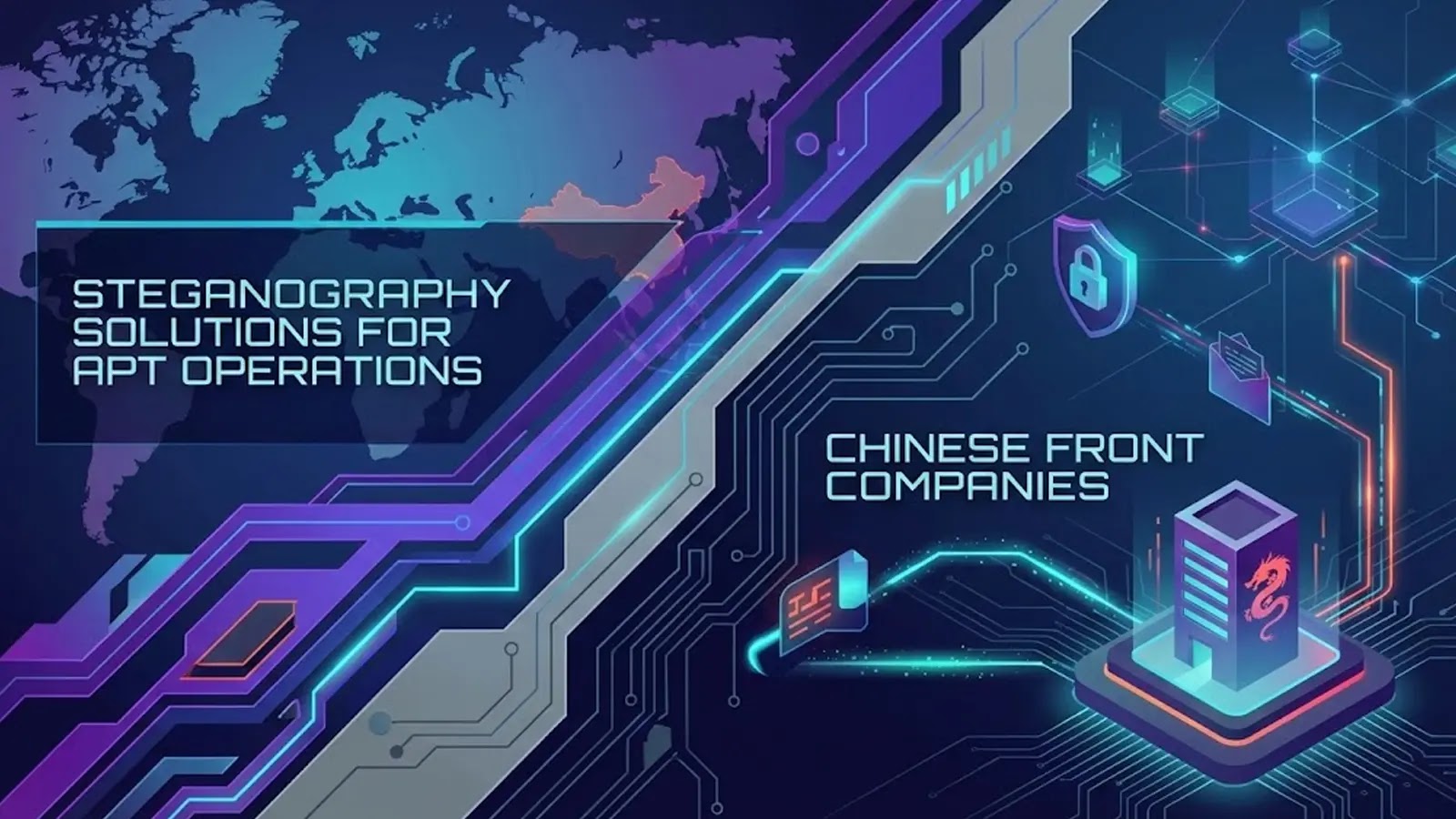
In the evolving landscape of cyber espionage, advanced steganography techniques have become pivotal tools for state-sponsored cyber operations. Recent investigations have unveiled two Chinese technology firms, BIETA and CIII, allegedly providing sophisticated steganographic solutions to bolster advanced persistent threat (APT) campaigns. These entities are believed to function as front companies linked to China’s Ministry of State Security (MSS), playing a crucial role in modernizing the nation’s intelligence-gathering capabilities.
BIETA and CIII: Front Companies with Strategic Ties
BIETA, officially known as the Beijing Institute of Electronics Technology and Application, operates from a location adjacent to the MSS headquarters in Beijing. The company maintains close institutional ties with various government agencies and academic institutions, including the University of International Relations, which functions as an MSS subsidiary.
CIII, operating under the name Beijing Sanxin Times Technology Co., Ltd., presents itself as a state-owned enterprise. It reportedly provides forensic and counterintelligence support services, further indicating its strategic alignment with state-sponsored objectives.
Focus on Steganographic Research and Development
Both organizations have dedicated substantial resources to the research and development of advanced steganographic techniques. Security analysts have identified that these companies have a pronounced focus on steganography, a method of concealing information within other non-secret data to evade detection.
An analysis of academic publications reveals that approximately 46 percent of BIETA’s 87 research papers published between 1991 and 2023 specifically address steganography. This significant proportion underscores the organization’s commitment to advancing this field.
Furthermore, both companies have obtained multiple software copyrights for techniques including audiovisual-to-voice conversion systems and JPEG image forensic differentiation methods, both registered in 2017. These developments highlight their ongoing efforts to refine and implement steganographic solutions.
Implementation Strategies in APT Operations
The steganographic implementation strategies employed by these organizations represent a significant technical shift in APT operations. Rather than relying solely on traditional encryption methods, threat actors are now utilizing Least Significant Bit (LSB) steganography to conceal .NET payloads within image files. This technique allows malicious code to be hidden in the least significant bits of image data, making it less detectable by conventional security measures.
BIETA’s research extends beyond standard JPEG formats to include MP3 audio and MP4 video files for covert information transmission. By embedding malicious payloads within these media formats, threat actors can exploit commonly used files to distribute malware without raising suspicion.
Historical APT groups, including APT1, Mirage, Leviathan, and Pirate Panda, have utilized similar techniques to distribute backdoors like TClinet and Stegmap without triggering conventional detection systems. These methods have proven effective in evading traditional security measures, allowing for prolonged and undetected access to compromised systems.
Advancements in Steganographic Techniques
The technical innovation extends to emerging technologies, with BIETA researchers exploring Generative Adversarial Networks (GANs) for steganographic applications. GANs, a class of artificial intelligence algorithms, can generate highly realistic media content, making them ideal for creating undetectable carrier files for steganographic purposes.
This advancement suggests that future APT operations may employ AI-driven methods to generate carrier files that are virtually indistinguishable from legitimate media. Such developments pose significant challenges for cybersecurity professionals, as traditional detection methods may become increasingly ineffective against these sophisticated techniques.
Implications for Cybersecurity
Understanding these advanced steganographic techniques is essential for defensive security teams. As state-sponsored actors continue to refine their ability to hide malicious communications within seemingly innocuous media files, detection becomes increasingly challenging for traditional security monitoring tools and approaches.
Organizations must adopt proactive measures to detect and mitigate steganographic threats. This includes implementing advanced anomaly detection systems, conducting regular security audits, and fostering a culture of cybersecurity awareness among employees.
Furthermore, collaboration between international cybersecurity communities is crucial to share intelligence, develop countermeasures, and stay ahead of evolving threats. By understanding the tactics and techniques employed by state-sponsored actors, organizations can better prepare and defend against sophisticated cyber espionage campaigns.
Conclusion
The exposure of BIETA and CIII’s involvement in providing advanced steganographic solutions for APT operations underscores the evolving nature of cyber threats. As these techniques become more sophisticated, it is imperative for cybersecurity professionals to stay informed and adapt their strategies accordingly. By enhancing detection capabilities and fostering international collaboration, the global community can work towards mitigating the risks posed by state-sponsored cyber operations.