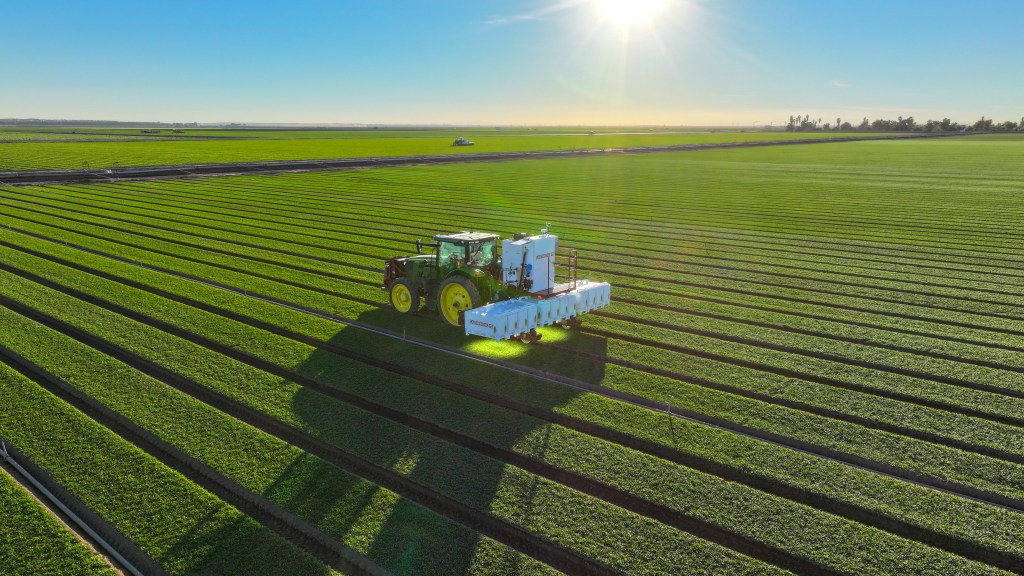
Carbon Robotics Unveils AI Model Revolutionizing Weed Detection in Agriculture
In the ever-evolving landscape of agricultural technology, Seattle-based Carbon Robotics has introduced a groundbreaking advancement poised to transform weed management practices. The company, renowned for its LaserWeeder—a fleet of robots that utilize lasers to eradicate weeds—has unveiled the Large Plant Model (LPM), an artificial intelligence system capable of instantly recognizing and identifying plant species. This innovation empowers farmers to target and eliminate new weed varieties without the need for retraining their robotic systems.
The LPM has been meticulously trained on an extensive dataset comprising over 150 million photographs and data points. These were collected by Carbon Robotics’ machines operating across more than 100 farms in 15 countries. This vast repository of information enables the model to power Carbon AI, the intelligent core that drives the company’s autonomous weed-eliminating robots.
Paul Mikesell, founder and CEO of Carbon Robotics, highlighted the challenges faced prior to the development of LPM. Traditionally, when a new weed type appeared on a farm—or even a familiar weed exhibiting slight variations due to different soil conditions—the company had to create new data labels and retrain its machines to recognize the plant. This process was time-consuming, often taking approximately 24 hours each time. With the advent of LPM, the system can now learn to identify a new weed instantaneously, even if it has never encountered it before.
The farmer can live in real time and say, ‘Hey, this is a new weed. I want you to kill this,’ and that was something that had never been done before, Mikesell explained. There’s no new labeling or retraining because the Large Plant Model understands, at a much deeper level, what it’s looking at and the type of plant.
Founded in 2018, Carbon Robotics began developing this model shortly after shipping its first machines in 2022. Mikesell brings a wealth of experience in building neural networks from his previous roles at Uber and Meta’s Oculus virtual reality headsets.
The implementation of LPM will be facilitated through a software update to the company’s existing systems. Farmers will have the capability to instruct the machine on which plants to eliminate and which to preserve by selecting photographs collected by the robot’s user interface.
To date, Carbon Robotics has secured over $185 million in venture capital from prominent backers, including Nvidia NVentures, Bond, and Anthos Capital. The company plans to continue refining the model as its machines gather new data, further enhancing the system’s accuracy and efficiency.
We have over 150 million labeled plants now in our training set, Mikesell stated. We have enough data now that we should be able to look at any picture and decide what kind of plant that is, what species it is, what it’s related to, what its structure is like, without having ever even seen that particular plant before, because we have so much data going into the neural net.
This development marks a significant milestone in agricultural technology, offering farmers a more efficient and precise method for weed management. By leveraging advanced AI capabilities, Carbon Robotics is setting a new standard in the industry, potentially leading to increased crop yields and more sustainable farming practices.