AWS CEO Matt Garman Addresses Investments in Competing AI Firms Anthropic and OpenAI
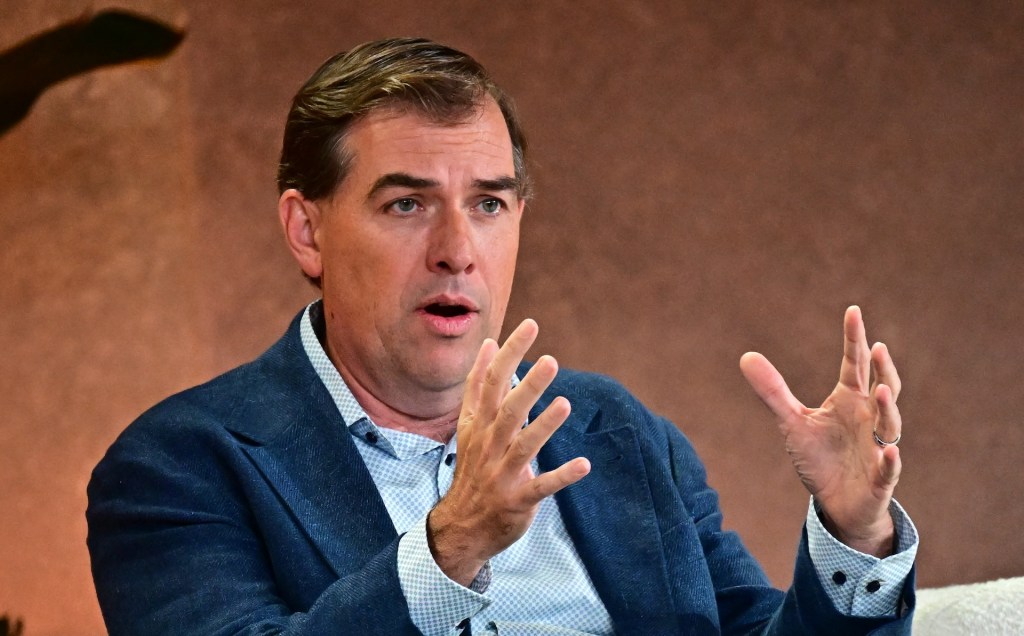
In a recent address at the HumanX conference in San Francisco, Amazon Web Services (AWS) CEO Matt Garman discussed Amazon’s substantial investments in both Anthropic and OpenAI, two leading competitors in the artificial intelligence (AI) sector. Garman emphasized that such dual investments are consistent with AWS’s longstanding approach to managing partnerships and competition within the tech industry.
Amazon’s financial commitments include an $8 billion investment in Anthropic and a more recent $50 billion investment in OpenAI. These significant investments have raised questions about potential conflicts of interest, given the direct competition between Anthropic and OpenAI in developing advanced AI models.
Garman, who has been with Amazon since 2005, explained that AWS has a history of navigating complex relationships with partners who are also competitors. He noted that in AWS’s early years, the company recognized the necessity of collaborating with other tech firms to expand its cloud offerings. This collaboration often meant partnering with companies while simultaneously competing with them in certain areas.
We also knew that we would have to compete with our partners because technology is interconnected, Garman stated. So, for a very long time, we’ve built this muscle up of how we go to market with our partners. But we also may even have first-party products that compete with them, and that’s okay, and we’ve promised them we won’t give ourselves unfair competitive advantage.
This approach has become more common in the tech industry. For instance, Oracle, a significant competitor to AWS, offers its database and other services on AWS’s cloud platform. This practice reflects a broader trend where companies balance competition and collaboration to drive innovation and meet customer needs.
The AI sector, in particular, has seen a blurring of traditional lines of investor loyalty. In February, Anthropic announced a $30 billion funding round that included at least a dozen investors who also back OpenAI, such as Microsoft’s main cloud partner. This overlap underscores the dynamic and interconnected nature of AI investments.
For AWS, investing heavily in OpenAI was a strategic move to ensure that its customers have access to leading AI models. Both Anthropic’s and OpenAI’s models were already available on Microsoft’s cloud platform, AWS’s primary competitor. By securing partnerships with both AI firms, AWS aims to provide a comprehensive suite of AI tools to its clients.
Additionally, cloud providers like AWS are developing AI model-routing services. These services allow customers to utilize different AI models for various tasks, optimizing performance and cost-effectiveness. Garman highlighted that one model might be ideal for planning, another for reasoning, and a more cost-effective model for simpler tasks like code completion. I think that is where the world will go, Garman said.
This strategy also enables AWS and other cloud providers to integrate their proprietary AI models into these routing services, further blending the lines between partnership and competition.
In conclusion, AWS’s investments in both Anthropic and OpenAI reflect a deliberate strategy to navigate the complex landscape of AI development. By fostering relationships with competing AI firms, AWS positions itself to offer a diverse range of AI solutions to its customers, demonstrating that in the rapidly evolving tech industry, collaboration and competition often go hand in hand.