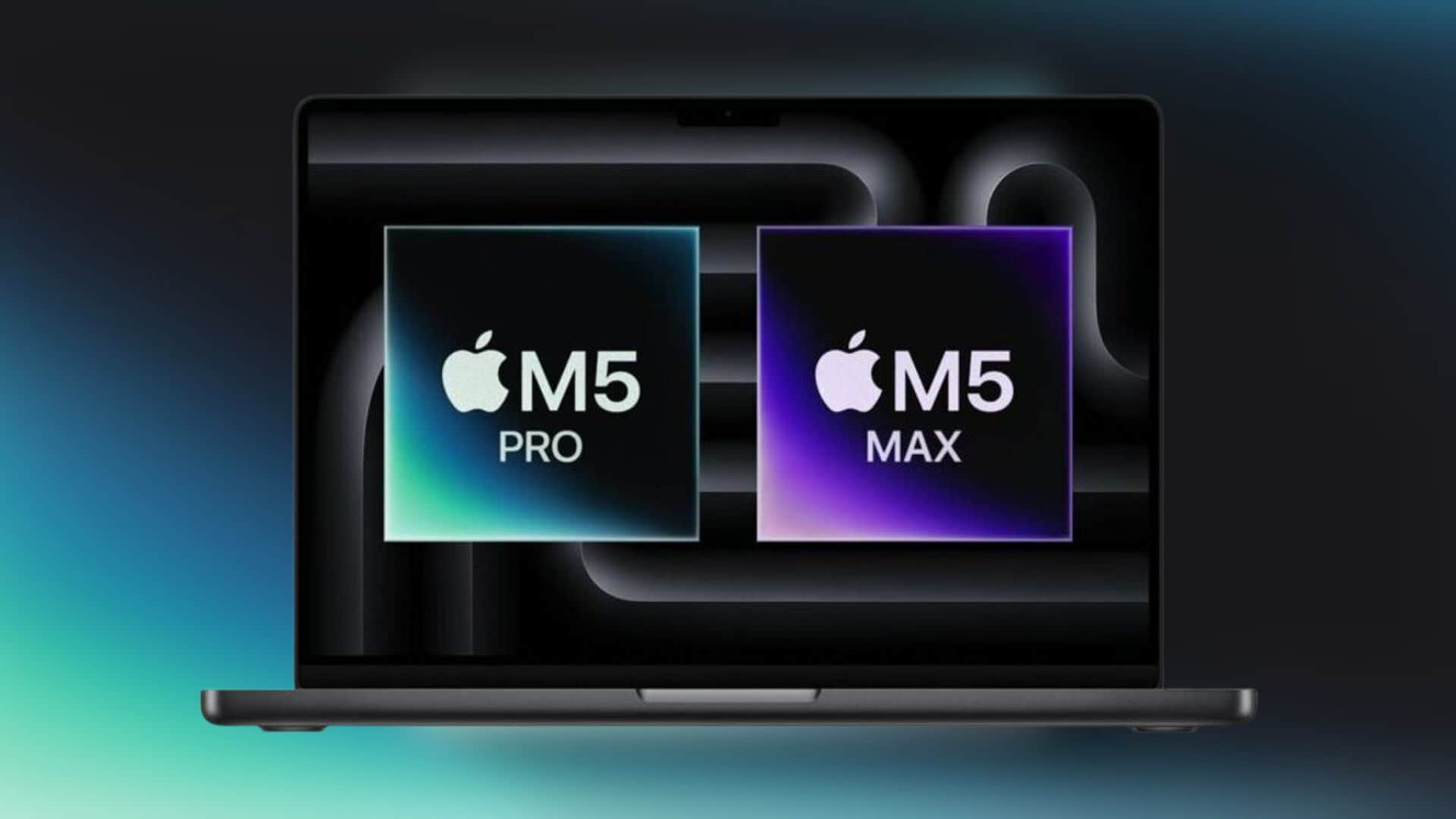
Apple’s M5 Pro and M5 Max: A Unified Chip Design Revolutionizing Mac Performance
Apple’s forthcoming M5 Pro and M5 Max chips are poised to redefine the landscape of Mac performance. Recent insights suggest that these two variants may not be distinct designs but rather different configurations of a singular, advanced chip architecture. This strategic shift could streamline Apple’s production processes and offer consumers more flexible performance options.
Unveiling the Unified Chip Theory
The concept of a unified chip design emerged following a meticulous analysis of Apple’s adoption of advanced 2.5D chip packaging technology. This innovative approach enables the assembly of CPU, GPU, and memory components as modular chiplets, moving away from the traditional monolithic die structure. Consequently, Apple can produce a single core design and modulate its performance by selectively enabling or disabling specific components.
Absence of M5 Pro in Code Leaks
Tech analyst Vadim Yuryev identified a notable omission in recent beta code leaks: the absence of explicit references to an M5 Pro chip. He interprets this as evidence supporting the unified chip theory. Yuryev posits that Apple is leveraging 2.5D chip technology to utilize a single M5 Max chip design for both M5 Pro and M5 Max models. This consolidation could lead to significant cost savings in terms of SKU management and design complexity.
Differentiating M5 Pro and M5 Max Configurations
Yuryev further elaborates on how Apple might distinguish between the M5 Pro and M5 Max configurations:
– M5 Max: Comprises one CPU chiplet, two GPU chiplets, and additional RAM chiplets.
– M5 Pro: Utilizes the same chip design with fewer active CPU cores, a single GPU chiplet, and reduced RAM.
This methodology suggests that the M5 Pro is essentially a binned version of the M5 Max, with certain performance cores disabled and extra GPU and memory chiplets omitted to create a clear distinction between the two tiers. Predicted specifications based on this approach include:
– Up to 24 GPU cores on the M5 Pro
– Up to 48 GPU cores on the M5 Max
This configuration allows Apple to maintain a pricing hierarchy while relying on a shared design foundation.
Implications for Hardware Design
The unified chip strategy extends beyond the silicon itself, impacting the overall hardware design. By employing a single core chip design, Apple can standardize the logic board layout across both Pro and Max models. This consolidation reduces engineering efforts, lowers manufacturing costs, and simplifies the supply chain. For consumers, this means that differences between models will be more about configuration choices rather than physical design disparities.
Rationale Behind the Unified Design Approach
This strategic shift aligns with earlier reports indicating Apple’s adoption of server-grade System-on-Integrated-Chips (SoIC) packaging for high-end M5 chips. This method separates CPU and GPU components, enhancing production yields and thermal performance. Additionally, it corresponds with recent changes to Apple’s online Mac purchasing process, where customers now start with a base model and customize their system. Such flexibility is more feasible if the Pro and Max chips share the same foundational design.
Looking Ahead
If this unified chip theory holds true, it signifies a major evolution in Apple’s approach to high-performance Mac silicon. The real confirmation will come post-launch, when hardware teardowns can reveal whether the M5 Pro and M5 Max indeed share the same core silicon. Until then, it appears that Apple is poised to blur the lines between Pro and Max at the design level, while maintaining clear distinctions in performance, memory, and pricing.