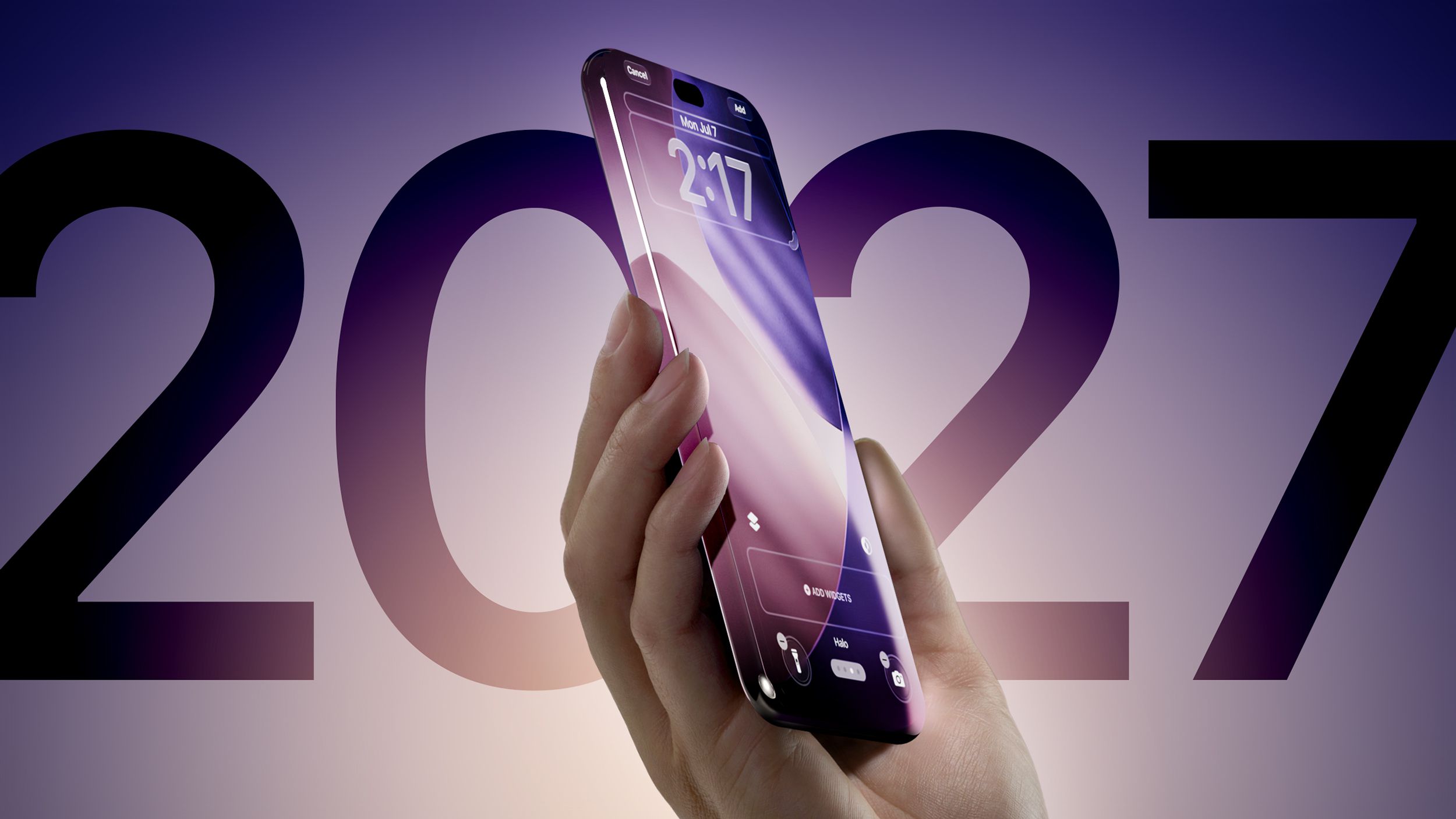
Apple’s 20th Anniversary iPhone: All-Screen Design in Question
As Apple approaches the 20th anniversary of the iPhone in 2027, speculation about a groundbreaking redesign has been widespread. Initial reports suggested a revolutionary all-screen device devoid of any display cutouts. However, recent insights from industry experts cast doubt on this ambitious design materializing as anticipated.
In May 2025, Bloomberg’s Mark Gurman reported that Apple aimed to launch an all-glass iPhone with a seamless display, eliminating traditional notches and cutouts. This vision aligned with Apple’s history of significant design overhauls to commemorate major milestones. For instance, the 10th anniversary iPhone X introduced the notch and Face ID, setting a new standard for smartphone design.
Contrasting Gurman’s projections, display industry analyst Ross Young provided a more conservative outlook. In January 2026, Young suggested that the anticipated smaller Dynamic Island, expected in the iPhone 18 Pro models, would persist through 2027. He further projected that a truly all-screen iPhone might not debut until 2030, indicating a significant delay from earlier expectations.
This divergence in predictions highlights the complexities involved in integrating under-display technologies. Embedding components like Face ID sensors and front-facing cameras beneath the screen presents substantial technical challenges. While some Android manufacturers have experimented with under-display cameras, achieving comparable quality to traditional setups remains elusive.
Apple’s commitment to delivering a seamless user experience suggests that the company may prioritize functionality over aggressive design changes. The potential delay in adopting an all-screen design could reflect a cautious approach, ensuring that new technologies meet Apple’s stringent quality standards before widespread implementation.
Moreover, the introduction of a special 20th-anniversary model, possibly positioned above the Pro tier, remains a possibility. This strategy would mirror Apple’s past practices, such as the launch of the iPhone X alongside the iPhone 8, offering consumers a premium option with cutting-edge features.
In conclusion, while the vision of an all-screen iPhone remains compelling, current insights suggest that such a design may not materialize for the 20th anniversary as initially anticipated. Apple’s focus on delivering a polished and functional product may lead to a more incremental evolution in design, with groundbreaking changes reserved for future iterations.