Apple’s Verification Server Outage Disrupts Developer App Testing
On March 10, 2026, Apple’s verification servers experienced a significant outage, preventing developers from verifying and installing enterprise-signed applications. This disruption, lasting approximately three hours from 3 PM to 6 PM Eastern Time, had a substantial impact on the development community.
Understanding the Verification Process
For developers working within Apple’s ecosystem, the verification process is a critical step. Applications compiled through Xcode must be signed via Apple’s verification servers to ensure their authenticity and integrity. This process is essential not only for distributing enterprise applications but also for local app installations. It serves as a safeguard, ensuring that only trusted software runs on Apple devices, thereby maintaining the security and reliability of the platform.
The Impact of the Outage
During the outage, developers attempting to install or verify their applications encountered error messages indicating that an internet connection was required to verify the trust of the developer. This error effectively halted the testing and deployment of new app builds, causing delays and disruptions in development workflows. The inability to verify apps meant that developers could not proceed with essential testing phases, potentially delaying project timelines and affecting deliverables.
Community Response and Resolution
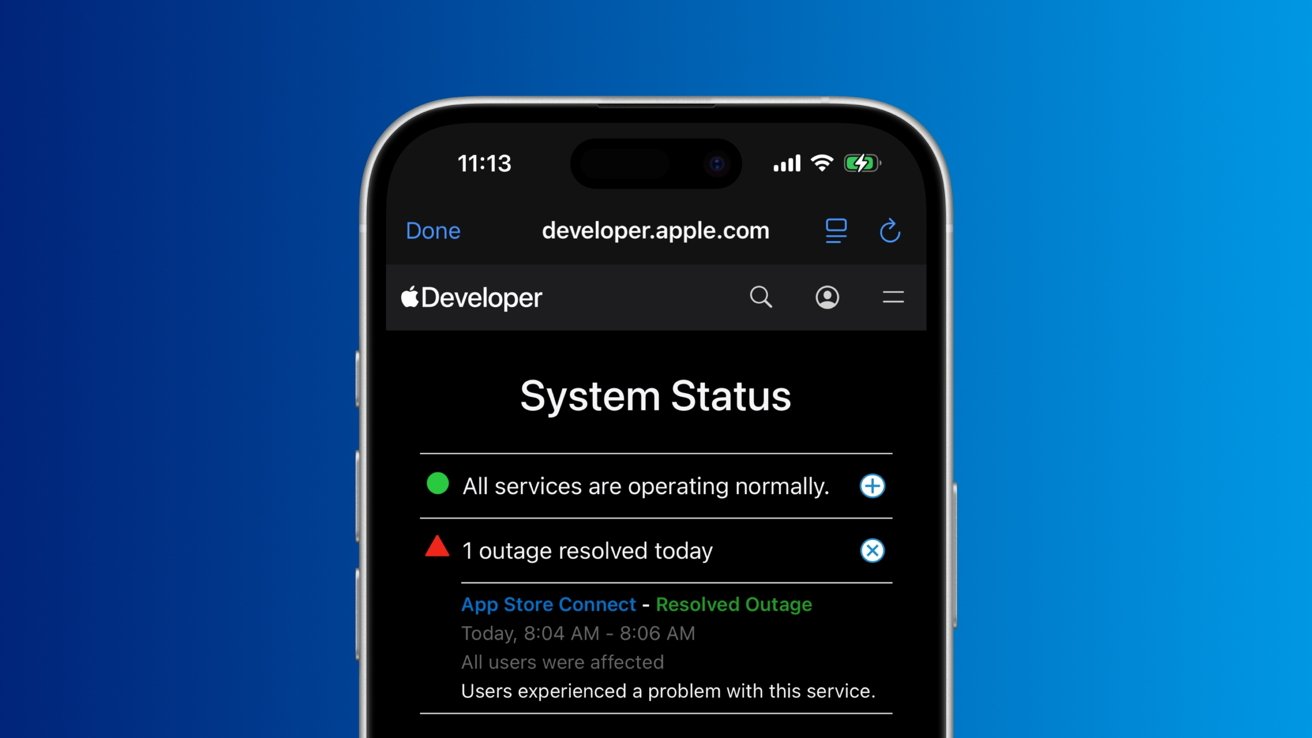
The developer community quickly took to social media platforms and forums to report and discuss the issue. A Reddit post highlighted the widespread nature of the problem, with many developers sharing their experiences and seeking solutions. Apple acknowledged the issue on their system status page, noting an App Store Connect outage that was resolved by 6:06 PM Eastern Time. The page indicated that all users of the service experienced the problem, underscoring the broad impact of the outage.
The Importance of Verification Servers
Apple’s verification servers play a pivotal role in the app development and distribution process. They are responsible for:
– Code Signing: Ensuring that all executable code is signed using an Apple-issued certificate, which helps prevent unauthorized or malicious code from running on devices.
– App Notarization: A process where apps are scanned for known malware and other security issues before they can be distributed outside the App Store. This step adds an additional layer of security, especially for apps distributed through alternative means.
– Enterprise App Distribution: Allowing organizations to distribute proprietary apps internally without going through the App Store. This is particularly important for businesses that need to deploy custom applications to their employees.
Potential Risks and Future Considerations
The outage highlights the potential risks associated with centralized verification systems. While these systems are designed to enhance security and trust, they also represent a single point of failure. When they go down, the ripple effects can be significant, affecting developers’ ability to test and deploy applications.
To mitigate such risks in the future, Apple could consider implementing redundant verification systems or providing offline verification options for developers. Additionally, improving communication channels to promptly inform developers of issues and expected resolution times can help manage disruptions more effectively.
Conclusion
The March 10 outage of Apple’s verification servers served as a stark reminder of the dependencies inherent in the app development process. While the issue was resolved within a few hours, the impact on developers was notable. Moving forward, both Apple and the developer community can benefit from exploring strategies to reduce reliance on centralized systems and enhance the resilience of the app verification process.