Apple’s Foldable iPhone: Exploring the Future of Smartphone Design
In the ever-evolving landscape of smartphone technology, Apple is reportedly testing a new foldable iPhone with a flip-style design, aiming to compete with devices like Samsung’s Galaxy Z Flip 7 and the modern-day Motorola Razr. This development suggests that Apple is exploring multiple form factors to redefine user experience and device portability.
Exploring the Flip-Style Foldable iPhone
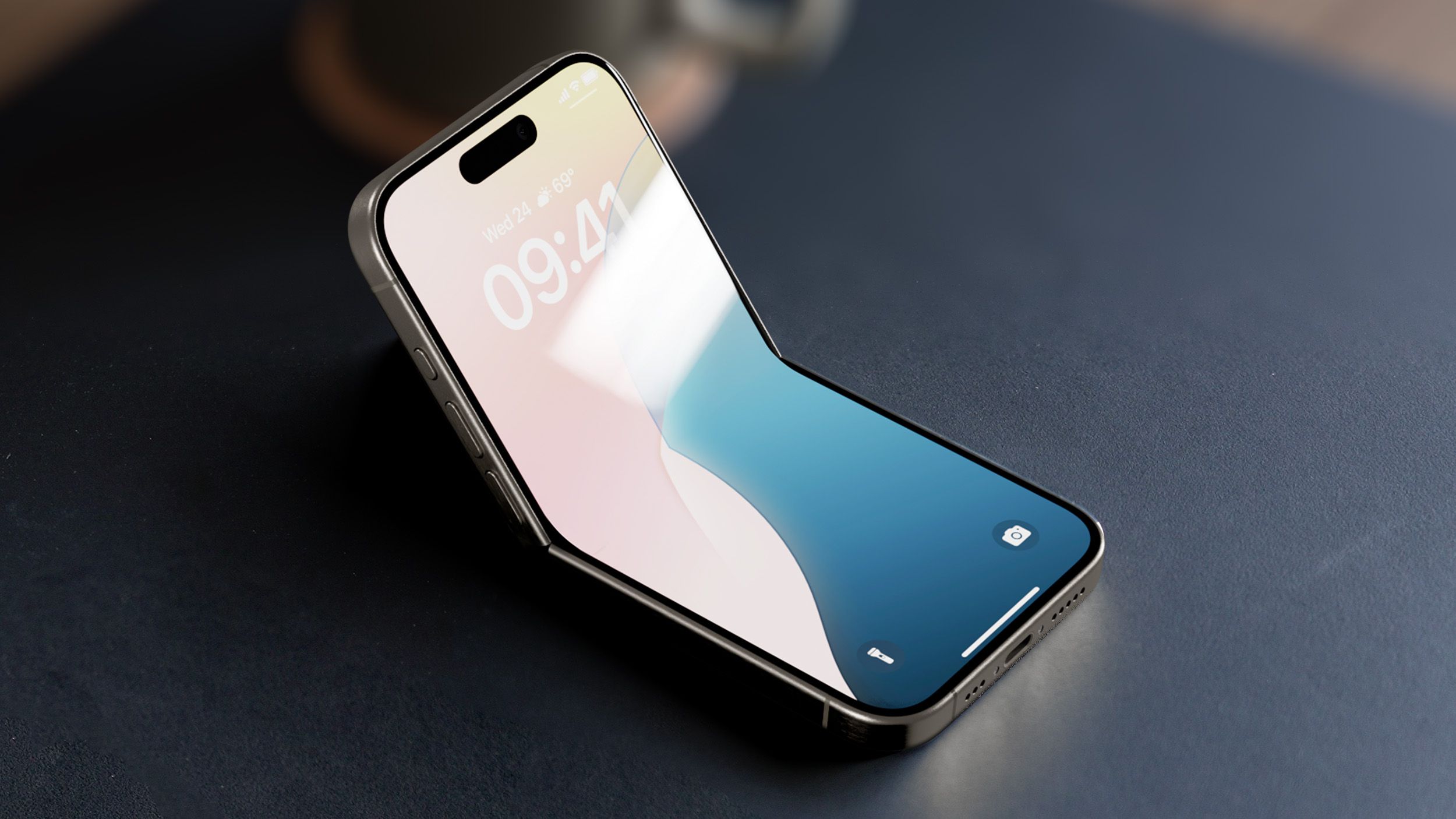
According to a known leaker based in Asia, Apple has tested a flip-style foldable iPhone. This design would allow the device to fold vertically, making it more compact and pocket-friendly. The flip-style foldable iPhone is in addition to the wide foldable iPhone that is expected to launch later this year. However, whether the flip-style foldable iPhone will reach mass production is yet to be decided.
Apple’s First Foldable iPhone: A Book-Style Design
Apple’s first foldable iPhone is expected to feature a book-style design, opening up like a book to reveal a large inner display. This design aims to provide users with a larger screen for activities such as watching videos, gaming, and multitasking. The device is anticipated to launch alongside the iPhone 18 Pro and iPhone 18 Pro Max in the fall.
Technical Challenges and Innovations
Developing foldable devices presents several technical challenges, particularly concerning the durability and functionality of the folding mechanism and display. Apple is reportedly testing next-generation ultra-thin flexible glass (UFG) for its book-style foldable iPhone to make the display crease invisible and potentially solve one of the most persistent issues of existing foldable displays. The testing is said to be ongoing as Apple refines manufacturing processes and long-term reliability targets ahead of an expected 2026 launch alongside the iPhone 18 Pro models.
Production Timeline and Market Expectations
Apple supplier Foxconn is expected to officially start producing Apple’s foldable iPhone late in the third quarter of 2025 (late September), or early in the fourth quarter (October). Apple plans to launch the device in the fall of 2026 as part of the iPhone 18 lineup. Though the September/October 2025 timeline is fast approaching, many component specifications have not yet been finalized. What is finished, though, is the foldable display, which will be produced by Samsung Display.
Potential Features and Specifications
Rumors suggest that Apple’s first foldable iPhone will feature a 7.8-inch crease-free inner display, a 5.5-inch cover display, Touch ID, two rear cameras, the A20 chip, and the C2 modem. It is expected to launch alongside the iPhone 18 Pro and iPhone 18 Pro Max in the fall. The device could be as thin as 4.5mm when unfolded, and 9 to 9.5mm when it’s closed, making it incredibly thin when used in its full-screen mode. Apple has put considerable effort into hinge design, and the device is expected to have almost no visible crease. It will use under-display cameras, though it may feature some kind of Touch ID authentication feature rather than Face ID due to space constraints. It will, of course, be expensive. In the past, analyst Ming-Chi Kuo has said he expects Apple to price the foldable iPhone at $2,000 to $2,500.
Market Implications and Consumer Interest
The introduction of a foldable iPhone could significantly impact the smartphone market, offering consumers new form factors and functionalities. While book-style foldables are expected to solidify their position as the dominant form factor in 2026, multi-fold panels like Samsung’s Galaxy Z TriFold will account for only low single-digit market share. The shift toward book-style designs is also expected to drive up average selling prices, making the category even more premium-focused.
Conclusion
Apple’s exploration into foldable iPhone designs, including both flip-style and book-style models, indicates a commitment to innovation and meeting diverse consumer preferences. As the company continues to test and refine these devices, the potential for a new era in smartphone design becomes increasingly tangible. However, the success of these devices will depend on overcoming technical challenges, meeting consumer expectations, and delivering a seamless user experience.