Apple’s Ongoing Legal Battle with Epic Games: A Supreme Court Showdown Looms
Apple is once again preparing to escalate its legal confrontation with Epic Games to the highest judicial authority in the United States. The tech giant has announced plans to petition the U.S. Supreme Court to review a pivotal aspect of the protracted dispute concerning App Store fees. This move underscores the intensifying battle over the financial dynamics of app distribution and the broader implications for the digital marketplace.
Background of the Dispute
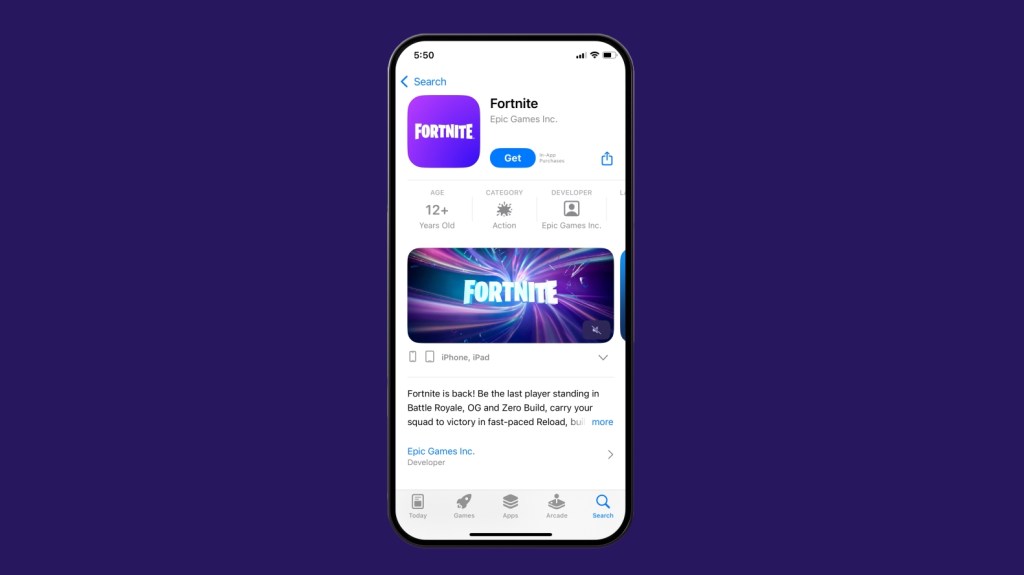
The conflict between Apple and Epic Games began in 2020 when Epic introduced an external payment system within its popular game, Fortnite, aiming to circumvent Apple’s standard 30% commission on in-app purchases. Apple responded by removing Fortnite from the App Store, prompting Epic to file a lawsuit alleging anticompetitive practices.
In 2021, the U.S. District Court largely sided with Apple, determining that the company did not hold a monopoly over mobile app distribution. However, the court mandated that Apple must permit developers to include links directing users to alternative payment methods outside the App Store. Apple contested this directive, but the Supreme Court declined to hear the appeal, thereby upholding the lower court’s decision.
Apple’s Response and Subsequent Legal Challenges
Complying with the court’s order, Apple adjusted its policies to allow external payment links. Nevertheless, the company instituted a 27% commission on transactions completed through these external avenues—a marginal reduction from the original 30% fee. Epic Games and other developers contended that this fee structure effectively nullified the intended benefits of the court’s ruling, as the savings were minimal and external payment processing incurred additional costs.
The U.S. District Court for the Northern District of California concurred with Epic’s position, finding Apple in contempt for imposing the 27% fee. This judgment was upheld by the U.S. Court of Appeals for the Ninth Circuit in December 2025, which stated that Apple’s fee undermined the purpose of allowing external payments. The appeals court did not specify a new commission rate, leaving that determination to a lower court. Apple’s request for a rehearing was denied in March 2026, prompting the company to seek intervention from the Supreme Court.
Implications of the Supreme Court Appeal
By petitioning the Supreme Court, Apple aims to challenge the legal standards that led to its contempt ruling. The company argues that judicial bodies should not have the authority to dictate the fees it charges for its services. Apple maintains that the 27% commission reflects the value provided by its App Store ecosystem, encompassing services such as hosting, app discovery, and access to developer tools.
The Supreme Court’s decision to hear or decline the case will have significant ramifications. A refusal to hear the appeal would uphold the lower court’s ruling, potentially compelling Apple to revise its commission structure. Conversely, if the Supreme Court agrees to review the case, it could lead to a reevaluation of the legal framework governing digital marketplaces and the extent of control exerted by platform owners.
Broader Industry Context
This legal battle occurs against a backdrop of increasing scrutiny over the practices of major tech companies. Notably, Google recently settled a similar dispute with Epic Games by reducing its Play Store commissions to 20% and introducing measures to facilitate the installation of alternative app stores. This settlement highlights a growing trend toward more flexible and developer-friendly policies within the app distribution landscape.
As the case progresses, its outcome could reshape the financial models of app stores and influence the balance of power between platform owners and developers. The resolution will be pivotal in determining how digital marketplaces operate and how value is distributed within the app economy.