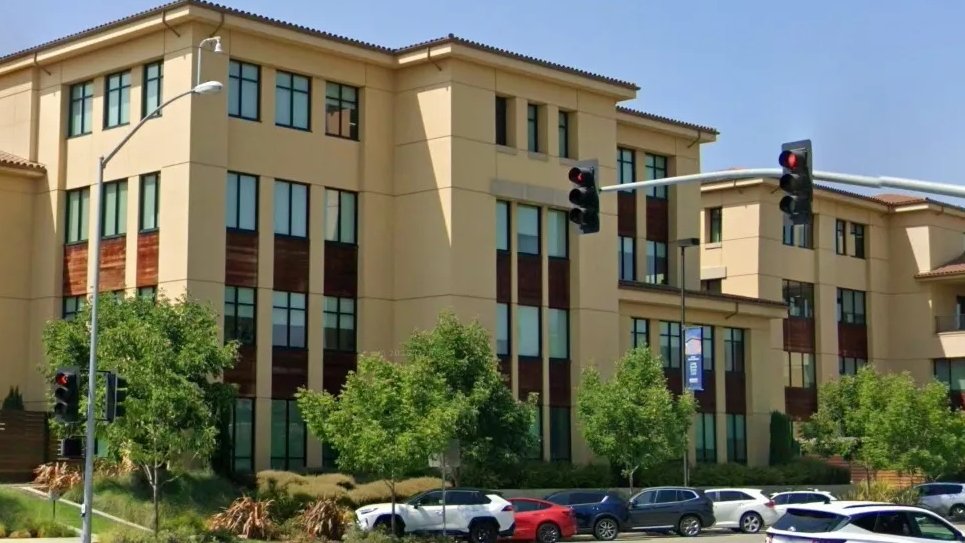
Apple’s Strategic Expansion: $216 Million Investment in Cupertino Office Buildings
In a significant move to bolster its presence in Cupertino, Apple Inc. has acquired two office buildings for a combined total of $216 million. This acquisition is part of Apple’s ongoing strategy to expand its real estate footprint in the Bay Area, reflecting the company’s commitment to fostering innovation and collaboration within its teams.
Details of the Acquisition
The two newly acquired properties are situated on Stevens Creek Boulevard in Cupertino, a city that has been synonymous with Apple’s growth and innovation for nearly half a century. The buildings, located at 19319 and 19339 Stevens Creek Boulevard, offer approximately 136,600 square feet and 129,900 square feet of space, respectively. The transaction was finalized on December 11, 2025, as per documents filed with the Santa Clara County Recorder’s Office.
Kristina Raspe, Apple’s Vice President of Global Real Estate and Facilities, commented on the acquisition, stating, We are proud to continue investing in world-class facilities designed to foster innovation and collaboration. The Santa Clara Valley has been Apple’s home for nearly 50 years, and we are committed to its future.
A Year of Strategic Investments
The purchase of these office buildings is the latest in a series of significant real estate investments by Apple in 2025. Earlier this year, the company made notable acquisitions, including:
– June 2025: Apple acquired a $350 million campus in Sunnyvale, adding over 380,000 square feet of office space to its portfolio. This campus is located just under seven miles from Apple Park, the company’s iconic headquarters.
– June 2025: Shortly after the Sunnyvale acquisition, Apple purchased the Tantau office complex near Apple Park for $160 million. The 220,700-square-foot building was already in use by Apple through a lease agreement before the purchase.
These strategic investments underscore Apple’s commitment to expanding its operational capacity and providing state-of-the-art facilities for its employees.
Historical Context of Apple’s Real Estate Expansion
Apple’s recent acquisitions are part of a long-standing strategy to secure prime real estate in the Cupertino area. Notable milestones in this journey include:
– 2010: Apple purchased a 98-acre campus vacated by Hewlett-Packard (HP) in Cupertino. This acquisition was adjacent to land Apple had bought in 2006, allowing the company to consolidate its operations and plan for future growth.
– 2011: The company began leasing the Results Way campus, a 373,000-square-foot facility, which it eventually purchased in December 2022. This move exemplifies Apple’s approach of initially leasing properties before committing to ownership.
– 2013: Apple initiated the development of its iconic Apple Park, often referred to as the spaceship campus. The project involved demolishing existing structures on the former HP campus to make way for the new headquarters, which now serves as a symbol of Apple’s innovation and design philosophy.
Implications for Cupertino and the Broader Bay Area
Apple’s continued investment in Cupertino has significant implications for the local economy and community. The company’s expansion efforts contribute to job creation, increased tax revenues, and the overall economic vitality of the region. For instance, the development of Apple Park was projected to generate thousands of jobs and substantial tax revenues for the City of Cupertino and surrounding municipalities.
Moreover, Apple’s commitment to the area has spurred infrastructure improvements, including roadways, utilities, and public transportation enhancements. The company’s investments often come with pledges to fund public improvements, reflecting a holistic approach to corporate expansion that considers community impact.
Looking Ahead
As Apple continues to grow, its real estate acquisitions signal a strategic focus on providing ample space for its expanding workforce and fostering an environment conducive to innovation. The company’s pattern of purchasing properties it initially leases suggests a careful, long-term approach to expansion, ensuring that facilities meet the evolving needs of its teams.
The recent $216 million investment in Cupertino office buildings is likely not the end of Apple’s real estate endeavors. Given the company’s trajectory, further acquisitions and developments can be anticipated in the coming years, reinforcing Apple’s deep-rooted presence in the Bay Area and its commitment to shaping the future of technology from its Cupertino base.