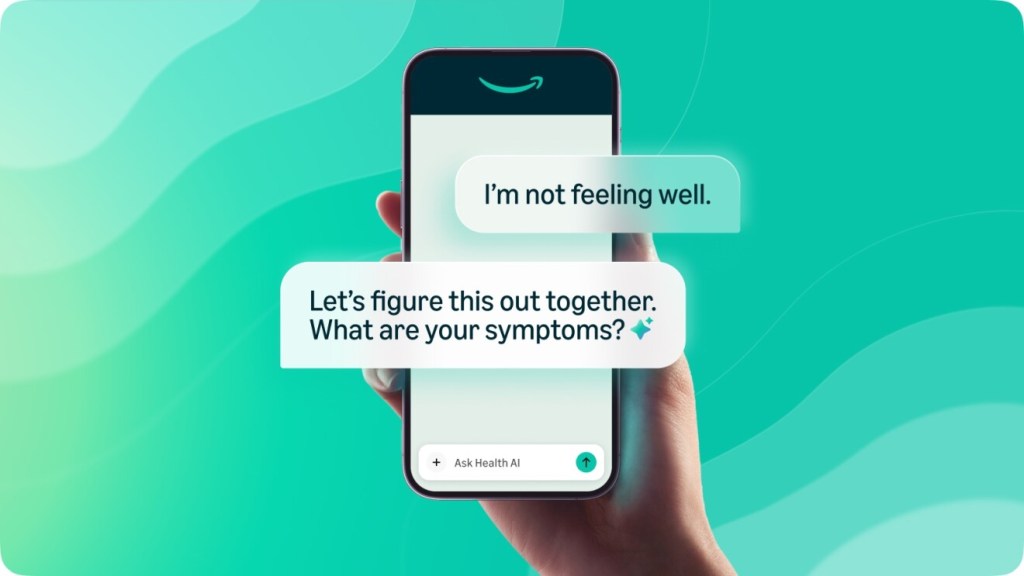
Amazon Expands Health AI Assistant to Website and App, Enhancing Healthcare Accessibility
Amazon has broadened the reach of its healthcare AI assistant, Health AI, by integrating it into its main website and mobile application. Previously exclusive to the One Medical app—a healthcare provider Amazon acquired for $3.9 billion in 2023—this expansion aims to make healthcare resources more accessible to a wider audience.
Comprehensive Health Support
Health AI is designed to assist users with a variety of healthcare-related tasks, including:
– Answering general health inquiries
– Explaining health records and lab results
– Managing prescription renewals
– Scheduling medical appointments
Notably, access to Health AI is not restricted to Amazon Prime subscribers or One Medical members, ensuring that a broad spectrum of users can benefit from its features.
Personalized Healthcare Guidance
While Health AI can provide general health information without accessing personal medical data, it is also equipped to offer personalized guidance. With user consent, Health AI can:
– Interpret individual lab results and medical records
– Provide tailored advice based on personal health information
– Connect users with healthcare professionals and appropriate treatments
This personalized approach is facilitated through the Health Information Exchange, a secure national system for sharing patient medical data.
Commitment to Data Privacy and Security
Amazon emphasizes its dedication to user privacy and data security. The company states that Health AI operates within a HIPAA-compliant environment, ensuring that all interactions are protected by encryption and strict access controls. Additionally, Amazon clarifies that Health AI models are trained on abstracted patterns without directly identifying information. For instance, if multiple users inquire about medication interactions, the system uses these patterns to improve responses while keeping individual identities confidential.
Accessing Health AI
To utilize Health AI, users can sign up on the Amazon Health page. As access is expanded, users will receive an email notification once they can use the assistant. After gaining access, users need to create or sign in to their personal Amazon Health profile. They can then start a conversation by typing their health questions on Amazon.com or in the Amazon app. Examples of queries include:
– Can you explain my recent cholesterol results and what they mean for me?
– I’m feeling congested and have a sore throat. What should I do?
Integration with One Medical Providers
For users requiring professional care, Health AI can facilitate connections with One Medical providers. Prime members in the U.S. using Health AI receive up to five free direct-message consultations with a One Medical provider for over 30 common conditions, including:
– Cold and flu
– Allergies
– Acid reflux
– Pink eye
– Urinary tract infections (UTIs)
– Erectile dysfunction
– Anti-aging skin care
– Hair loss
Non-Prime members can connect with One Medical providers through Amazon’s pay-per-visit option.
Addressing Privacy Concerns
While Health AI offers numerous benefits, sharing personal health information with AI systems carries inherent risks. Researchers caution against potential privacy issues, noting that companies may use user conversations for training purposes. Amazon addresses these concerns by stating that Health AI models are trained on abstracted patterns without directly identifying information. However, specifics regarding encryption methods and access controls have not been fully disclosed.
Conclusion
The expansion of Health AI to Amazon’s website and app signifies a significant step in making healthcare resources more accessible and personalized. By integrating advanced AI capabilities with a commitment to data privacy, Amazon aims to provide users with a reliable and secure health assistant. As with any AI-driven service, users should remain informed about privacy practices and exercise discretion when sharing personal health information.