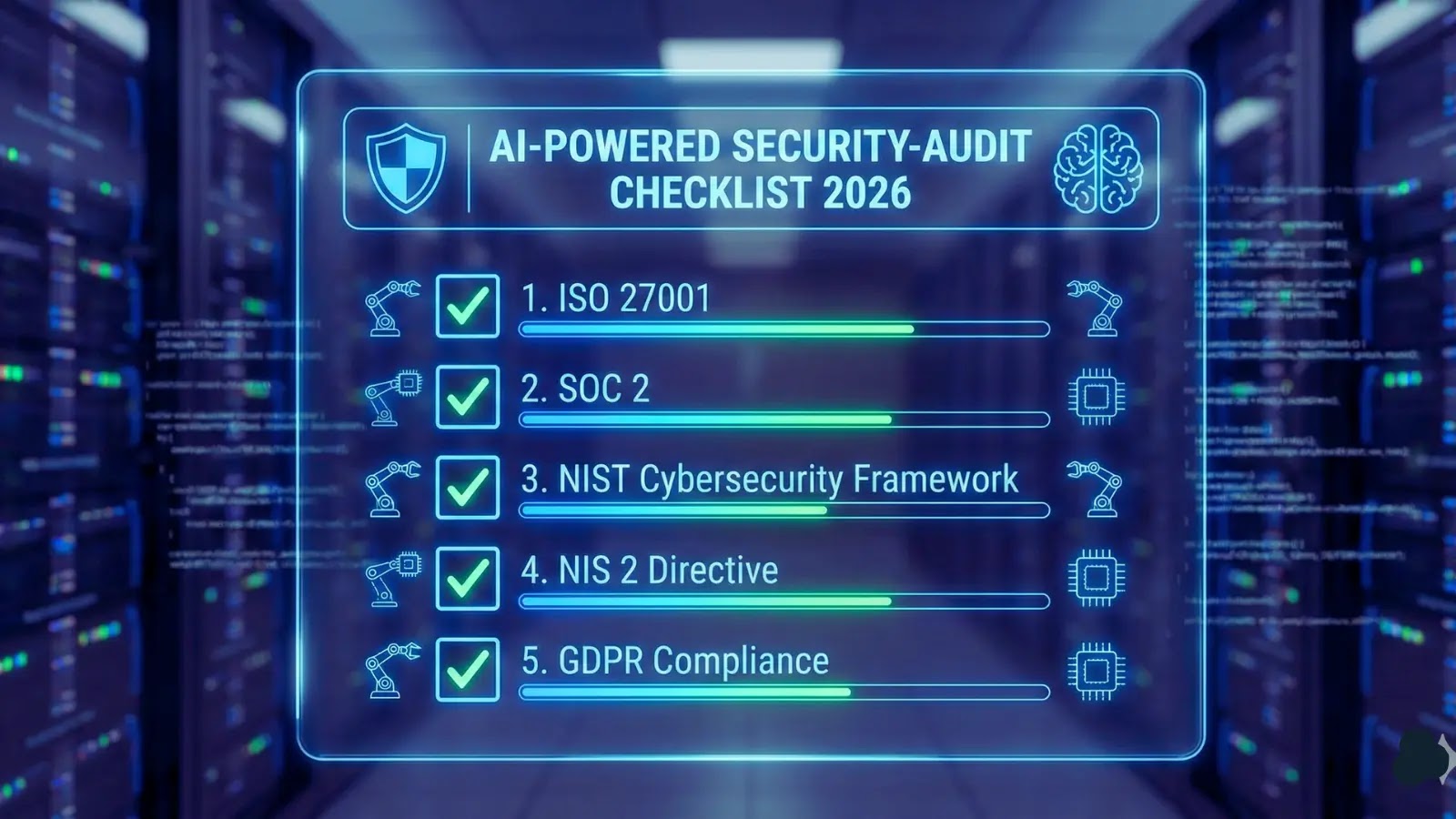
Revolutionizing Compliance: AI-Powered Security Audit Checklists for 2026
In today’s rapidly evolving digital landscape, organizations face increasing demands to maintain continuous audit readiness. Traditional methods, often reliant on manual processes and scattered documentation, are proving inadequate. The advent of AI-driven tools offers a transformative solution, streamlining compliance efforts and enhancing security postures.
The Shift from Periodic Audits to Continuous Compliance
Historically, frameworks like ISO 27001, SOC 2, NIST CSF, NIS 2, and GDPR have emphasized:
– Risk-based approaches
– Documented processes and controls
– Traceable implementations
– Regular reviews and improvements
However, many organizations treat audits as annual projects rather than ongoing processes. Evidence is often dispersed across platforms like SharePoint, ticketing systems, and emails, lacking contextual alignment with specific requirements. Manual completion of questionnaires and checklists further burdens security teams, diverting them from core responsibilities.
Continuous audit readiness integrates controls into daily operations, ensuring:
– Ongoing control implementation
– Systematic evidence collection
– Efficient response to audit catalogs
– Adaptability to new requirements
AI technologies play a pivotal role in facilitating this transition.
Commonalities Across Compliance Frameworks
Despite varying focuses, frameworks such as ISO 27001, SOC 2, NIST CSF, NIS 2, and GDPR share overlapping themes:
– Asset management and data classification
– Access control and identity management
– Logging and monitoring
– Incident response
– Backup and recovery
– Vendor management and third-party risk
– Privacy by design and data protection
This overlap necessitates repeated evidence collection, with only the framework perspective changing. AI-powered tools can automate the mapping between evidence and controls, maintaining professional oversight.
Practical Applications of AI in Compliance
To move beyond the hype, AI must address specific tasks without implying that audits are self-sufficient. Key areas include:
1. Document Comprehension Beyond Full-Text Search
Modern AI models can:
– Semantically understand policies, process descriptions, logs, tickets, and reports
– Recognize conceptually similar content (e.g., Access Control Policy vs. User Provisioning Guidelines)
– Extract relevant passages matching specific requirements
2. Automated Completion of Audit Catalogs
The labor-intensive aspects of compliance projects often involve:
– Filling out checklists and questionnaires
– Compiling information from existing documentation
– Manually referencing evidence
Specialized tools can:
– Import audit catalogs (e.g., ISO 27001 controls, SOC 2 questionnaires)
– Ingest existing evidence (policies, logs, ISMS documents, reports)
– Automatically generate draft responses with evidence references
3. Identifying Gaps and Missing Evidence
AI can highlight:
– Controls lacking suitable evidence
– Unaddressed or superficially covered topics
– Inconsistencies across documents
This proactive approach reveals:
– Well-covered controls
– Areas requiring further attention
– Practiced but undocumented processes
4. Real-Time Support During Audits
AI-powered audit assistants can:
– Receive auditor questions (e.g., How do you manage privileged access?)
– Search within uploaded evidence
– Formulate answers
– Highlight relevant document passages
This streamlines the audit process for both companies and auditors without compromising professional responsibility.
Integrating AI into Compliance Architecture
A serious approach avoids presenting AI as a black box that autonomously conducts audits. Instead, AI should:
– Complement existing ISMS, GRC, and ticketing systems
– Integrate with document management systems like SharePoint or wikis
– Serve as an intermediary layer that:
– Reads documents
– Understands audit catalogs
– Generates suggestions, mappings, answers, and overviews
Tools like AiAuditBuddy exemplify this approach, aiming to automate tedious tasks such as filling out catalogs and searching for evidence, without replacing ISMS or auditors.
Recognizing AI’s Current Limitations
It’s crucial to acknowledge that AI is not a panacea. Responsibility for risk assessment, control selection, and prioritization remains with the organization. AI can suggest but cannot determine whether a control is sufficiently implemented. Claims of one-click compliance should be critically evaluated, especially for security-critical topics.
Pragmatic solutions focus on:
– Time savings
– Consistency of responses
– Enhanced visibility into evidence
– Clear audit trails indicating responsibility
Practical Example: Continuous Audit Readiness Without an Enterprise Budget
Smaller companies, startups, or specialized IT service providers often lack the resources for major GRC suites. Tools like AiAuditBuddy address this gap by offering:
– Simple implementation: SaaS, sign up, upload documents, and start
– Focus on critical tasks: checklists, question catalogs, evidence mapping
– Realistic promises: providing suggestions and structure while maintaining team responsibility
– European data protection standards: hosting and development with a focus on privacy
The goal is not to automate compliance away but to free security teams to focus on real risks, architectural decisions, and hardening measures, while AI handles the repetitive tasks.