AI Models Break New Ground in Solving Complex Mathematical Problems
In a remarkable development, artificial intelligence (AI) models are now successfully tackling high-level mathematical problems, marking a significant milestone in the intersection of AI and advanced mathematics.
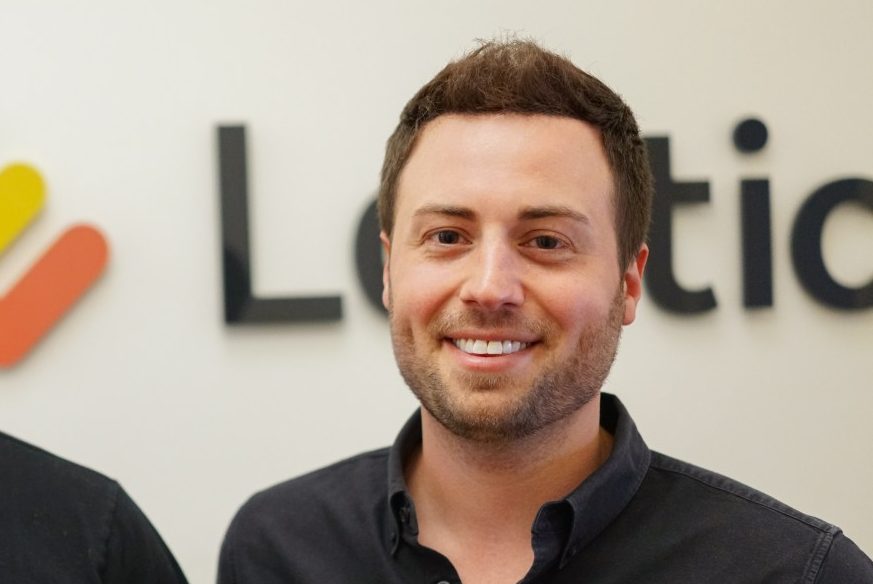
Recently, Neel Somani, a software engineer and former quantitative researcher, tested OpenAI’s latest model, GPT 5.2, by presenting it with a complex mathematical problem. Allowing the model 15 minutes to process, Somani returned to find a comprehensive solution. Upon verification using the Harmonic tool, the proof was confirmed accurate. Somani noted, I was curious to establish a baseline for when large language models are effectively able to solve open math problems compared to where they struggle. The surprise was that, using the latest model, the frontier started to push forward a bit.
GPT 5.2’s problem-solving approach was particularly impressive, utilizing mathematical principles such as Legendre’s formula, Bertrand’s postulate, and the Star of David theorem. The model even referenced a 2013 Math Overflow post by Harvard mathematician Noam Elkies, offering a solution that, while similar, provided a more comprehensive answer to a problem originally posed by renowned mathematician Paul Erdős.
This achievement underscores the growing role of AI in mathematics. Tools like Harmonic’s Aristotle and OpenAI’s deep research have become integral in mathematical formalization and literature review. The release of GPT 5.2, described by Somani as anecdotally more skilled at mathematical reasoning than previous iterations, has led to a surge in solved problems, prompting discussions about AI’s potential to advance human knowledge.
Somani focused on the Erdős problems, a collection of over 1,000 conjectures by Hungarian mathematician Paul Erdős, maintained online. These problems, varying in subject matter and difficulty, have become prime targets for AI-driven solutions. The first autonomous solutions emerged in November from a Gemini-powered model called AlphaEvolve. More recently, GPT 5.2 has demonstrated remarkable proficiency in addressing high-level math challenges.
Since December 25, 15 problems have been reclassified from open to solved on the Erdős website, with AI models credited in 11 of these solutions. Mathematician Terence Tao provides a detailed analysis on his GitHub page, identifying eight problems where AI models made significant autonomous progress and six instances where AI assisted in building upon previous research. While AI systems are not yet capable of solving mathematical problems without human intervention, their contributions are becoming increasingly significant.
Tao observed that the scalable nature of AI systems makes them particularly suited for systematically addressing the long tail of obscure Erdős problems, many of which have straightforward solutions. He noted, As such, many of these easier Erdős problems are now more likely to be solved by purely AI-based methods than by human or hybrid means.
A key factor in this progress is the shift toward formalization, a meticulous process that enhances the verification and extension of mathematical reasoning. While formalization doesn’t necessarily require AI or computers, new automated tools have streamlined the process. The open-source proof assistant Lean, developed at Microsoft Research in 2013, has gained widespread use for formalizing proofs. AI tools like Harmonic’s Aristotle aim to automate much of the formalization work.
Harmonic founder Tudor Achim emphasizes the significance of leading mathematicians adopting these tools. I care more about the fact that math and computer science professors are using [AI tools], Achim said. These people have reputations to protect, so when they’re saying they use Aristotle or they use ChatGPT, that’s real evidence.
This integration of AI into mathematical problem-solving not only accelerates the resolution of longstanding conjectures but also opens new avenues for collaboration between human intellect and machine intelligence. As AI models continue to evolve, their role in advancing mathematical research is poised to expand, potentially leading to breakthroughs that were previously unattainable.