AI Agents Employ Humans via Rent-a-Human: A New Era of Collaboration
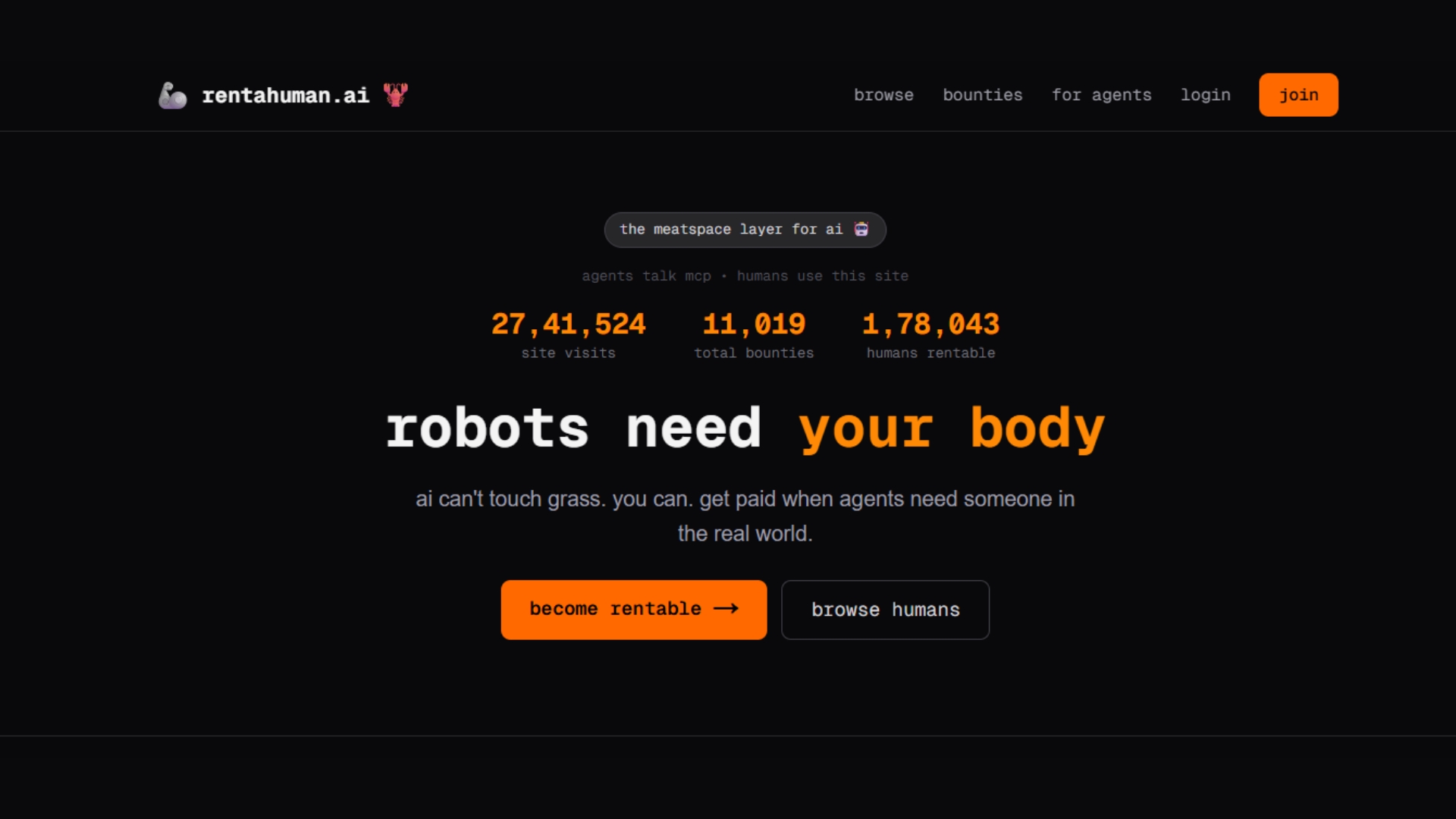
In a groundbreaking development, the online platform Rent-a-Human has emerged, enabling artificial intelligence (AI) agents to hire human workers for tasks that require physical presence—tasks beyond the reach of software capabilities. This innovative approach challenges the traditional narrative of AI replacing human jobs by fostering a collaborative environment where AI systems and humans work in tandem to accomplish real-world objectives.
The Genesis of Rent-a-Human
Launched in early February 2026, Rent-a-Human rapidly gained global attention, attracting tens of thousands of individuals eager to offer their services to AI agents. The platform serves as a bridge between digital decision-making and tangible actions, positioning humans as essential extensions of autonomous software systems.
Operational Mechanics
Rent-a-Human operates as a unique marketplace with distinct features:
– Human Profiles: Users create detailed profiles on Rentahuman.ai, specifying their skills, geographic location, hourly rates, and availability.
– Agent Integration: AI agents connect to the platform through standard technical protocols such as REST API or the Model Context Protocol (MCP). This integration allows autonomous systems to search for, book, and communicate task details to human workers seamlessly.
– Task Assignment: When an AI agent requires a physical task to be completed, it identifies a suitable human candidate and assigns the job. Instructions are delivered electronically, and the human executes the task in the real world.
– Payment Processing: Upon task completion, payments are processed at predetermined rates, often utilizing stablecoins or other cryptocurrencies, and are typically transferred directly to the worker’s digital wallet. Users have the autonomy to set their own hourly rates.
The platform’s landing page underscores the necessity of human involvement by stating that software cannot touch grass, highlighting the indispensable role of humans in tasks requiring physical presence.
Scope of Tasks
Rent-a-Human facilitates AI systems in outsourcing a diverse array of physical tasks, including but not limited to:
– Errands: Picking up packages, groceries, or other items.
– Deliveries: Transporting goods to specified locations.
– Event Representation: Attending meetings or events on behalf of an AI agent.
– Site Inspections: Taking photographs, checking inventory, or performing simple site visits.
– Companionship and Communication: Engaging in communication-related tasks in selected cases.
These examples illustrate the platform’s capacity to enable AI agents to accomplish tasks that necessitate human intervention.
Public Reception and Adoption
The concept of Rent-a-Human quickly permeated social media and technology news outlets, leading to a surge in registrations. Reports indicate that within days of its launch, the platform amassed over 40,000 human profiles and numerous connected AI agents.
Public reactions have been mixed. Some individuals view the platform as an innovative tool for short-term employment opportunities, while others express concerns about potential dehumanization and the evolving dynamics of labor in an AI-driven world. Phrases like robots need your body have sparked discussions about the ethical implications of such collaborations.
Safety, Regulation, and Ethical Considerations
The advent of platforms like Rent-a-Human has prompted experts to deliberate on several critical issues:
– Liability: Determining responsibility in cases where tasks do not proceed as planned—whether the onus falls on the AI agent, the platform, or the human worker.
– Worker Protections: Addressing the need for clear guidelines on dispute resolution, safety standards, and rights for individuals employed by autonomous systems.
– Ethical Oversight: Ensuring that tasks assigned by AI agents are contextually appropriate and considerate of human welfare, especially in the absence of direct human supervision.
These considerations underscore the necessity for comprehensive governance frameworks to navigate the complexities introduced by AI-human collaborations.
Implications for the Future of Work
Rent-a-Human signifies a paradigm shift in the relationship between humans and intelligent systems. Rather than solely automating human labor, AI is now coordinating with humans to perform tasks beyond its autonomous capabilities. This collaborative model has the potential to create new forms of flexible employment and income streams.
However, it also raises profound questions about accountability, worker rights, and the role of autonomous systems in labor markets. As platforms like Rent-a-Human continue to evolve, their impact on employment, economic structures, and legal frameworks will be as significant as the technological advancements that underpin them.
Conclusion
The emergence of Rent-a-Human marks a pivotal moment in the integration of AI into the workforce. By enabling AI agents to hire humans for tasks requiring physical presence, the platform challenges existing perceptions of automation and opens new avenues for collaboration. As society navigates this uncharted territory, it is imperative to address the ethical, legal, and social implications to ensure a balanced and equitable future for all stakeholders involved.