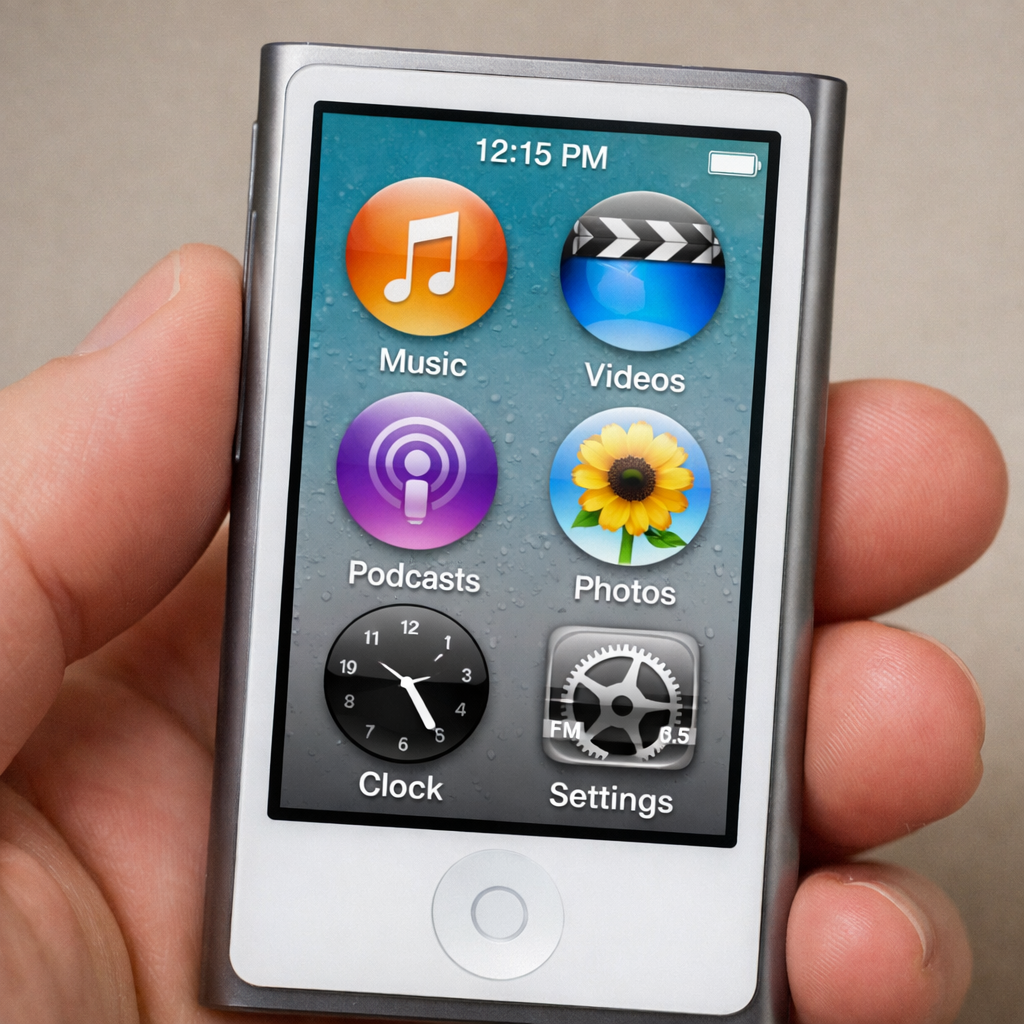
A developer known as “New Frontier 0x” has created and released an unofficial project enabling the seventh-generation iPod nano (2012 model) to boot iOS, allowing it to run classic iPhone apps. The device, which has a 2.5-inch touch display, originally shipped with its own OS sporting round icons and an interface reminiscent of iOS 6—but never supported genuine iPhone apps. With this hack, it now supports iPhone OS through up to iOS 10, though performance severely suffers on later versions.
What the Port Involves
The project, announced November 28 by New Frontier 0x, replaces the nano’s original operating system with a version of iOS modified to run on its hardware. Key to this feat are a modified kernel, memory compression to survive with just 64MB of RAM, and leveraging the nano’s graphics chip (shared with iPod touch 2nd generation) to enable hardware acceleration. The screen UI has been redesigned to fit the device’s 240×432 display. Launching the port is done via NanoApps, a homebrew toolkit layered on top of the original firmware interface.
Performance, Risks & Status
Booting iOS on the nano is a slow process. Early testers report boot-times like five minutes for iOS 6, around one minute for iPhone OS 3, and nearly 11 minutes for iOS 10. Many apps fail to launch, crashes are frequent, and some units get stuck on the Apple logo post-restart. Restores via official methods may not succeed. Developers are examining flash storage corruption and have proposed experimental recovery tools. For safety, the download has been pulled and use is discouraged until a stable, recoverable version is released.
Legacy Details & Hardware Constraints
The seventh-generation nano first shipped in 2012 with a 16GB storage capacity and a Lightning connector. It stood out for its ultrathin profile—just over five millimeters thick—and light weight at 31 grams, making it still Apple’s slimmest standalone device once camera-bumps are excluded. Apple ended the iPod line entirely in July 2017.
This is not the first time enthusiasts have pushed classic Apple hardware past its intended limits. By adapting kernel functions and squeezing out hardware features, projects like these revive devices that Apple has long since discontinued.
For now, installing iOS on the nano remains experimental and risky: the hardware struggles under the weight of modern OS demands, and recovery tools aren’t yet reliable. But the work highlights a deeper fascination with preserving and enhancing vintage devices—raising questions about Apple’s role in long-term support and what unofficial efforts can achieve when passionate users take control.