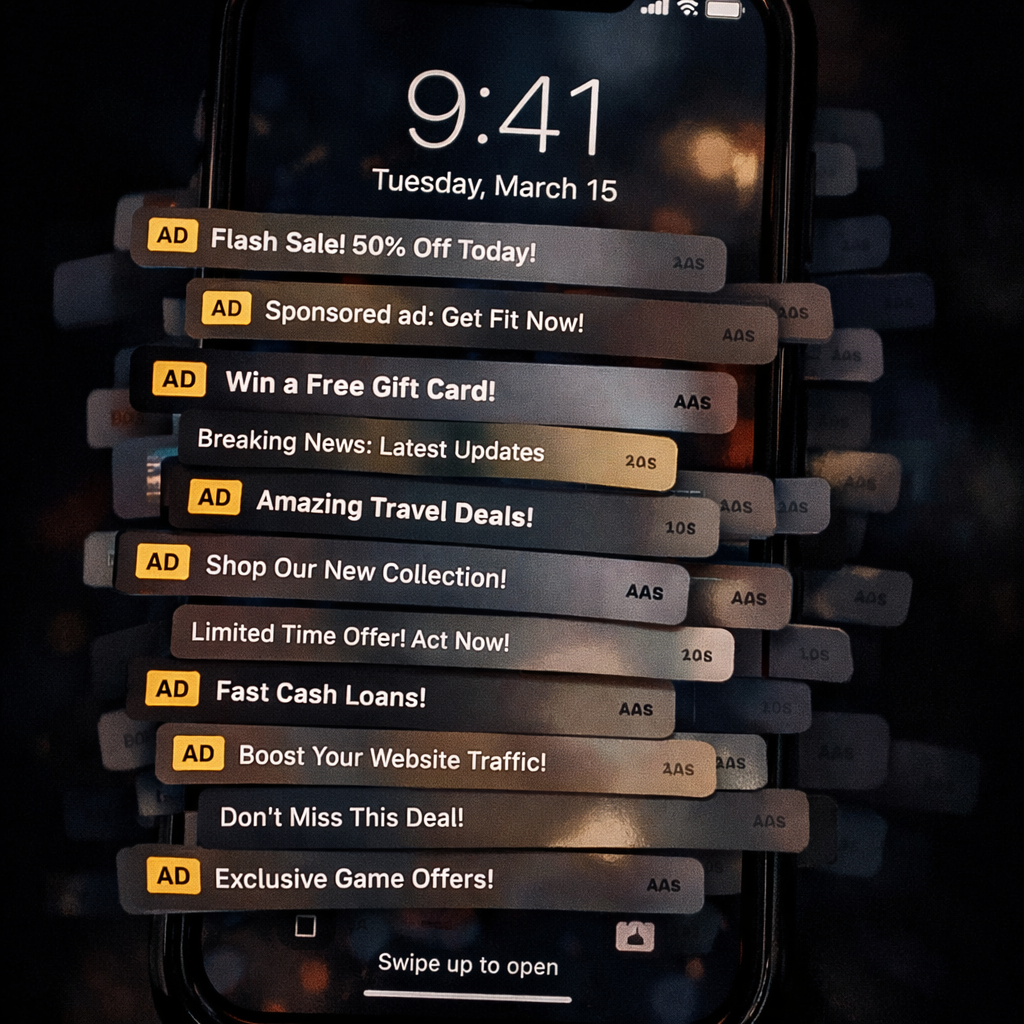
Apple appears set to change how notification ads behave in iOS 28, igniting debate over whether the update will clean up unwanted alerts or make them even harder to avoid.
The Current State: Ads via Notifications
Today, iPhone users sometimes get notification-style ads—from Apple and third parties—that pop up like regular app alerts. Though users are generally supposed to opt in before receiving ads, reports suggest this requirement is being sidestepped: apps send ads even when users have turned off the relevant permissions, and built-in settings in the App Store meant to disable “Recommendations & Offers” are allegedly ignored. The issue isn’t just with third-party developers; Apple may also be contributing to the problem. When apps bundle advertising under seemingly unrelated permissions—like delivery apps using “order updates” as a pretext for ad messages—it becomes murky what users are consenting to.
What iOS 28 Might Do (or Not)
The rumor is vague: changes to notifications are likely, but whether they reduce ad noise or expand it remains uncertain. It’s possible the update will reinforce rules so that developers can’t override both app-level and system-level settings. Alternatively, Apple might relax restrictions, opening doors for even more aggressive notification ads. Another scenario is that the changes are cosmetic—re-styling alerts without addressing the deeper policy issues.
Settings Already in Place… But Flawed
Some controls already exist. In the App Store, users can tap their profile picture, go to Notifications, and disable “Recommendations & Offers.” Apple Wallet also has a toggle for “New Features & Updates.” Yet these features don’t always seem to work reliably: even with them off, ad-like notifications keep arriving. This suggests either technical bugs or policy loopholes that allow some developers—and possibly Apple—to bypass what are supposed to be user-controlled settings.
On the upside, these existing settings provide a baseline users can control now, rather than waiting for iOS 28. On the downside, the recurrence of ad notifications despite those settings severely damages trust. Users who disable ads expect the system to respect that choice; when it doesn’t, frustration and cynicism follow.
As for iOS 28, the pressure is strong for Apple to set hard limits. The company may need to clarify exactly what consent means, enforce existing rules more strictly, or restructure notification permissions altogether. On the flip side, if Apple leans toward monetization and gives more leeway to developers (or itself), it could end up making the ad problem worse.
So far, there’s no public, credible source that confirms whether iOS 28 will rein in notification ads or expand them further. What’s clear is that users are paying close attention—and their patience is wearing thin.
What this means: Notification ads are more than just nuisance—they’re a test of Apple’s commitment to user control over their phone experience. iOS 28 could mark a turning point: either users finally get the say in what appears on their lock screen—or Apple doubles down on ad reach. Keep an eye on the first betas of iOS 28 for how permissions change, which alerts can’t be suppressed, and whether App Store policy begins prioritizing respect for user settings over revenue potential.