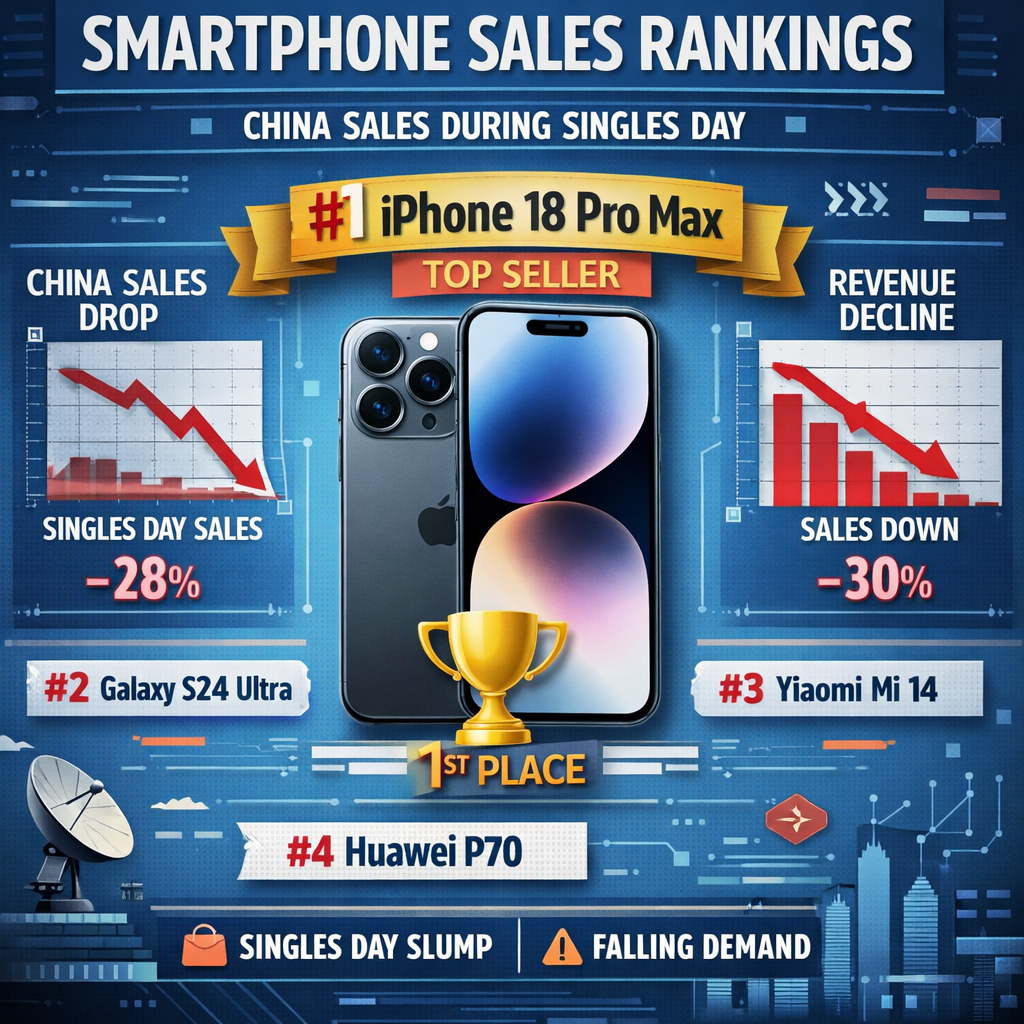
China’s Singles’ Day promotional period (Weeks 42–46 of 2026) confirmed a broader slump in smartphone demand: total sales across all brands fell 17% year-over-year, according to a new tracker from Counterpoint. Despite this drop, Apple remained the market leader, even though its own smartphone sales were down 8%.
Apple secured six out of the top ten spots among best-selling phone models during the period—led by the iPhone 18 Pro Max. Other iPhones in the top ten included several models in the 17 series, along with the newly released iPhone Duo, which took the ninth slot in the rankings. The company’s strong performance in premium models helped it outperform the overall market contraction.
Among China’s local OEMs, only Huawei posted growth—sales rose a notable 29% year-over-year. The uplift was driven by its recent launches: the Enjoy 90 Pro Max, Pura X View, and the Enjoy 100 series. Other major Android brands saw double-digit declines as rising costs and weaker buying incentives hurt demand across mid-to-low-end steps in the market.
What’s Behind the Decline?
While promotional campaigns—such as JD and Tmall offering discounts, coupons, trade-ins, and installments—were active, they failed to fully offset price increases. Competition platforms like PDD concentrated subsidies specifically on iPhones. Still, surging costs of components restricted how deeply even Apple or Huawei could discount their devices.
Consumer sentiment also played a key role. A Counterpoint survey found that 81% of Chinese customers planning to purchase a phone in the next six months have noticed price hikes. There’s a growing trend of delaying upgrades rather than paying more. Analysts warn that this cautious behavior could drag on through 2027, especially as even premium devices increasingly play within these pressured margins.
To put these numbers into perspective: Singles’ Day (also known as Double 11) spans from October 12 to November 13 in 2026. Despite robust efforts from retailers, the 17% market-wide decline contrasts sharply with past years when strong discounts or earlier flagship launches drove growth.
Apple’s dominance during this period reinforces its strength in China’s premium smartphone sector. Still, even its 8% slide signals exposed vulnerabilities under current economic pressures. For competitors, Huawei’s 29% leap is impressive—but whether it can sustain momentum depends heavily on whether it can control costs while delivering appealing specs.
What to Watch: Can Android brands rebound with aggressive premium offerings in 2027? Will Apple need to adjust pricing strategies to defend its market position? And, most importantly, how will government subsidy policies, platform promotions, and component costs shape consumers’ upgrade decisions?