Security researchers uncovered three open web directories tied to a hacking crew, exposing sensitive credentials from U.S. hospitals, cloud storage of a major manufacturer, and internal access maps used by law firms. Though the exposed data provided significant visibility into what the attackers had gathered and attempted, there’s no confirmed breach of patient records or proof that law firms suffered a successful compromise.
Hospital Credentials Leaked, Scam Tracked
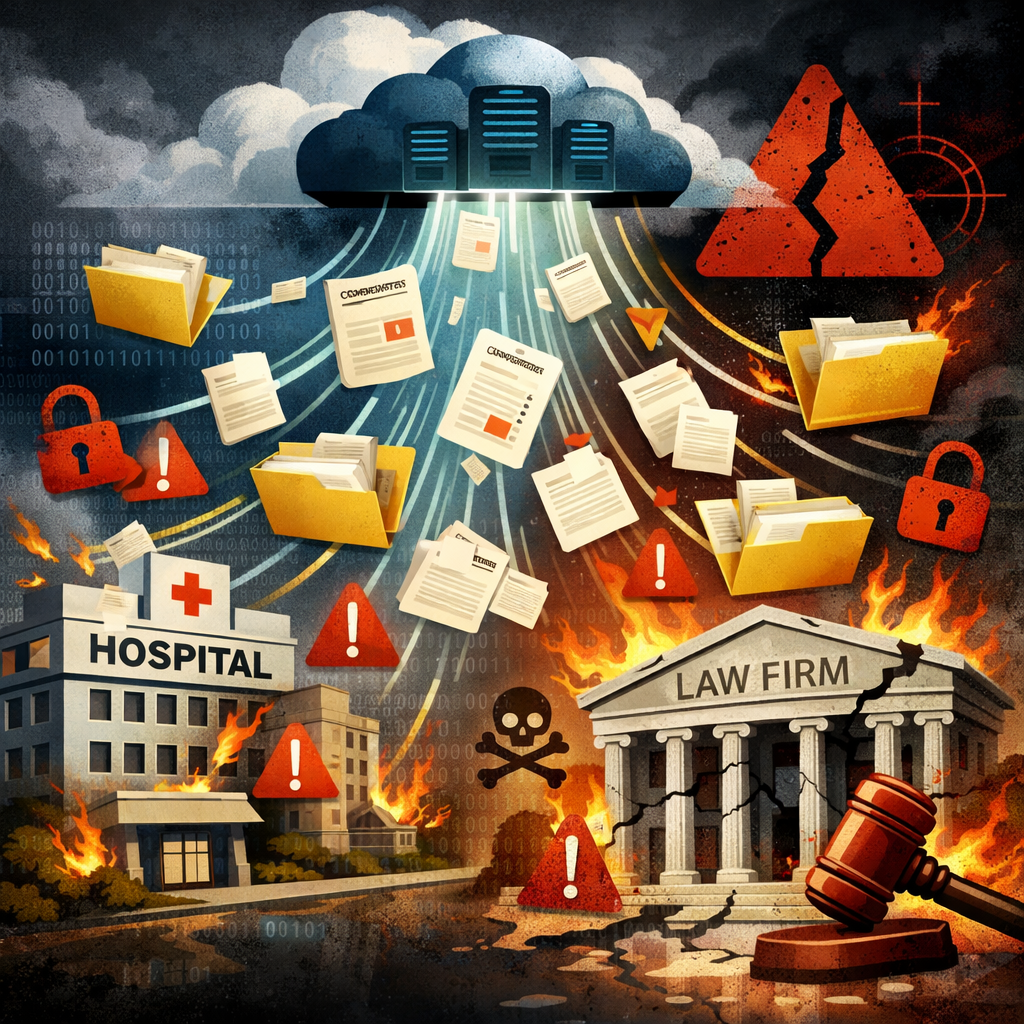
One directory revealed thousands of hospital-related records: over 8,400 unique email addresses, separated authentication logs, and detailed configuration files from a hospital’s web server. Most of the email addresses were associated with the hospital system’s main domain, with hundreds more linked to its academic affiliate. While a captured hospital VPN session appeared among these files, it wasn’t directly tied to the credential dump, and nothing indicated that patient data was accessed.
Cloud Exposure & Legal Sector Vulnerabilities
The second exposed domain belonged to a manufacturer whose cloud storage held over 155,000 listed objects thanks to misuse of a valid Azure shared access signature (SAS) token. Though files were listed—including a QuickBooks company file—none were confirmed as downloaded. This incident highlights how attackers can gain insight into a company’s data architecture even without downloading anything.
In the legal sector, scanning uncovered 563 separate law firm entries, and at least 60 firms had live remote-access services (like VPNs and client portals) detected. One firm, Simpson Thacher & Bartlett, was more directly probed: attackers tested around 100 employee credentials—from leaked databases—against firm infrastructure. The credential stuffing failed, and no unauthorized session was recorded.
Malware, AI Credentials & What Was Found Behind the Scenes
The recovered files included a Java database driver designed to run malicious code, an Apollo-derived Windows payload, and a Linux implant tied to Poseidon, related to the Mythic command-and-control framework. Researchers also discovered that the attackers had collected credential files for AI platforms like Claude and OpenAI Codex, showing that they were expanding targets beyond traditional systems. It’s not yet clear if any of these tools or credentials were used in active attacks.
Recommendations for Defense
Investigators suggest organizations should watch for telltale signs of exposure: suspicious login patterns in VPN systems, unexpected directory listings in cloud storage, and unknown or unauthorized Java database drivers in applications. Regularly reviewing token permissions—especially shared access signatures—and rotating or revoking them when exposed is crucial. And while infrastructure matches (like IPs or ports) may point toward malicious activity, they require thorough verification, not assumptions of compromise.
Indicators of Compromise include multiple file hashes—associated with malware payloads and implants—plus listed IP addresses, domains, ports, and TLS certificates found across the exposed directories. These serve as critical signals for threat intelligence tools and defenders.
What this reveals is not just the volume of what’s out in the open, but how attackers try to steal visibility long before—or without—staging full breaches. Token misuse, credential stuffing, and exposed infrastructure may not always lead to headlines, but each is a test only one step away from serious harm. Organizations must assume exposure of indirect signs matters as much as direct data loss. Moving forward, keeping access clean, tokens locked down, and logs watched need to be non-negotiable parts of any defense strategy.